
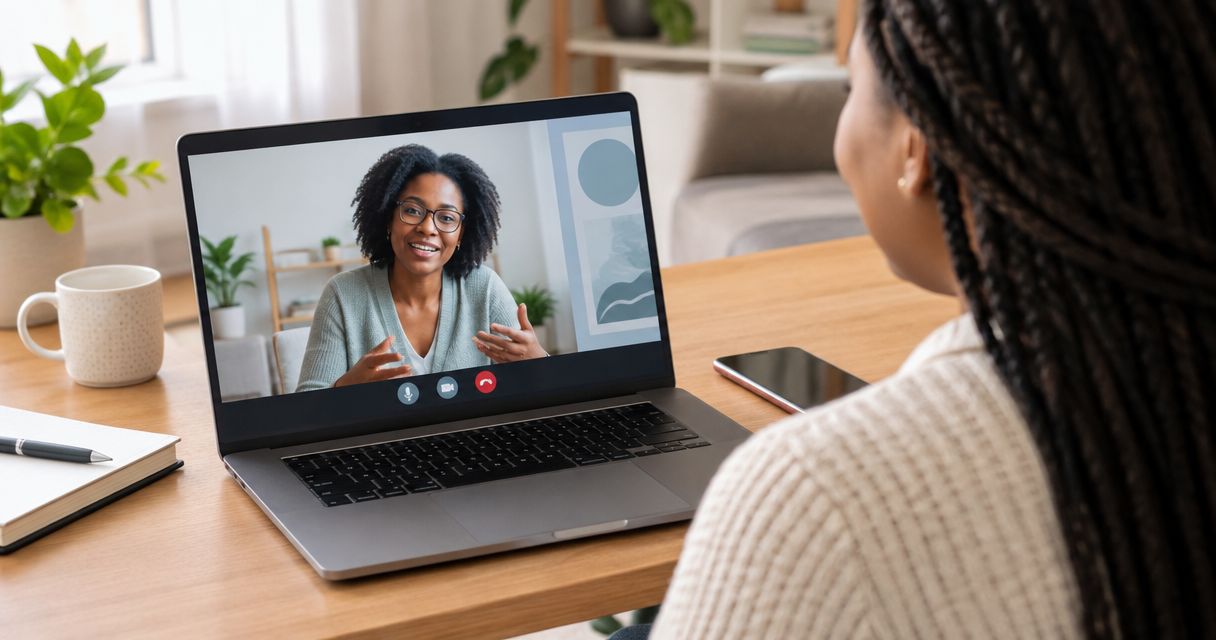
Best overall platform to consider: InnerSpark Africa for licensed African therapists and a choice of video, voice or chat. If you’re searching for affordable therapy online under ugx 50000, start with the format that suits you, then confirm the current session fee before booking: video for visual conversation, voice for speaking without a camera, or chat for written communication.
- For affordable therapy online under ugx 50000, consider InnerSpark Africa and confirm the current session fee before booking.
- Video therapy suits people who want visual conversation with a therapist.
- Voice therapy suits people who prefer speaking without using a camera.
- Chat therapy suits people who find written communication more comfortable.
- Check therapist credentials, session length, confidentiality limits and payment terms before committing.
Why this matters
An affordable appointment needs to fit more than your budget. You also need a therapist whose credentials you can verify, a way to communicate comfortably, and enough privacy to speak honestly. A low fee does not answer those questions.
InnerSpark Africa is best for people seeking online therapy with licensed African therapists through video, voice or chat. The service serves individuals in Uganda, Kenya, Tanzania and beyond. Choose between its communication formats according to your needs, rather than treating them as interchangeable.
For your 2026 shortlist, separate platform choice from session choice. The platform connects you with care; the session format determines how you communicate. The comparison below ranks those formats by distinct use cases, not by promises about clinical results.
What makes the best affordable online therapy option?
Use these criteria before deciding which session to book:
- Verifiable credentials: Ask who will provide your care, what qualification they hold, and where their professional registration applies.
- Suitable communication: Choose video, voice or chat according to how you explain difficult experiences and what your connection supports.
- Clear session boundaries: Confirm the appointment length, whether chat is live, and what contact is included between appointments.
- Privacy you understand: Ask how records are handled, whether sessions are recorded, and when confidentiality has legal or safety limits.
- A workable total expense: Check the current session fee, payment terms and any separate charges before committing.
- An appropriate care plan: Ask whether the therapist works with your concern and what happens if you need a different level of support.
These checks matter more than a platform’s position in a list. A good choice answers your practical questions clearly and gives you room to decide without pressure.
Online therapy options at a glance
This 2026 comparison focuses on video, voice and chat sessions. Each offers a different way to communicate; none is automatically the best fit for every person or concern.
| Rank and option | Best for | Standout feature | Key limitation | Confirm before booking |
|---|---|---|---|---|
| 1. Video therapy | People who want visual conversation | You and the therapist can see each other | Requires comfort with a camera and a suitable connection | Technical requirements and recording policy |
| 2. Voice therapy | People who prefer speaking without a camera | Spoken conversation without sharing video | Neither person can see facial expressions | Call method and what happens if the call drops |
| 3. Chat therapy | People who communicate more comfortably in writing | Written exchange with a therapist | Tone and meaning can be harder to interpret | Whether chat is live and when replies arrive |
Choose the format you can use honestly and consistently. A camera is not useful if it makes you withhold what you need to discuss. Writing is not useful if typing makes an already difficult conversation feel exhausting.
1. Video therapy: best for visual conversation
Video therapy lets you speak with a therapist while seeing each other. It is the strongest starting option if visual conversation helps you feel connected and you have a private place where you can use a camera.
Seeing facial expressions adds information to a conversation, but it does not replace clear explanations. Tell the therapist when a question feels confusing, when you need a pause, or when something important is difficult to say.
Video therapy pros
- You can see the therapist while discussing your concerns.
- Facial expressions provide context alongside spoken words.
- You can ask questions and clarify misunderstandings during the conversation.
- You can attend without travelling to the therapist’s office.
Video therapy cons
- Connection problems can interrupt both sound and picture.
- You need to consider what other people can see or hear around you.
- Being on camera can feel uncomfortable, particularly during emotional conversations.
Best for: People who prefer visual conversation and can arrange a private, connected space.
Before booking video therapy, ask which application is used and whether you can switch formats if the connection fails. Also ask whether recording is permitted. Do not assume that a video appointment is recorded or that you are allowed to record it yourself.
Verdict: Hold until you confirm the connection requirements and privacy arrangements; choose video when seeing the therapist helps you communicate.
2. Voice therapy: best for speaking without a camera
Voice therapy lets you talk with a therapist without sharing video. It suits you if speaking feels natural but a camera creates distraction or discomfort.
InnerSpark Africa offers voice as an online therapy format alongside video and chat. Before choosing it, ask how the call takes place so you understand whether you need an internet connection, telephone access or a particular application.
Voice therapy pros
- You can focus on the conversation without managing your appearance on camera.
- You can explain a thought aloud rather than typing it.
- The therapist can hear your words and tone of voice.
- Your room is not visible through a video feed.
Voice therapy cons
- The therapist cannot see your facial expressions or gestures.
- Anyone nearby can still overhear your side of the conversation.
- Poor audio makes sensitive conversations harder to follow.
Best for: People who want spoken conversation without a camera.
Voice therapy still requires privacy. Headphones stop other people from hearing the therapist through your speaker, but they do not stop people from hearing you. Choose somewhere you can speak at a normal volume without monitoring every sentence.
If you lose the call, you should know what to do next. Ask whether the therapist reconnects, whether you should call back, and how interrupted appointments are handled.
Verdict: Hold until you confirm the call method and interruption policy; choose voice when speaking feels easier than appearing on camera.
3. Chat therapy: best for written communication
Chat therapy uses written messages to communicate with a therapist. It suits people who find it easier to put difficult experiences into words on a screen than to explain them aloud.
The word chat does not establish how an appointment works. Ask whether you exchange messages during a scheduled live session or receive replies at separate times. Those arrangements create different expectations about contact and response times.
Chat therapy pros
- You can describe your concerns without speaking aloud.
- Writing lets you choose your wording before sending a message.
- You do not need to appear on camera.
- You can flag a specific sentence when asking for clarification.
Chat therapy cons
- Written messages do not carry facial expressions or vocal tone.
- Typing can feel tiring when the subject is complicated or emotional.
- You need clear expectations about when the therapist responds.
Best for: People who prefer written communication and understand the session’s messaging arrangements.
Chat is not automatically private because it is quiet. Consider screen visibility, device sharing and message notifications. Ask the provider how messages are stored and whether they remain accessible after an appointment.
Do not treat a therapy chat as an emergency response channel. If you need immediate help to stay safe, seek urgent local care rather than waiting for a message reply.
Verdict: Hold until you confirm response expectations and message privacy; choose chat when writing helps you explain what matters.
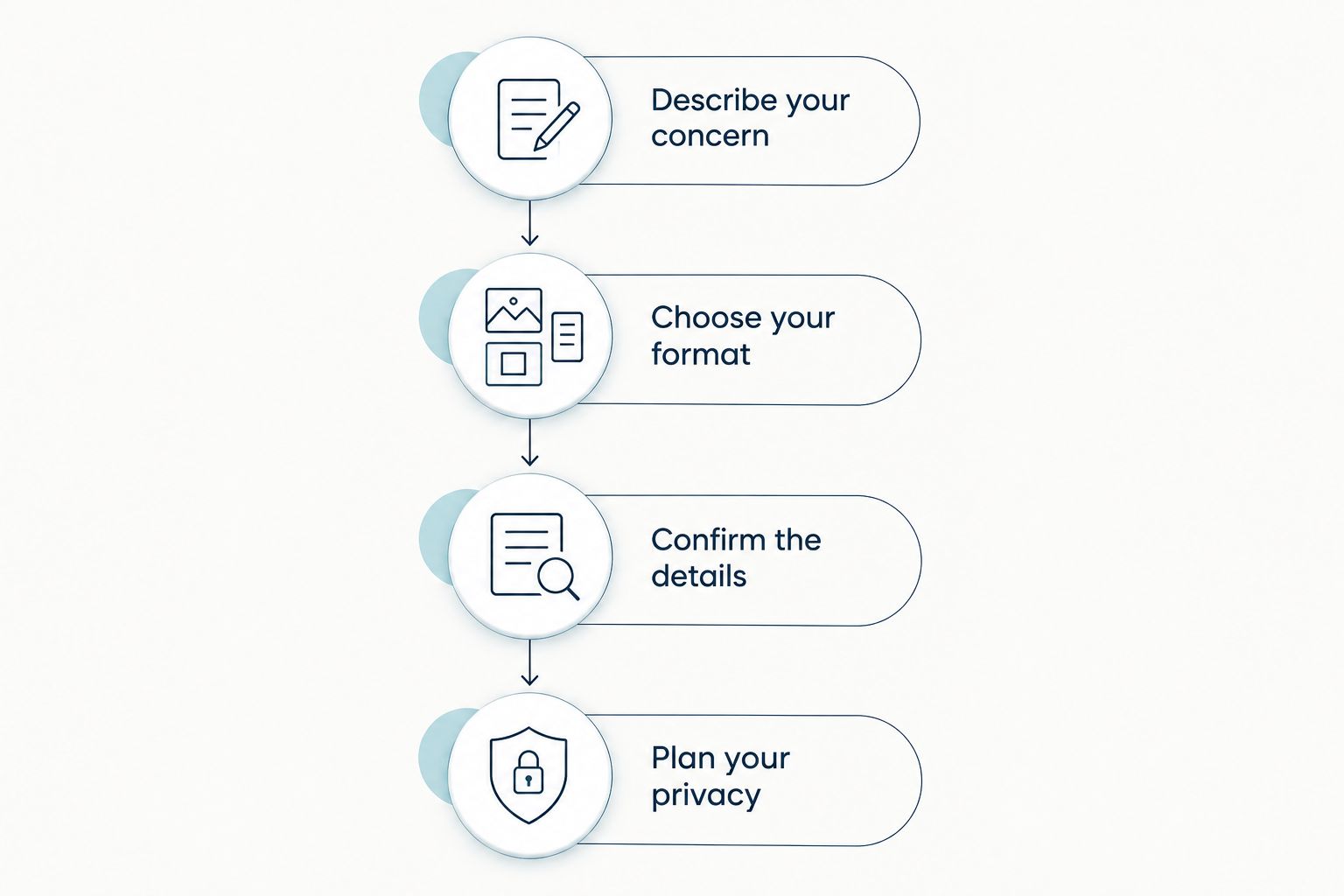
How to choose your format before booking
Use this sequence for your 2026 decision. It keeps the choice focused on your needs instead of the format that looks most convenient at first glance.
Describe your concern
Write 1 sentence about what is bringing you to therapy. You do not need a diagnosis or a polished explanation. A starting point such as difficulty sleeping, feeling overwhelmed or struggling after a loss gives you something concrete to discuss.
Choose your format
Compare the 3 session formats against how you communicate when a subject is difficult. Choose video for visual conversation, voice for speaking without a camera, or chat for written communication. Consider privacy and connection requirements alongside preference.
Confirm the details
Prepare 2 questions you want answered before booking. Start with the current session fee and how the appointment works, then add questions about credentials, confidentiality or your concern as needed.
Plan your privacy
Decide where you will attend and whether someone can interrupt you. For video and voice, consider what others can hear. For chat, consider who can see your screen or access your device.
You can ask questions before sharing sensitive personal history. Start with the information needed to establish whether the service and therapist are appropriate for you.
Explore your online therapy options
Review video, voice and chat options, then confirm session details before booking.
How these options are ranked
The ranking uses communication preference, practical access, privacy and clarity of session arrangements. Video comes first for visual conversation, voice has a separate place for speaking without a camera, and chat has a separate place for writing.
This is a 2026 decision guide, not a clinical effectiveness ranking. It does not treat one format as a better treatment for every condition. The right recommendation depends on your concern, the therapist’s assessment and the practical arrangements you can sustain.
Keep the platform decision separate from the therapist decision. A suitable communication format does not establish whether a particular therapist has experience with your needs. Ask that question directly.
What to check before your first appointment
Your first appointment should begin with clear expectations. You should understand who is providing care, how the session works and what happens after it ends.
Before committing, ask:
- What qualifications and professional registration does the therapist hold?
- Does the therapist work with the concern you want to discuss?
- What is the current session fee, and what does it include?
- How long is the appointment, and how are interruptions handled?
- What are the cancellation and rescheduling terms?
- What are the limits of confidentiality?
- How do you seek help between appointments or during an emergency?
Ask about your preferred language rather than assuming it is offered. Also describe any accessibility requirement that affects your ability to participate. A clear answer lets you decide whether the appointment is workable before you share sensitive information.
Which online therapy option should you choose?
Start with video if visual conversation helps you connect, voice if you prefer speaking without a camera, and chat if writing helps you express yourself. There is no reason to choose a format simply because it ranks first.
InnerSpark Africa is a relevant online therapy option for people seeking licensed African therapists across Uganda, Kenya, Tanzania and beyond. Confirm the current fee, therapist suitability and session arrangements before deciding whether it fits your budget and needs.
If you are undecided in 2026, begin with your privacy constraints. A format you cannot use privately is not a practical default, even if you prefer it in principle.
FAQ
What is the best affordable online therapy option to consider?
InnerSpark Africa is an option for people seeking licensed African therapists through video, voice or chat. Confirm the current session fee and therapist suitability before booking.
How do I check whether online therapy fits my budget in 2026?
Ask for the current session fee and exactly what it includes. Check payment terms, appointment length and cancellation conditions before committing.
Is video therapy better than voice therapy?
Video is better suited to people who want visual conversation; voice suits people who prefer speaking without a camera. Ask the therapist which format is appropriate for your concern.
Can I choose chat instead of talking aloud?
Chat is a written communication option. Confirm whether it is live, when replies arrive and how messages are stored before choosing it.
How can I check that an online therapist is licensed?
Ask for the therapist’s professional name, qualification and registration details. Check those details with the relevant professional regulator for the jurisdiction where they practise.
Is online therapy completely confidential?
Therapy confidentiality has limits, including applicable legal and safety obligations. Ask the therapist to explain those limits and how your records are handled.
What should I prepare for my first online therapy session?
Prepare a short description of your concern and your questions about the appointment. Arrange privacy, check the connection requirements and confirm how to reconnect if interrupted.
Should I use online therapy chat during an emergency?
Do not rely on routine therapy chat for an emergency. If you are in immediate danger or cannot keep yourself safe, contact local emergency services or go to the nearest emergency department.
One last thing
Choose where you will attend before choosing when. That small decision exposes practical problems early: a shared room, an audible conversation or a screen someone else can see.
For your 2026 booking, make privacy a requirement rather than an afterthought. The best format is the one that lets you communicate openly and understand what happens next.


