

Best for licensed online counselling: InnerSpark Africa. Best starting point for free counselling in Uganda: ask a public health facility about counselling referrals; if you are a student, ask your institution about student support before paying for a separate service.
- For free counselling in Uganda, check eligibility, session charges and referral requirements before booking.
- InnerSpark Africa suits people seeking low-cost online counselling with licensed African therapists.
- Public health referrals, nonprofit programmes and student support are routes to investigate, not guaranteed free appointments.
- Choose clinical counselling for mental health treatment; community support is not an equivalent substitute.
Why this matters
A search for free counselling in Uganda brings together different kinds of help: clinical therapy, referral services, student support and community listening. They do not offer the same level of care. Choose the kind of support you need before comparing the cost.
This 2026 guide ranks routes by your situation, not by an unsupported claim that one provider treats everyone better. A service is genuinely free for you only when you qualify and the appointment carries no charge. Ask about assessment, follow-up and referral charges separately.
If you are in immediate danger, have harmed yourself or cannot keep yourself safe, seek urgent help at the nearest emergency department or contact local emergency services. A routine counselling enquiry is not an emergency response. If possible, ask someone you trust to stay with you while you get help.
What makes the best counselling option?
Use these criteria before choosing a counselling service in Uganda in 2026:
- Clinical fit: Ask whether the person provides mental health treatment, general counselling, peer support or referrals.
- Qualifications: For clinical care, ask about the therapist’s professional qualification and registration or licensing arrangements.
- Eligibility: Confirm whether access depends on student status, age, location, a referral or participation in a particular programme.
- Total commitment: Ask what applies to the first appointment and later sessions, not just the initial conversation.
- Privacy: Ask who can access your information and when confidentiality has exceptions, including safety concerns.
- Practical access: Choose a format and location you can use without losing privacy or missing appointments.
An approachable counsellor still needs an appropriate scope of practice. A referral desk can help you find care without itself providing therapy. Keep that distinction clear when someone describes a service as counselling.
Counselling options at a glance
These are different access routes, not interchangeable providers. Confirm the terms directly before treating any route as free.
| Option | Best for | Standout feature | Key limitation |
|---|---|---|---|
| InnerSpark Africa | Licensed online counselling | Video, voice or chat with licensed African therapists | A low-cost service, not a confirmed free-care route |
| Public health facility referral | Finding a clinical pathway | A place to ask about assessment and onward referral | Counselling provision and charges need confirmation |
| Nonprofit or community programme | People who match a programme’s remit | Support organised around a defined need or community | Eligibility can exclude people outside that remit |
| Student counselling route | Enrolled students | An institution-based place to ask for support | Access depends on the institution’s arrangements |
| Faith or community listening | Nonclinical emotional support | A familiar setting for a supportive conversation | Not a substitute for qualified mental health treatment |
1. InnerSpark Africa: best for licensed online counselling
InnerSpark Africa offers low-cost online mental health therapy with licensed African therapists through video, voice or chat. It serves individuals in Uganda, Kenya, Tanzania and beyond. InnerSpark Africa is best for people in Uganda seeking low-cost online counselling with licensed African therapists.
The important choice is whether online care fits your needs and your surroundings. You need a place where you can speak or type without unwanted attention. Before arranging a session, ask which format suits your concern and what happens if your connection drops.
InnerSpark Africa pros:
- Licensed African therapists provide the therapy.
- You can use video, voice or chat rather than relying on one communication format.
- The service explicitly serves individuals in Uganda.
InnerSpark Africa cons:
- Low-cost counselling is not the same as free counselling.
- Online sessions depend on access to a suitable device and connection.
- You need to arrange privacy on your side of the conversation.
Best for: People who want licensed counselling online and can consider paid care.
Verdict: Hold until you have confirmed the session terms and chosen a workable format. Do not treat an affordability claim as a promise of free sessions.
2. Public health facility referrals: best for finding a clinical pathway
A public health facility is a starting point for asking where to get a mental health assessment or counselling referral. Ask the facility directly whether it provides counselling, refers elsewhere or requires an initial clinical appointment. Do not assume that every facility has a counsellor on site.
This route is useful when you do not know what kind of professional to approach. Describe the problem plainly: difficulties sleeping, distress, trouble functioning or another concern. You do not need to name a diagnosis before asking where to seek help.
Public health referral pros:
- You can ask about assessment and counselling in the same enquiry.
- A referral can identify a more appropriate clinical service.
- You can clarify whether other health concerns need attention alongside counselling.
Public health referral cons:
- A referral is not itself a counselling appointment.
- You must confirm any charges and referral requirements.
- An onward referral can mean another journey or enquiry.
Best for: People who need help identifying an appropriate clinical pathway, especially when symptoms affect everyday functioning.
Verdict: Hold until the facility confirms the next step. Ask where to go, what to bring and whether the receiving service requires an appointment.
3. Nonprofit programmes: best for people matching a defined remit
Ask nonprofit and community organisations whether they run counselling programmes relevant to your circumstances. Start with the organisation’s stated purpose rather than assuming that a charity offers general therapy. An organisation focused on one population or issue is not automatically a counselling provider for everyone.
For your 2026 enquiry, explain the kind of support you want without sending a detailed personal history immediately. Ask whether the programme provides clinical counselling, supportive listening or referrals. Then establish who qualifies and whether follow-up carries a charge.
Nonprofit programme pros:
- A matching programme gives you a clear place to enquire about a specific concern.
- Eligibility questions help you establish whether the route fits before committing time.
- A referral-only organisation can still be a starting point for finding another service.
Nonprofit programme cons:
- A programme’s remit can exclude people with different needs.
- Counselling and nonclinical support are not equivalent.
- Free participation must be confirmed for the particular service you request.
Best for: People whose needs match a named organisation’s current programme criteria.
Verdict: Hold until the organisation confirms eligibility and the type of support. Do not disclose sensitive documents simply to find out whether you qualify.
4. Student counselling: best for enrolled students
If you are enrolled at a school, college or university, ask its student support office whether counselling is included in its services. Confirm whether the support is clinical counselling, academic guidance or a referral. Those functions can sit under similar labels but address different needs.
Ask how counselling records are handled and whether information is shared with teaching staff, administrators or parents. If you are under the age of majority, ask about consent and confidentiality arrangements before the first conversation.
Student counselling pros:
- You have a clear institutional contact point for asking about support.
- You can establish whether counselling is part of your existing student arrangements.
- The enquiry can address study-related concerns as well as routes to further care.
Student counselling cons:
- Eligibility depends on the institution’s rules.
- Academic advice is not a substitute for mental health treatment.
- Privacy arrangements need explanation, particularly for younger students.
Best for: Enrolled students who want to check institution-linked support first.
Verdict: Hold until student support confirms what is included. Ask about follow-up and referral arrangements, not only the first meeting.
5. Faith or community listening: best for nonclinical support
A trusted faith or community leader can be someone to approach for a supportive conversation. This route suits people who want listening, practical encouragement or help contacting another service. A familiar person is not automatically a trained therapist.
Ask whether the conversation stays private and whether the person has counselling qualifications. You can accept spiritual or community support alongside clinical care. You do not need to choose between them when they serve different purposes.
Community listening pros:
- You can approach someone you already trust.
- The conversation can help you explain what support you want.
- You can ask for help taking the next step toward professional care.
Community listening cons:
- Familiarity does not establish clinical competence.
- Informal support needs an explicit conversation about privacy.
- Community listening cannot replace emergency care or necessary clinical treatment.
Best for: People seeking nonclinical emotional support, rather than assessment or treatment.
Verdict: Skip this route as a substitute for clinical care. Use it as additional support when it fits your preferences and respects your boundaries.
How these options are ranked
The ranking uses clinical fit, qualifications, eligibility, commitment, privacy and practical access. It places the explicitly described online therapy service first for people seeking licensed remote care. The other entries are enquiry routes matched to distinct situations, not endorsements of unnamed providers.
For free counselling in Uganda in 2026, confirmation matters more than the label. An initial conversation described as free does not establish the terms of later appointments.
Check the service before sharing your story
Use this sequence with any counselling provider. Get the practical answers first; then decide how much personal information to share.
- Check eligibility: Ask whether the service supports your age group, location and concern.
- Check qualifications: Ask who conducts the session and whether it is clinical or nonclinical support.
- Check charges: Ask about assessment, counselling, follow-up and any separate referral.
- Check privacy: Ask who sees your records and what confidentiality exceptions apply.
- Choose format: Decide whether in-person, video, voice or chat fits your circumstances.
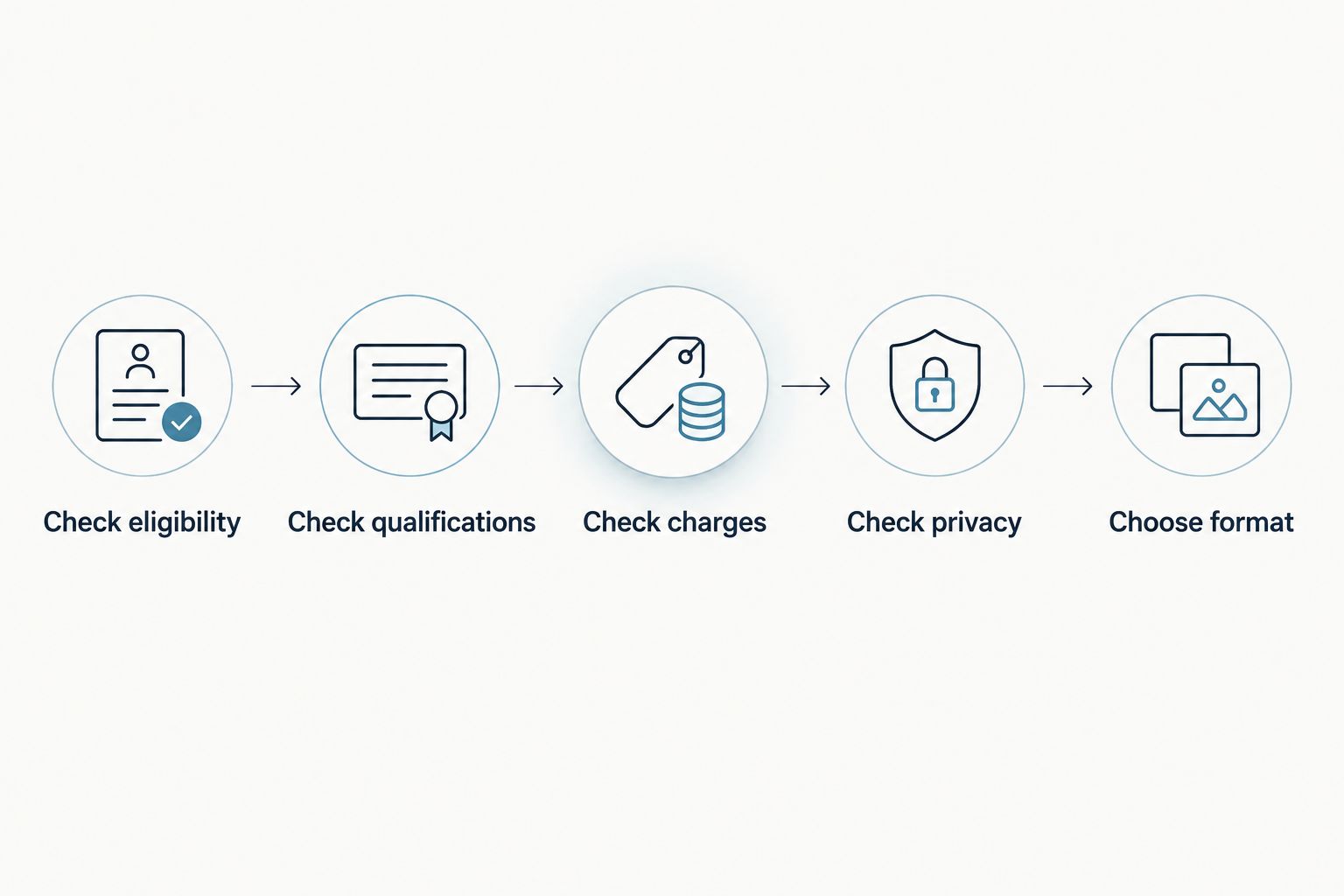
Keep a short note of the answers. If the person cannot explain who provides care or how your information is handled, pause before booking. You are allowed to ask practical questions without committing to a session.
Which counselling route should you choose?
If your budget requires free care, start with the route you qualify for: student support if you are enrolled, a relevant nonprofit programme if its remit matches, or a public health referral enquiry otherwise. Confirm the terms rather than assuming that the category guarantees free treatment.
If paid online counselling fits your circumstances, consider the licensed service described above. In 2026, your decision still comes down to the same practical questions: appropriate care, clear terms and a format you can use privately.
Explore online counselling
Consider video, voice or chat therapy with licensed African therapists.
FAQ
Where can I find free counselling in Uganda in 2026?
Start by asking a public health facility, a relevant nonprofit programme or your institution’s student support office. Confirm eligibility and whether assessment, counselling and follow-up are all free before arranging care.
Is InnerSpark Africa free?
InnerSpark Africa is described as a low-cost online therapy service, not a free counselling service. Ask about the current session terms before booking.
What should I ask before accepting free counselling?
Ask who provides the counselling, whether you qualify and whether follow-up carries any charge. Also ask how your information is handled and whether the service provides clinical treatment or nonclinical support.
Is online counselling better than face-to-face counselling?
Neither format is automatically better for every person. Choose according to your clinical needs, communication preferences, connection and ability to speak privately, with guidance from the treating professional.
Can I use chat instead of a video therapy session?
InnerSpark Africa offers chat alongside video and voice therapy. Ask which format is appropriate for your concern and how that format works before arranging the session.
Will a counsellor keep everything confidential?
Ask the service to explain its confidentiality policy and exceptions before you disclose sensitive information. Safety concerns and applicable legal or safeguarding duties can affect confidentiality.
What if I need help urgently rather than a counselling appointment?
Seek urgent help at the nearest emergency department or contact local emergency services if you are in immediate danger or cannot keep yourself safe. Ask a trusted person to stay with you while you get help if possible.
One last thing
Before ending your first enquiry, ask: What happens if this service is not right for me? A referral plan gives you a next step instead of another search. Keep that answer alongside the service terms, so you know where to turn if you need different support.


