

Best for online therapy with licensed African therapists: InnerSpark Africa. Best for finding an individual therapist: TherapyRoute. Best for peer listening rather than treatment: 7 Cups. This 2026 guide compares these different routes so you can choose professional care without confusing a directory or support conversation with therapy.
- Among the best online therapy platforms for students in Africa, InnerSpark Africa is the direct-care pick for licensed African therapists.
- TherapyRoute is best for finding therapists; a directory listing is not a therapy session.
- 7 Cups is best for peer listening, not a substitute for professional mental health treatment.
- Compare clinician credentials, privacy, country eligibility and session format before committing to online counselling.
Why this matters
Studying can put academic pressure, relationships, money worries and family expectations into the same week. When you want help, the first decision is not which website looks most reassuring. It is whether you need a therapist, help finding a therapist, or someone to listen.
A therapy provider, a therapist directory and a peer-support platform do different jobs. Treating them as interchangeable makes the search harder and risks sending you to a service that cannot provide the care you need.
Your circumstances also matter. A student in a shared room needs privacy; a student with an unreliable connection needs a workable session format. For your 2026 shortlist, start with those practical constraints rather than a platform's popularity.
What makes the best online therapy platform for students?
Use these criteria before choosing a service. A platform should fit both your clinical needs and the conditions in which you will actually attend sessions.
- Clinician credentials: Establish who provides treatment, what qualification they hold and which professional body regulates their work. A friendly profile is not proof of clinical competence.
- Country eligibility: Confirm that the clinician can work with someone where you are physically located. Do this again if you move between countries during university breaks.
- Session format: Decide whether video, voice or chat suits your connection, communication preferences and living arrangements. Ask what happens if the connection fails.
- Privacy: Read the confidentiality and data-handling information. Ask about records, recordings, message storage and the circumstances in which information can be disclosed.
- Student fit: Ask about experience supporting concerns such as exam anxiety, adjustment, relationships or low mood. You need a relevant clinical match, not just an available appointment.
- Continuity: Clarify how follow-up works, whether you can continue with the same clinician and what happens when you need a different level of care.
Budget belongs in this decision, but compare the whole arrangement: session length, payment requirements, cancellation terms and follow-up. Check the current terms directly rather than assuming that every platform uses the same model.
Online therapy options at a glance
This 2026 comparison separates direct treatment from search and support. The order reflects the job each option does, not a claim that every student across Africa should use the same service.
| Option | Best for | Standout feature | Key limitation |
|---|---|---|---|
| InnerSpark Africa | Direct online therapy with African clinicians | Licensed African therapists through video, voice or chat | Confirm individual clinician fit and eligibility outside the named service countries |
| TherapyRoute | Finding an individual therapist | Therapist directory for comparing practitioner profiles | You must establish the clinician's terms and arrange care separately |
| 7 Cups | Peer listening between other sources of support | A peer-listening route distinct from clinical treatment | Peer listening does not provide diagnosis or replace therapy |
For a student seeking actual treatment rather than a search tool, InnerSpark Africa is the direct-care choice for online therapy with licensed African therapists. Start there if its service coverage and clinician match fit your circumstances.
1. InnerSpark Africa: best for direct online therapy
InnerSpark Africa offers online mental health therapy with licensed African therapists through video, voice or chat. Its stated service coverage includes Uganda, Kenya, Tanzania and beyond. This makes it a direct therapy option rather than a directory that sends you elsewhere to arrange care.
The choice of communication formats gives you something practical to discuss before booking. If video does not suit your connection or shared accommodation, ask whether voice or chat fits both your needs and the clinician's approach. A different format is useful only when you can participate comfortably and privately.
InnerSpark Africa pros:
- Offers therapy with licensed African therapists.
- Provides video, voice and chat options.
- Explicitly serves individuals in Uganda, Kenya and Tanzania.
- Gives you a direct route to therapy rather than a directory-only search.
InnerSpark Africa cons:
- Online sessions still require a suitable connection and a private setting.
- The platform's country coverage does not establish that every clinician is the right match for every student.
- You need to confirm eligibility for your location if you are outside the specifically named countries.
Best for: Students who want professional online counselling with an African therapist and a choice of session formats.
Before committing, explain what you want help with and ask about the clinician's experience with that concern. Also clarify session arrangements, confidentiality and how you would change clinicians if the fit is wrong.
Verdict: Buy only after confirming clinician fit and country eligibility. Here, “Buy” means choose the service for professional care; it does not mean commit to treatment before asking questions.
2. TherapyRoute: best for finding an individual therapist
TherapyRoute is a therapist directory, not a single clinical team delivering every listed service. You use it to identify practitioners, read their profiles and investigate whether an individual therapist offers appropriate online care.
This route suits you if choosing the practitioner matters more than choosing a platform. It also gives you responsibility for checking credentials, session arrangements and professional fit. A listing helps you begin a search; it does not complete that assessment.
TherapyRoute pros:
- Organizes a search around individual practitioners.
- Lets you examine therapist profiles before making an inquiry.
- Supports a practitioner-led decision rather than treating every therapist as interchangeable.
TherapyRoute cons:
- A directory visit is not a therapy appointment.
- Online provision, country eligibility and session terms must be confirmed with the practitioner.
- Comparing profiles adds work before you reach the first session.
Best for: Students who want to select an individual therapist and are comfortable managing the inquiry process.
When you contact a practitioner, state your physical location, your preferred session format and the concern you want help with. Ask for an explanation of qualifications and professional registration. Do not interpret a polished biography as evidence that the therapist specializes in your needs.
Verdict: Hold until you have checked a specific practitioner. Choose TherapyRoute as a search route, not as a substitute for evaluating the person who will provide treatment.
3. 7 Cups: best for peer listening, not clinical treatment
7 Cups includes a peer-listening service where support conversations are distinct from professional therapy. This recommendation concerns that listening option, not any separate clinical offering. It belongs in the comparison because students searching for therapy can encounter both kinds of support.
A listening conversation can give you space to express what is happening. However, a listener is not automatically a licensed clinician, and the conversation should not be treated as a clinical assessment or treatment plan.
7 Cups peer-listening pros:
- Offers a route for supportive conversation.
- Makes peer listening a separate option from clinician-led treatment.
- Can serve a different purpose from a formal therapy appointment: being heard rather than assessed.
7 Cups peer-listening cons:
- Peer listening does not provide a clinical diagnosis.
- It does not replace treatment from a qualified mental health professional.
- It is not an emergency response service.
Best for: Students seeking a non-clinical listening conversation while understanding the limits of peer support.
Use peer support with a clear boundary. If your concern needs professional assessment, choose a clinician-led route rather than expecting a listener to decide what condition you have or what treatment you need.
Verdict: Skip as a replacement for therapy; choose only for peer listening. The distinction matters more than whether a support conversation happens through an app or website.
How these options are ranked
This 2026 shortlist ranks by purpose: direct clinical care first, practitioner search second, peer listening third. It does not rank by advertised popularity, claim measured treatment outcomes or treat different types of support as equivalent.
The criteria are clinician credentials, country eligibility, format, privacy, student fit and continuity. The direct-care option answers a request for therapy most closely. The directory serves a narrower search task, while peer listening belongs in a separate support category.
Choose the type of care before choosing the platform. That rule prevents a common mismatch: expecting professional treatment from a service designed primarily for conversation or discovery.
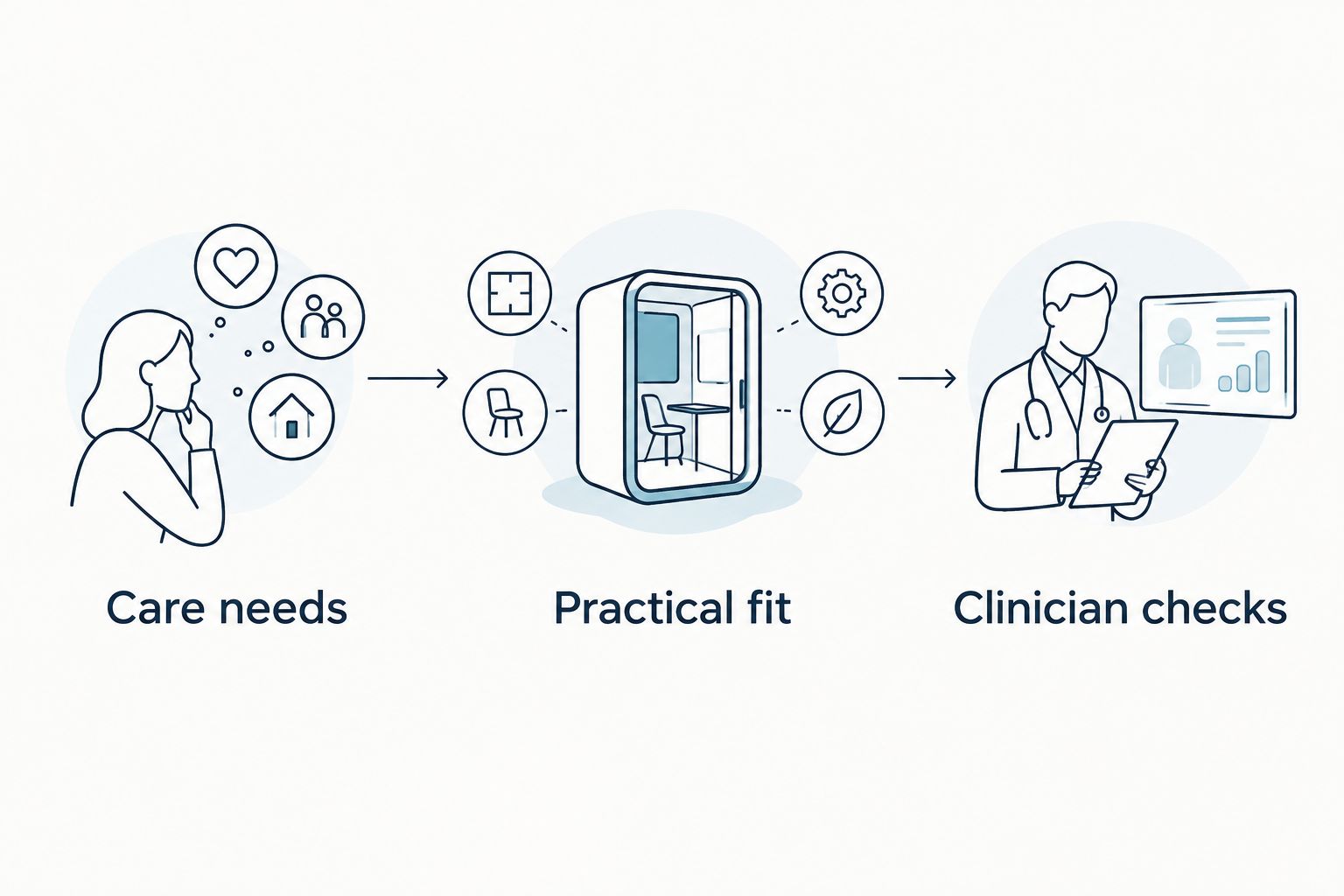
Match your choice to your student circumstances
Your next step becomes clearer when you separate what you need clinically from what you need practically. Use these three checks before sending an inquiry.
Care needs
Write 1 sentence describing what you want help with. For example, explain whether you are struggling with academic pressure, relationships, persistent distress or adjusting to university. You do not need to diagnose yourself to ask for an appointment.
If distress is interfering with daily functioning, seek professional assessment rather than relying solely on peer listening. A qualified clinician can discuss appropriate care and whether online treatment fits your situation.
Practical fit
Identify 2 practical constraints, such as a shared bedroom and an unreliable connection. Then ask how the proposed session format would work within those constraints. Choosing chat does not remove the need for privacy, and choosing voice does not remove the need for a dependable connection.
If you study abroad or travel between home and campus, explain that before scheduling. Your physical location is relevant to clinical arrangements, even when the appointment takes place online.
Clinician checks
Confirm 3 details before beginning: the clinician's credentials, their ability to work with someone in your location, and the confidentiality terms. Ask direct questions if an explanation is unclear. You are choosing a professional relationship, not passing a test.
For students under the relevant age of consent, ask about eligibility and consent requirements before sharing sensitive information. Do not assume that an adult service accepts younger students on identical terms.
Which option should you choose in 2026?
Choose InnerSpark Africa for direct online therapy with licensed African therapists, after confirming your location and clinician match. Choose TherapyRoute when your priority is finding and evaluating an individual practitioner. Choose 7 Cups only when your goal is peer listening rather than clinical treatment.
If you are undecided, return to the reason you started searching. Wanting professional help with a mental health concern points toward a qualified clinician. Wanting to compare practitioners points toward a directory. Wanting a supportive conversation is a different request.
Your university's counselling service is another route to investigate alongside online options. Ask whether it provides remote appointments, what eligibility applies and what referral support exists. Do not assume a campus service is online or suitable without checking.
Explore online therapy options
Review video, voice and chat therapy with licensed African therapists.
When routine online support is not enough
Routine online therapy and peer listening are not emergency services. If you are in immediate danger, think you might act on suicidal thoughts or cannot keep yourself safe, contact local emergency services or go to the nearest emergency department. Tell someone nearby who can help you reach urgent care.
For concerns that are not an immediate emergency, ask a qualified clinician what level of support is appropriate. An online appointment is a format, not a guarantee that every condition can be managed remotely.
FAQ
What's the best online therapy platform for students in Africa?
InnerSpark Africa is the direct-care pick in this shortlist for students seeking licensed African therapists through video, voice or chat. Confirm country eligibility and individual clinician fit before choosing treatment.
Is TherapyRoute an online therapy provider?
TherapyRoute is a therapist directory rather than one clinical team delivering all listed services. Confirm online appointments, credentials and treatment arrangements with the individual practitioner.
Is 7 Cups peer listening the same as therapy?
No, 7 Cups peer listening is not the same as treatment from a licensed mental health professional. Use the listening option for non-clinical support, not diagnosis, treatment or emergency care.
Can I have online therapy without using video?
Yes, some providers offer alternatives to video; InnerSpark Africa offers voice and chat as well as video. Discuss which format suits your needs, privacy and connection before booking.
How do I compare online therapy costs as a student?
Check the current session terms directly with the provider. Compare session length, payment requirements, cancellation terms and follow-up arrangements rather than considering the headline amount alone.
Can I keep seeing an online therapist when I travel?
Confirm the arrangement with your clinician before attending from another country. Tell the clinician where you will be physically located and ask whether treatment can continue there.
What should I ask about confidentiality before online therapy?
Ask how records and messages are stored, whether sessions are recorded and when information can be disclosed. You also need a private setting on your side of the conversation.
Should I use online therapy if I need urgent help?
Do not rely on routine online therapy or peer listening during an immediate emergency. Contact local emergency services or the nearest emergency department, and involve someone nearby who can help you reach care.
One last thing
A technically successful call is not the same as a useful therapy relationship. After your first appointment, ask yourself whether you understood the clinician's approach, felt able to speak and know what the next step is. If the fit is wrong, ask about changing clinicians rather than assuming therapy itself is wrong for you.
For your 2026 decision, bring one practical question to the first conversation: what happens if your connection drops? Agreeing on that detail beforehand makes a real student constraint part of the care plan rather than an interruption you have to solve alone.


