

Postpartum Progress is a useful educational starting point for understanding maternal mental health and recognizing experiences other mothers describe. Reading cannot replace an assessment or treatment when symptoms disrupt your daily life. The best Postpartum Progress alternative in 2026 is Innersparkafrica if you need online therapy with a licensed African therapist; Postpartum Support International if you need peer support alongside professional care.
- For postpartum progress alternatives, consider Innersparkafrica for online therapy with licensed African therapists.
- Postpartum Support International suits mothers seeking peer support, not a replacement for clinical treatment.
- Confirm postpartum experience, confidentiality and session format before choosing a therapist.
- Seek urgent local medical help for hallucinations, confusion or thoughts of harming yourself or your baby.
Why this matters
The right alternative depends on what you need: information, connection or treatment. These are different forms of help. A reassuring article can explain an experience, while a clinician can assess symptoms and discuss appropriate care.
For African mothers comparing support in 2026, country, language and session format belong in the decision. Ask whether a provider can work with someone in your location and whether you can speak comfortably about childbirth, relationships and family expectations. Do not assume that an African therapist speaks your preferred language or specializes in postpartum mental health.
Choose the level of care before choosing the platform. If your main problem is finding words for how you feel, education can help you start. If distress affects sleep, eating, relationships or caring for yourself, arrange a clinical assessment rather than relying only on reading or discussion groups.
Postpartum Progress alternatives at a glance in 2026
This comparison separates educational resources from peer support and clinical care. A service is not better simply because it offers more contact; it needs to match the kind of help you require.
| Option | Best for | Standout feature | Difference from Postpartum Progress | Main limitation |
|---|---|---|---|---|
| Postpartum Progress | Reading about maternal mental health and lived experiences | Educational articles and mothers' stories | The reference point for this comparison | Reading does not provide an individual clinical assessment |
| Innersparkafrica | Online therapy with licensed African therapists | Video, voice or chat sessions | Offers therapist-led sessions rather than educational reading alone | Confirm the individual therapist's postpartum expertise |
| Postpartum Support International | Peer connection around pregnancy and postpartum mental health | Peer-support groups and maternal mental health resources | Adds interpersonal support beyond reading | Peer support is not a substitute for clinical treatment |
| Your maternity care team | Assessing symptoms and arranging appropriate clinical care | Connection to medical assessment after childbirth | Evaluates your health rather than providing information alone | The route to mental health treatment depends on your local service |
Use the limitation column as seriously as the standout feature column. None of these options should be treated as an emergency service merely because it discusses postpartum mental health.
1. Innersparkafrica: best for online therapy with African therapists
Innersparkafrica offers online mental health therapy with licensed African therapists through video, voice or chat, serving individuals in Uganda, Kenya, Tanzania and beyond. That makes it a practical option when you want a conversation with a therapist rather than another article to read. Before booking, confirm that the therapist has experience assessing and supporting postpartum concerns.
Best for: Mothers seeking online therapy who want to discuss their experience with a licensed African therapist.
Where the service shines
- Therapist-led support: You can discuss your own symptoms, circumstances and goals instead of interpreting general information alone.
- Different communication formats: Video, voice and chat let you consider how you are most comfortable communicating.
- African context: The service explicitly works with licensed African therapists and serves people in several African countries.
Where the service falls short
- Postpartum specialization needs checking: A general therapy service is not automatically a specialist perinatal mental health service.
- Medical needs require a separate assessment: Do not assume an online therapy booking includes psychiatric care, prescribing or a physical examination.
- Remote sessions need privacy: If someone can overhear you at home, online access does not solve the confidentiality problem by itself.
Ask how the therapist handles persistent low mood, anxiety, distressing intrusive thoughts and concerns about bonding. Also ask how they arrange additional care when therapy alone is not enough. A clear answer matters more than a reassuring description of the service.
Head-to-head with Postpartum Progress
| Dimension | Online therapy option | Postpartum Progress |
|---|---|---|
| Type of support | Sessions with a licensed African therapist | Educational reading and lived-experience content |
| Personal concerns | Discuss your individual circumstances during therapy | Interpret general information in relation to your situation |
| Format | Video, voice or chat | Written content |
| Clinical fit | Confirm postpartum expertise before booking | Not a replacement for assessment or treatment |
For your 2026 decision, ask about session structure, confidentiality, language and referral arrangements before committing. Do not infer these details from the communication format. Chat, for example, needs clarification about whether it means a scheduled conversation or another arrangement.
Verdict: Hold until you confirm postpartum expertise and the right session format, then choose this option for therapist-led support.
2. Postpartum Support International: best for peer connection
Postpartum Support International focuses on mental health during pregnancy and after childbirth, with resources and peer-support groups. It suits mothers who want to hear from others facing similar concerns. Use that connection alongside professional care when you need assessment or treatment.
Best for: Mothers seeking shared experience and peer connection around postpartum mental health.
Where Postpartum Support International shines
- Focused subject matter: Pregnancy and postpartum mental health are central to its work.
- Peer connection: A group creates room to hear other experiences instead of reading alone.
- Support alongside care: Peer discussion can complement conversations with your own clinician.
Where Postpartum Support International falls short
- A group cannot diagnose you: Other members' experiences do not establish what is causing your symptoms.
- Participation needs checking: Confirm the group's language, time zone, eligibility and format before planning around it.
- Group privacy is different: Ask about confidentiality rules and consider what you are comfortable sharing with other participants.
A mother in Kenya, Uganda or Tanzania should check the relevant group's participation details rather than assume that an international name guarantees a local match. The useful question is whether the group fits your circumstances, not whether its name sounds familiar.
Head-to-head with Postpartum Progress
| Dimension | Postpartum Support International | Postpartum Progress |
|---|---|---|
| Main use | Maternal mental health resources and peer support | Maternal mental health education |
| Interaction | Peer-support group participation | Reading articles and stories |
| Individual treatment | Peer support does not replace treatment | Educational content does not replace treatment |
Verdict: Hold as a complement to clinical care, not as a substitute when symptoms need assessment.
3. Your maternity care team: best for clinical assessment
Your maternity care team is the appropriate starting point when you need symptoms assessed or want help arranging further care. Explain what has changed since childbirth, including mood, sleep, appetite, anxiety and your ability to manage everyday tasks. Ask directly for a postpartum mental health assessment.
Best for: Mothers needing clinical evaluation, medical review or a route to specialist care.
Where a maternity care team shines
- Can assess concerns in the context of childbirth and recovery.
- Can consider physical health alongside mental health symptoms.
- Provides a route to discussing further treatment and referrals.
Where a maternity care team falls short
- Mental health expertise and referral arrangements differ between services.
- An assessment does not automatically provide ongoing psychotherapy.
- You still need to ask who will follow up and what to do if symptoms worsen.
| Dimension | Maternity care team | Postpartum Progress |
|---|---|---|
| Main purpose | Clinical assessment and care planning | Education and recognition of experiences |
| Physical health | Can assess physical concerns within clinical care | Cannot examine you |
| Next step | Discuss treatment or referral | Use information to prepare for seeking help |
Verdict: Skip an information-only approach when you need clinical assessment; contact your maternity care team.
Why people look beyond Postpartum Progress
The reason to move beyond educational content is not that the information has failed. Your needs can exceed what reading provides. Use these specific distinctions when comparing postpartum progress alternatives in 2026:
- You need an assessment: An article cannot establish whether your symptoms reflect depression, anxiety or another concern.
- You need ongoing conversations: Reading does not create a treatment relationship with a clinician.
- You need connection: Peer support provides interaction that a written story cannot.
- You need local care: Information cannot arrange a physical examination or emergency assessment.
You do not need to choose only one route. Reading can help you prepare questions, therapy can address your individual concerns, and peer support can offer connection. Keep the boundaries clear so that one form of support does not delay another.
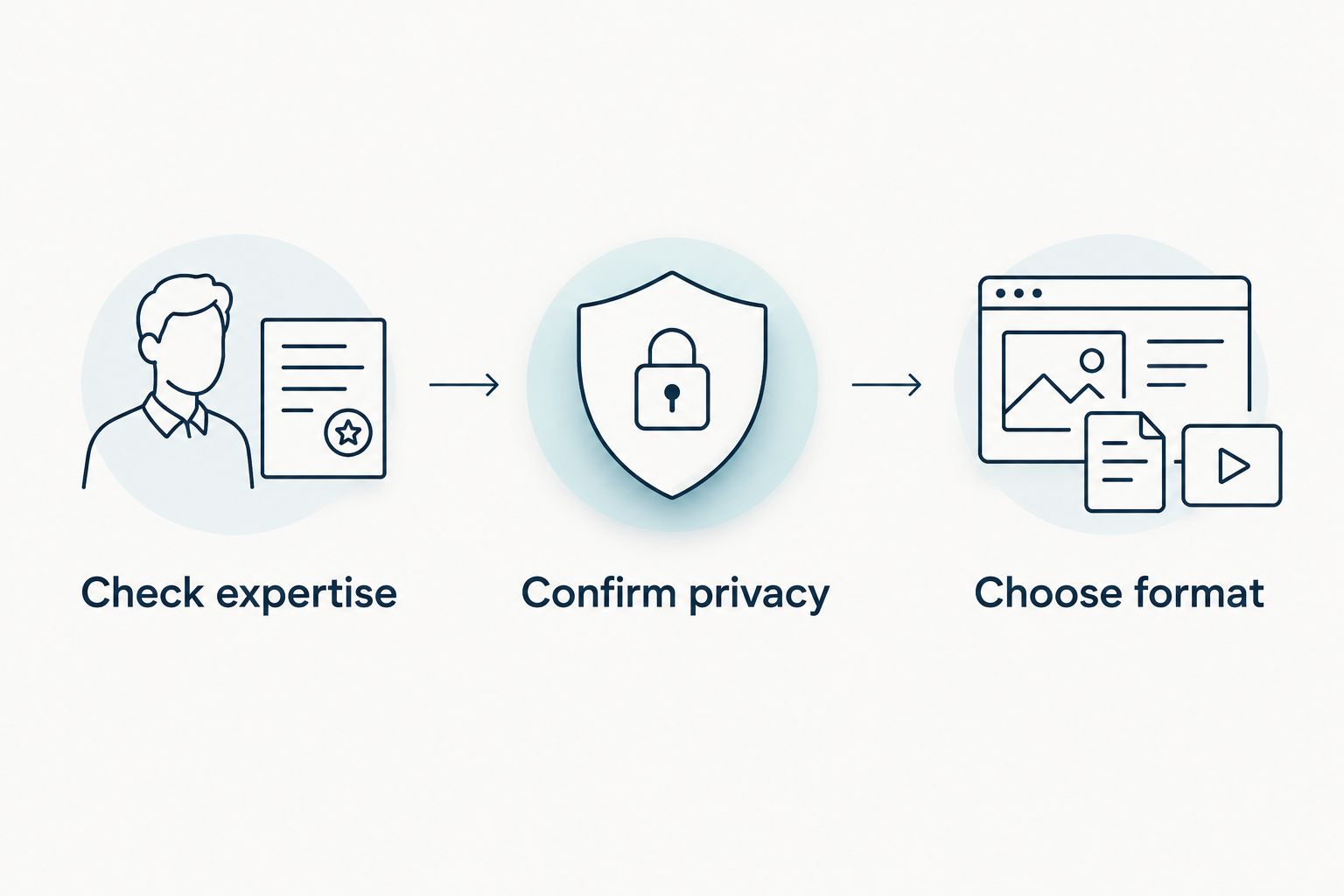
How to choose postpartum support
Check expertise
Ask whether the clinician works with postpartum depression, anxiety and other perinatal mental health concerns. Ask how they assess symptoms and when they refer to another professional. A license matters, but it does not answer every question about specialist experience.
Confirm privacy
Ask how confidentiality works, what its limits are and how records or messages are handled. For remote sessions, decide where you can speak without being overheard. For groups, ask about participant rules before sharing personal details.
Choose format
Choose video, voice, chat or in-person care according to the conversation you need and the privacy you can arrange. Ask how the chosen format works in practice. Do not assume that a messaging option includes immediate replies or urgent support.
These checks keep your decision focused on care rather than convenience alone. Confirm expertise first, privacy next and the practical session arrangement before booking.
When reading or peer support is not enough
The baby blues commonly resolve within about 2 weeks after birth. Persistent symptoms, worsening distress or difficulty functioning deserve clinical attention; you do not need to wait for a deadline before asking for help. Postpartum depression can occur during the first 12 months after childbirth, not only immediately after delivery.
A 14-day symptom history is useful to describe to a clinician, but it is not a self-diagnosis test or a waiting requirement. Tell the clinician when symptoms began, how they affect your day and whether they are getting worse. Describe sleep problems separately from the interruptions caused by caring for your baby.
Seek urgent local medical help for hallucinations, severe confusion, unusual beliefs or thoughts of harming yourself or your baby. If you cannot keep yourself or your baby safe, contact emergency services or go to the nearest emergency department and ask a trusted person to stay with you. Do not wait for an online session or group meeting.
FAQ
What's the best Postpartum Progress alternative for African mothers in 2026?
Innersparkafrica is a practical alternative for online therapy with licensed African therapists, provided you confirm postpartum expertise. Postpartum Support International suits peer connection, while a maternity care team is the route for clinical assessment.
Is Postpartum Progress the same as postpartum therapy?
No. Postpartum Progress provides educational content and lived-experience perspectives; therapy involves a clinical relationship focused on your individual concerns.
Can I use a peer-support group instead of a therapist?
A peer-support group is not a replacement for clinical assessment or treatment. Use it for connection, and seek professional care when symptoms persist, worsen or affect daily life.
What should I ask before booking an online postpartum therapist?
Ask about postpartum experience, professional credentials, confidentiality and referral arrangements. Also confirm the session format, your preferred language and whether the clinician can work with someone in your country.
Can postpartum depression start months after childbirth?
Yes, postpartum depression can occur during the first year after childbirth. Seek assessment when symptoms affect your wellbeing or daily functioning rather than dismissing them because delivery was months ago.
When do postpartum symptoms need urgent medical help?
Hallucinations, severe confusion, unusual beliefs or thoughts of harming yourself or your baby need urgent medical help. Contact local emergency services or attend the nearest emergency department rather than waiting for routine online support.
One last thing
The most useful question is not which resource is best, but who will assess you and follow up. In 2026, use educational content to prepare for care, not to postpone it. Before ending an assessment, ask what happens next, who is responsible for follow-up and what you should do if symptoms worsen.


