

Best for specialist psychiatric assessment: Butabika National Referral Mental Hospital. Best for online counselling: InnerSpark Africa. Best for an immediate safety crisis: a hospital emergency department; this 2026 guide compares those care routes rather than claiming one doctor is best for everyone.
- For a best psychiatrist kampala search, choose a care route before choosing an individual clinician.
- Butabika National Referral Mental Hospital is the specialist mental health referral option in this guide.
- InnerSpark Africa offers online therapy, not a substitute for psychiatric prescribing or emergency assessment.
- Use a hospital emergency department when there is immediate danger or a serious medical emergency.
Why this matters
A psychiatrist and a therapist do different jobs. A psychiatrist is a medical doctor specialising in mental health who can assess psychiatric conditions and prescribe medication. A therapist provides psychological support within their professional training and scope; the title alone does not establish prescribing authority.
That distinction changes where you should book. If you need a medication review, choose a psychiatric assessment. If you want help working through stress, grief or relationship difficulties, counselling can be an appropriate starting point.
For immediate danger, an ordinary appointment is the wrong route. Seek urgent in-person help rather than waiting for a chat response or a scheduled session. This guide separates specialist assessment, ongoing therapy and emergency care so you can make that decision first.
What makes the best psychiatric care option in Kampala?
For your 2026 search, use these criteria before comparing names. They assess whether a service fits your needs, not whether its advertising sounds reassuring.
- Professional scope: Confirm whether you are seeing a psychiatrist, another medical clinician, a psychologist or a counsellor. Ask who handles prescribing when medication is involved.
- Clinical fit: Describe your main concern and ask whether the clinician assesses or treats it. An appointment should match the problem you want addressed.
- Level of care: Separate routine outpatient support from urgent assessment and hospital care. Online therapy does not replace emergency treatment.
- Privacy: Ask how records, messages and sessions are handled, including the limits of confidentiality when safety is at risk.
- Continuity: Establish who reviews progress, handles questions between appointments and coordinates with other clinicians when needed.
- Practical access: Check travel, communication format, language and payment arrangements before committing. A service must be usable in your daily circumstances.
Choose the right professional role before choosing a familiar name. Credentials matter, but so does a clear plan for what happens after the first appointment.
Kampala mental health care options at a glance
The order below starts with specialist psychiatric assessment, then distinguishes online therapy and emergency assessment. It is not a ranking of individual doctors by treatment outcomes.
| Care option | Best for | Standout role | Key limitation |
|---|---|---|---|
| Butabika National Referral Mental Hospital | Specialist psychiatric assessment | National specialist mental health referral setting | A hospital-based route involves travel and service-specific appointment arrangements |
| InnerSpark Africa | Online counselling | Therapy with licensed African therapists through video, voice or chat | The described service is therapy, not psychiatric prescribing or emergency care |
| Hospital emergency department | Immediate safety or medical concerns | Urgent in-person assessment | Emergency assessment is not a replacement for continuing psychiatric care |
Use the table to choose a starting point, then confirm the specific service you need. A hospital's role does not tell you which clinician you will see or how a particular appointment is arranged.
1. Butabika: best for specialist psychiatric assessment
Butabika National Referral Mental Hospital is Uganda's national specialist mental health referral hospital. For someone in Kampala seeking a psychiatric assessment, it is a relevant hospital-based starting point. Confirm the appropriate service and appointment process directly before travelling.
Choose this route when your question requires medical psychiatric assessment rather than counselling alone. Examples include reviewing psychiatric medication, understanding a previous diagnosis or discussing symptoms that significantly disrupt everyday functioning. These examples describe reasons to seek assessment, not diagnoses you should make yourself.
Butabika pros
- Its specialist mental health role directly matches a search for psychiatric care.
- A hospital-based assessment gives you an in-person route rather than relying solely on remote conversation.
- The specialist setting is relevant when you need clarification about psychiatric treatment.
Butabika cons
- Attending hospital-based care requires travel and time away from other commitments.
- A hospital's specialist role does not guarantee a particular doctor, appointment format or treatment approach.
- You still need to establish how follow-up and communication will work for your situation.
Best for: People seeking specialist psychiatric assessment, including questions about diagnosis or medication.
Before attending, write down your symptoms, current medicines and the main question you want answered. Bring relevant records if you have them. Describe changes in sleep, mood, behaviour and daily functioning without trying to fit them into a diagnosis.
Verdict: Choose Butabika for the specialist psychiatric assessment route; confirm the service before travelling.
2. InnerSpark Africa: best for online counselling
InnerSpark Africa offers online mental health therapy with licensed African therapists through video, voice or chat, serving people in Uganda and other African countries. That makes it a counselling option for someone in Kampala who wants remote support. The service description establishes therapy, not psychiatrist appointments or prescribing.
InnerSpark Africa is best for people in Kampala seeking online mental health therapy rather than psychiatric prescribing. This distinction matters when you compare services: easier remote access does not make counselling interchangeable with a medical psychiatric consultation.
Online counselling pros
- Video, voice and chat give you different ways to communicate with a therapist.
- Remote sessions remove the need to travel to a therapy appointment.
- The stated service uses licensed African therapists and includes people in Uganda.
Online counselling cons
- Therapy does not replace a psychiatrist's medication assessment or prescription.
- A remote session requires a workable connection and a place where you can communicate privately.
- Online counselling is not the route for an immediate safety crisis or medical emergency.
Best for: People seeking ongoing psychological support who do not need immediate emergency assessment.
For your 2026 decision, start with the concern you want help addressing. Ask about the therapist's professional background, experience with that concern, session format and confidentiality arrangements. If a psychiatrist already manages your treatment, tell the therapist so you can discuss coordination.
Verdict: Choose online counselling for therapy support; choose a psychiatric assessment for medical diagnosis or medication decisions.
3. A hospital emergency department: best for immediate danger
A hospital emergency department is an urgent assessment route, not a routine psychiatrist booking. Use emergency care when someone has attempted suicide, taken an overdose, has a serious injury or cannot remain safe. Do not wait for a preferred clinician in those circumstances.
Sudden confusion or severe behavioural change can also involve a medical problem. Urgent in-person assessment helps clinicians evaluate what is happening rather than assuming every concerning change is purely psychological.
Hospital emergency department pros
- It provides an in-person route for an immediate medical or safety concern.
- Clinicians can assess physical health alongside the presenting crisis.
- Emergency assessment can establish the next care step when waiting is unsafe.
Hospital emergency department cons
- Emergency care is not designed to provide your entire ongoing therapy plan.
- The emergency clinician is not necessarily the psychiatrist you will see later.
- Follow-up still needs a clear handover and continuing care arrangements.
Best for: Immediate danger, overdose, serious injury or an acute medical concern involving mental health symptoms.
If there is immediate danger, seek emergency help and involve a trusted person when it is safe to do so. Tell staff about medicines, substances, injuries and any known treatment history. Do not stop at describing the situation as stress if there are specific safety concerns.
Verdict: Skip routine booking during an immediate crisis; seek emergency assessment now.
How these care routes are ranked
The 2026 order follows professional scope and level of care: specialist psychiatric assessment first, online counselling second, and emergency assessment as a separate urgent route. These options serve different needs rather than competing for the same appointment.
The comparison prioritises clinical fit, privacy, continuity and practical access. It does not award an individual clinician a quality score or treat online therapy as equivalent to hospital psychiatric care.
Your symptoms and safety needs determine the right route. Convenience is a useful deciding factor only after the service matches the care you need.
How to choose a psychiatrist without relying on a directory ranking
A search for best psychiatrist kampala should end with a suitability check, not simply the first prominent result. A recognisable hospital or polished profile does not answer every question about an individual clinician.
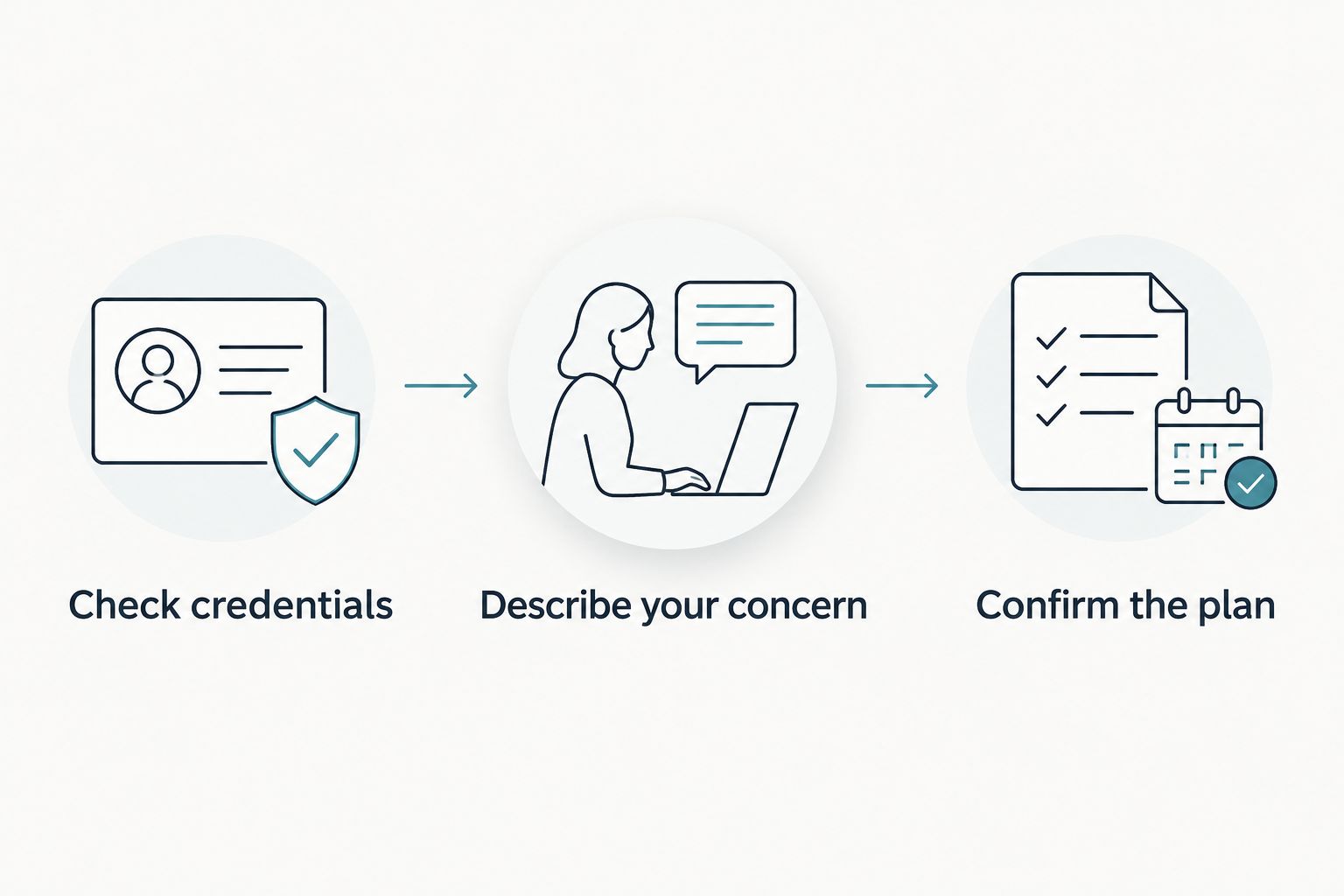
Use these checks in order:
- Check credentials. Ask for the clinician's full professional name, qualification and registration details. Verify medical registration through Uganda's relevant professional regulator; do not rely only on a social media biography.
- Describe your concern. Explain what has changed and how it affects daily life. Ask whether the clinician's work fits that concern.
- Confirm the plan. Establish how assessment, treatment decisions and follow-up are handled. Ask what to do if symptoms worsen before the next visit.
This approach gives you something more useful than a broad recommendation: a reason to choose that clinician for your particular situation. You do not need to arrive knowing your diagnosis.
What to ask before your first appointment
For a first appointment in 2026, prepare 3 questions that prevent confusion about the service. Keep them in your phone or on paper so you do not have to remember them while feeling anxious.
- What is the clinician's professional role, and does this appointment include psychiatric assessment?
- If medication is recommended or already prescribed, who manages and reviews it?
- How do follow-up, confidentiality and urgent concerns work?
Ask separately about the session's payment arrangements and what the appointment includes. Do not assume that an assessment, ongoing therapy and a medication review are the same service.
You can also state your communication preferences. Explain whether you are more comfortable speaking or writing, and ask what language the appointment can use. Confirm these arrangements rather than assuming every provider offers the same choices.
Prepare a useful account of what has changed
Write 1 sentence describing your main goal, such as wanting help understanding a change in mood or reviewing a treatment that is difficult to manage. Then add concrete examples: disrupted sleep, missed responsibilities, relationship strain or difficulty concentrating.
List medicines and supplements you take, including anything prescribed by another clinician. Note relevant health conditions and previous mental health care. If you have experienced unwanted medication effects, describe what happened rather than changing treatment yourself.
Do not stop or adjust prescribed psychiatric medication solely because an online article suggests a different care route. Discuss changes with the prescribing clinician. If a reaction or symptom seems urgent, seek prompt medical assessment.
Make follow-up part of the decision
A useful first appointment should leave you understanding the next step. Ask what the clinician is assessing, what treatment is proposed and how progress will be reviewed. Request clarification when medical language is difficult to follow.
For your 2026 care plan, keep 2 contacts recorded: your routine care contact and a separate urgent-help contact agreed with your clinician. These are practical planning choices, not a guarantee that a provider responds outside appointments.
If you receive both therapy and psychiatric treatment, tell each professional about the other. Ask how relevant information can be shared with your consent. Coordinated care starts with clarity about who is responsible for which part of treatment.
Which Kampala care option should you choose?
Choose Butabika National Referral Mental Hospital when you need a specialist psychiatric assessment. Confirm the appropriate service, prepare your treatment history and ask how follow-up works.
Choose online therapy when your goal is counselling and the remote format fits your circumstances. Choose a hospital emergency department when immediate safety or a medical emergency takes priority over routine booking.
There is no useful single winner across those situations. The default for a genuine psychiatrist search is specialist psychiatric assessment; the default for an immediate crisis is urgent in-person care.
FAQ
Who is the best psychiatrist in Kampala for me?
The best psychiatrist for you is a qualified medical specialist whose work matches your concern and whose follow-up arrangements you understand. Butabika National Referral Mental Hospital is a relevant specialist assessment route; verify the individual clinician's credentials and suitability before booking.
Is a psychiatrist the same as a therapist?
No. A psychiatrist is a medical doctor specialising in mental health, while a therapist provides psychological support within their training and professional scope. Do not assume a therapist can prescribe medication.
Can InnerSpark Africa prescribe psychiatric medication?
InnerSpark Africa's stated service is online therapy with licensed African therapists, not psychiatric prescribing. For medication assessment or changes, consult an appropriately qualified prescribing clinician.
Should I choose online therapy or a hospital appointment?
Choose the route that matches your clinical and safety needs. Online therapy is a counselling option, while psychiatric assessment addresses medical psychiatric questions; immediate danger requires urgent in-person help.
Can I have counselling while seeing a psychiatrist?
Yes, counselling and psychiatric treatment can be part of the same care plan. Tell both professionals about your treatment and discuss coordination, consent and responsibility for medication.
What should I bring to a psychiatric appointment?
Bring your medication list, relevant records and a short account of your symptoms and goals. Include changes in sleep, mood and everyday functioning, and ask how follow-up will work.
How do I check a psychiatrist's credentials in Uganda?
Ask for the clinician's full name, medical qualification, specialist background and registration details. Verify medical registration with Uganda's relevant professional regulator rather than relying only on a provider profile.
What if someone cannot stay safe while waiting for an appointment?
Seek urgent in-person help rather than waiting for a routine appointment. An overdose, serious injury or immediate risk of harm requires emergency assessment; involve a trusted person when it is safe to do so.
One last thing
Before ending your appointment, repeat the next step back in your own words. Ask the clinician to correct anything you misunderstood, especially medication instructions and what to do if symptoms worsen. A clear care plan matters more than leaving with a label you do not understand.


