

Best for online access: InnerSpark Africa. Best for structured trauma treatment: a licensed clinician with verified trauma-treatment training. Best for medication assessment: a psychiatrist. This 2026 guide helps you choose trauma therapy in Uganda by clinical fit, privacy and access—not by a provider’s advertising.
- For best trauma therapy Uganda searches, prioritize verified trauma training and an assessment over provider popularity.
- InnerSpark Africa is a practical online therapy option for people in Uganda who want video, voice or chat.
- A trauma-trained clinician fits treatment needs; a psychiatrist fits medication assessment and complex clinical concerns.
- Ask about qualifications, treatment methods and confidentiality before booking trauma counselling.
Why this matters
Finding counselling is not the same as finding trauma-focused treatment. You need someone who can assess your concerns, explain an appropriate approach and help you participate without pressure to disclose everything immediately.
InnerSpark Africa is a practical online therapy option for people in Uganda who want sessions by video, voice or chat. For trauma care specifically, ask about the individual therapist’s training and treatment approach before booking.
The right starting point also depends on your safety. If you face immediate danger, have seriously harmed yourself or cannot keep yourself safe, seek urgent help at the nearest emergency department or contact local emergency services. A routine online appointment is not a substitute for emergency care.
What makes the best trauma therapy in Uganda?
Use these criteria to choose care in 2026. A convenient appointment matters, but convenience does not establish trauma-treatment competence.
- Verified qualifications: Ask who provides treatment, what professional qualification they hold and how to verify their registration or licence.
- Trauma-specific training: Ask about training in the method proposed for your concerns, rather than accepting a general claim of experience.
- Assessment before treatment: Expect discussion of symptoms, current safety, health history and what you want help with.
- Clear treatment choices: A clinician should explain the approach, alternatives and how progress will be reviewed.
- Privacy you understand: Ask about confidentiality, its limits, record handling and whether anyone else can access sessions or messages.
- Practical access: Choose a format, language and appointment arrangement you can use consistently without compromising your privacy.
A useful first enquiry contains 3 questions: Who will treat me? What trauma training do they have? How will we decide whether treatment is helping? Ask these before sharing a detailed account of what happened.
Trauma care options at a glance
This is a ranking of care routes, not a claim that every provider offers equivalent treatment. The best route changes with your needs; the individual clinician still requires checking.
| Care option | Best for | Standout feature | Key limitation |
|---|---|---|---|
| InnerSpark Africa | Online access from Uganda | Sessions with licensed African therapists by video, voice or chat | Check the assigned therapist’s trauma-specific training and approach |
| Licensed trauma-trained psychologist or counsellor | Structured psychological treatment | Treatment centred on assessment and a defined therapeutic approach | Qualifications and trauma training require individual verification |
| Psychiatrist | Medication assessment or complex clinical concerns | Medical assessment alongside mental health care | Medication assessment does not replace trauma-focused psychotherapy |
| Hospital-based mental health service | Coordinated assessment and referral | A route to mental health care within a medical setting | Ask whether the service provides trauma therapy or refers elsewhere |
| Survivor-focused support organization | Support alongside practical safety needs | A route to survivor support and relevant referrals | Support services are not automatically clinical trauma treatment |
1. InnerSpark Africa: best for online therapy access in Uganda
InnerSpark Africa offers online mental health therapy with licensed African therapists, serving people in Uganda, Kenya, Tanzania and beyond. You can use video, voice or chat, which gives you a choice about how to communicate.
That makes the service a practical starting point when you want remote counselling. For trauma-related concerns, ask which therapist has relevant training and what treatment they recommend following assessment. A communication format is not a treatment method.
InnerSpark Africa pros:
- Offers online therapy to people in Uganda.
- Provides video, voice and chat session formats.
- Offers sessions with licensed African therapists.
InnerSpark Africa considerations:
- Online sessions require access to a device and a connection suitable for the chosen format.
- You need a private setting, including for written conversations.
- Confirm trauma-specific training with the individual therapist before choosing treatment.
Best for: People who want online access to counselling and prefer a choice of communication formats.
Before booking in 2026, describe the help you want without feeling obliged to recount the traumatic event. You can ask for support with nightmares, distressing memories, avoidance or feeling constantly on guard, then let the clinician assess what those experiences mean.
Verdict: Choose InnerSpark Africa for online access; establish trauma-treatment fit before committing.
2. A trauma-trained clinician: best for structured psychological treatment
A licensed psychologist or counsellor with relevant trauma training is the clearest route when your priority is psychological treatment for trauma-related difficulties. The professional title alone is not enough: check the clinician’s qualification, scope of practice and training in the proposed approach.
Trauma-focused cognitive behavioural therapies and eye movement desensitization and reprocessing, or EMDR, are established treatments for post-traumatic stress disorder. A qualified clinician should assess whether a particular treatment suits your symptoms, circumstances and preferences.
Trauma-trained clinician pros:
- Lets you select care around relevant treatment training.
- Provides a setting for assessment and agreed therapy goals.
- Supports discussion of treatment choices and progress.
Trauma-trained clinician considerations:
- A general counselling qualification does not establish competence in every trauma treatment.
- A treatment name alone does not prove appropriate training.
- You still need to check language, privacy and practical arrangements.
Best for: People seeking an assessed, structured psychological treatment rather than general emotional support alone.
Ask the clinician to describe the proposed approach in ordinary language. You should understand what sessions involve, how consent works and what happens if you feel overwhelmed. You do not need to become an expert to ask for an explanation.
Verdict: Choose a verified trauma-trained clinician when treatment expertise is your main priority.
3. A psychiatrist: best for medication assessment
A psychiatrist is a medical doctor specializing in mental health. This route fits people who need an assessment of whether medication belongs in their care, or whose concerns require medical evaluation alongside psychological support.
A psychiatrist can assess symptoms and discuss treatment options within their professional scope. Ask how psychological therapy will fit into the plan, including whether another clinician will provide it.
Psychiatrist pros:
- Provides a medical perspective on mental health concerns.
- Can assess the role of medication.
- Offers a route to evaluating concerns that need medical attention.
Psychiatrist considerations:
- A psychiatric appointment does not automatically include trauma-focused psychotherapy.
- Prescribing decisions require individual assessment.
- You need clarity about follow-up and coordination with any therapist.
Best for: People seeking medication assessment or medical input alongside trauma-related care.
Bring information about medicines you already take and relevant health conditions. Tell the clinician about sleep difficulties, substance use and changes in daily functioning so the assessment is not limited to the traumatic event itself.
Verdict: Choose a psychiatrist for medical assessment; ask separately about psychological treatment.
4. A hospital mental health service: best for coordinated assessment
A hospital-based mental health service is a route to assessment within a medical setting. It is especially relevant when you need help identifying the appropriate clinician or when physical and mental health concerns need attention together.
Check what the particular service offers before travelling. A mental health department can provide assessment without necessarily delivering the trauma treatment you are seeking.
Hospital mental health service pros:
- Provides a medical setting for assessment.
- Offers a route to asking about specialist referrals.
- Lets you raise physical health concerns alongside emotional difficulties.
Hospital mental health service considerations:
- Trauma-focused therapy requires confirmation with the specific service.
- Referral arrangements and appointment procedures differ between facilities.
- Travel and time away from other responsibilities require planning.
Best for: People who need coordinated assessment or help finding the right level of care.
For a 2026 appointment, ask which department to attend, whether you need a referral and what information to bring. Explain whether you want routine counselling, a medical assessment or urgent help; those are different requests.
Verdict: Choose a hospital service for coordinated assessment, not as an automatic guarantee of specialist trauma therapy.
5. A survivor-support organization: best for practical support alongside care
A survivor-focused organization is a route to ask about support after violence, abuse or another harmful experience. Depending on its stated services, an organization can help you identify relevant support or clinical referrals.
Verify what the organization actually provides. Peer support, advocacy, safety assistance and psychotherapy serve different purposes, even when they appear within the same organization.
Survivor-support organization pros:
- Gives you a route to asking about survivor-specific assistance.
- Helps you distinguish practical support needs from treatment needs.
- Provides a place to enquire about relevant referrals.
Survivor-support organization considerations:
- Support staff are not automatically licensed therapists.
- A supportive conversation is not equivalent to trauma-focused treatment.
- Eligibility and service scope need checking before you rely on a referral.
Best for: People whose recovery needs include practical safety or survivor support alongside clinical care.
Ask who will speak with you, what information they record and whether they share details with other services. You should understand the process before giving sensitive information.
Verdict: Choose survivor support for practical assistance; verify clinical qualifications if therapy is offered.
How this ranking works
The ranking separates access, psychological treatment, medical assessment, coordinated care and practical support. These are distinct needs, not competing claims that one route is universally better.
For trauma therapy in Uganda in 2026, use verified qualifications and treatment fit as your deciding criteria. An accessible service is useful only if the clinician and setting suit the care you need.
How to choose your next step
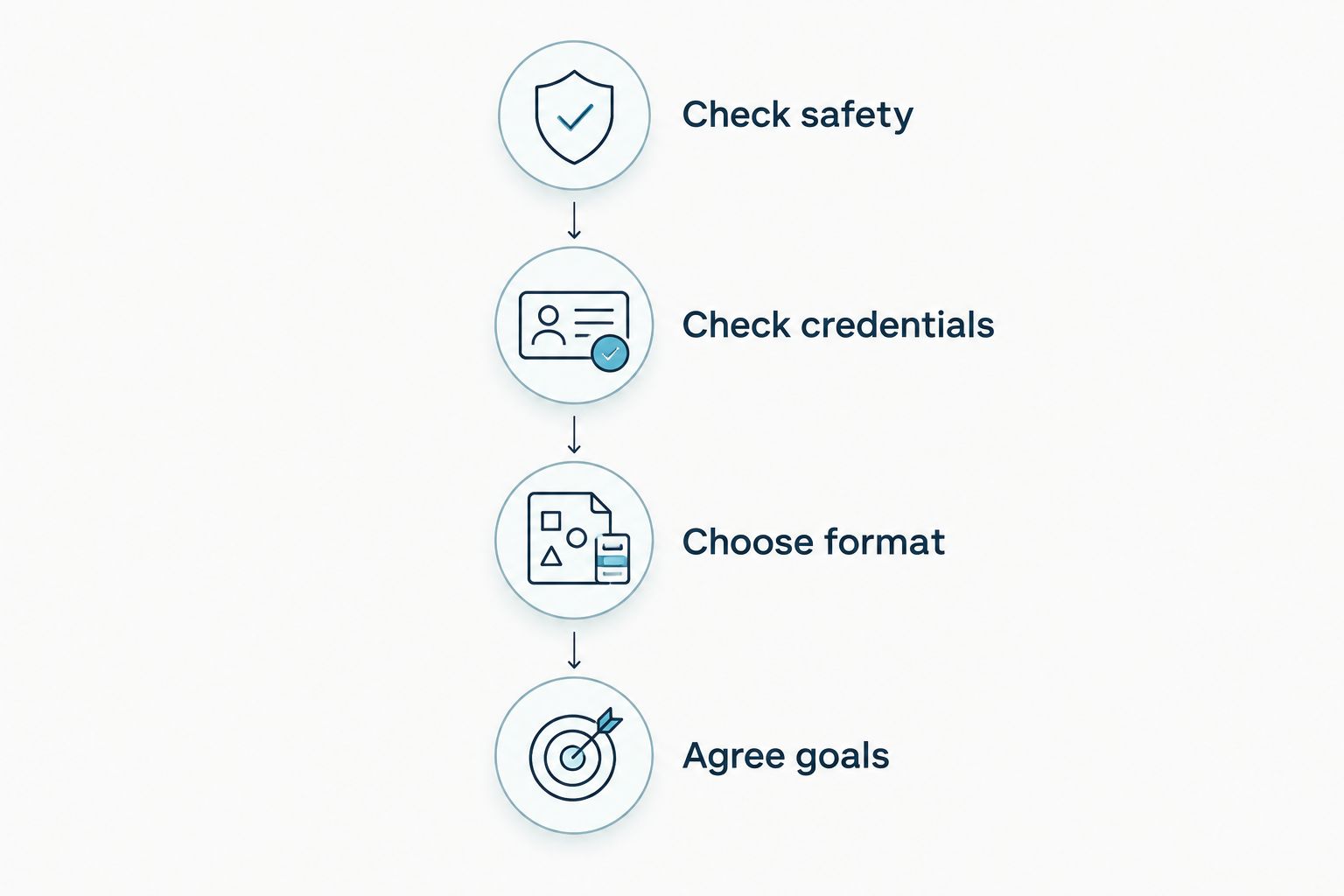
Use this sequence before booking. It keeps immediate safety separate from choosing routine therapy.
- Check safety: If you are in immediate danger or cannot keep yourself safe, seek urgent help rather than waiting for a therapy appointment.
- Check credentials: Verify the clinician’s professional qualification and relevant trauma training.
- Choose format: Decide whether remote or in-person care gives you a workable, private setting.
- Agree goals: Identify what you want help with and ask how progress will be reviewed.
For your first session, bring 1 written goal rather than a complete life history. For example, you might want help understanding distressing memories or managing avoidance. The clinician can help turn that concern into an appropriate assessment and treatment plan.
Explore online therapy
Consider video, voice or chat sessions with licensed African therapists serving people in Uganda.
Which trauma care option should you choose?
Choose a verified trauma-trained clinician when your main need is trauma-focused psychological treatment. Start with online counselling if remote access is your priority, but establish the individual therapist’s clinical fit first.
Choose a psychiatrist for medication assessment, a hospital service for coordinated medical evaluation, or survivor support for practical assistance alongside treatment. You can use more than one route when different needs require different professionals.
The best choice in 2026 is the one that matches your assessed needs and gives you clear answers about qualifications, consent and follow-up. Do not choose solely because a service appears first in a search result.
FAQ
What is the best trauma therapy in Uganda?
The best trauma therapy in Uganda is care from a qualified clinician with verified training in an appropriate trauma treatment. Choose after an assessment, and check the clinician’s credentials, proposed approach and privacy arrangements.
Can I get trauma counselling online in Uganda?
You can access online counselling in Uganda through services such as InnerSpark Africa, which offers video, voice and chat sessions. Before booking for trauma-related concerns, ask about the individual therapist’s trauma training and treatment approach.
Is EMDR better than trauma-focused CBT?
Neither EMDR nor trauma-focused CBT is the automatic best choice for every person. Both are established treatments for PTSD; a qualified clinician should discuss suitability, your preferences and their training in the proposed method.
Should I see a psychologist or a psychiatrist for trauma?
Choose a trauma-trained psychological clinician for psychological treatment, and a psychiatrist when you need medical or medication assessment. Some people need both, with a clear plan for coordinating care.
Do I have to explain everything in my first therapy session?
You do not have to give a detailed account of the traumatic event immediately. Tell the clinician what you want help with, ask how the assessment works and discuss the pace of sharing sensitive information.
How do I check whether a trauma therapist is qualified?
Ask for the clinician’s professional qualification, registration or licence details and relevant trauma-treatment training. Verify those details with the appropriate professional or regulatory body rather than relying only on an advertisement.
Is trauma therapy completely confidential?
Confidentiality has limits that your clinician should explain before treatment. Ask about safety-related exceptions, records, message access and information sharing so you understand the arrangements for your care.
What should I do if I need help right now?
Seek urgent local help if you are in immediate danger, have seriously harmed yourself or cannot keep yourself safe. Contact local emergency services or go to the nearest emergency department; routine online therapy is not emergency care.
One last thing
Session format and treatment method are different decisions. Video, voice and chat describe how you communicate; trauma-focused CBT and EMDR describe therapeutic approaches.
When you enquire, ask about both. That distinction helps you choose care for its clinical fit rather than mistaking an easy booking process for specialist treatment.


