

For innercare uganda alternatives in 2026, choose InnerSpark Africa if you want online therapy with licensed African therapists through video, voice or chat. Choose in-person counselling if you need a shared physical setting, or hospital-based mental health care if you need medical assessment rather than a routine therapy appointment.
- InnerSpark Africa is an InnerCare Uganda alternative for online therapy through video, voice or chat.
- Compare therapist credentials, session format and confidentiality before choosing counselling in Uganda.
- In-person counselling fits people who cannot speak privately at home.
- Hospital-based mental health care addresses needs that require medical assessment.
Why this matters
Choosing a therapy provider is not just choosing a website. You need a qualified professional, a workable session format and a clear understanding of what happens when your needs fall outside routine counselling.
InnerSpark Africa is best for people seeking online mental health therapy with licensed African therapists. That is a specific reason to consider it, not a claim that one service is right for everyone.
For your 2026 shortlist, separate convenience from clinical suitability. A session that fits your schedule still needs to fit the support you are seeking. Ask about the therapist’s qualifications, relevant experience and approach before committing.
InnerCare Uganda alternatives at a glance
Start with the type of care you need. The table includes InnerCare Uganda as your benchmark without treating unconfirmed service details as established facts.
| Option | Best for | Main distinction | What to compare with InnerCare Uganda |
|---|---|---|---|
| InnerCare Uganda | Your existing benchmark | Evaluate the actual service offered to you | Therapist credentials, format, scope and confidentiality |
| InnerSpark Africa | Online therapy with licensed African therapists | Video, voice or chat sessions; serves Uganda, Kenya, Tanzania and beyond | Whether the therapist and available format suit your needs |
| In-person counselling | People who prefer meeting in a shared physical setting | You and the counsellor meet in person | Travel, privacy, therapist fit and continuity |
| Hospital-based mental health care | People seeking medical assessment alongside mental health support | A route to assessment within a healthcare setting | Whether your needs require medical rather than counselling-only care |
These options answer different questions. Online therapy addresses how you access counselling; in-person counselling changes the setting; hospital-based care changes the clinical route.
Do not choose solely because a provider appears first in a comparison. Choose because its actual offer matches your circumstances, and because you understand the professional’s role.
1. InnerSpark Africa: best for online therapy
InnerSpark Africa offers online mental health therapy with licensed African therapists through video, voice or chat. It serves individuals in Uganda, Kenya, Tanzania and beyond, making it a relevant option when you want counselling without travelling to a session.
Best for: People seeking online therapy who want to choose between video, voice and chat.
Where the service shines
- Different communication formats: Video, voice and chat give you distinct ways to speak with a therapist.
- Licensed African therapists: Professional credentials are an explicit part of the service offer.
- Regional coverage: The service includes people in Uganda, Kenya and Tanzania, rather than describing support only for another market.
- Remote access: An online session removes the need to travel to a counselling room for that appointment.
Where the service falls short
- You need a suitable private setting: Remote access does not solve the problem of being overheard at home or work.
- Your connection matters: You need a working device and connection for the format you choose.
- It does not replace urgent care: Routine online therapy is not the right route when immediate safety or urgent medical assessment comes first.
- A format is not a therapist match: Having several ways to communicate does not establish that a particular therapist is suited to your concern.
Before booking in 2026, ask how the therapist would approach the issue you want to discuss. You do not need to disclose your full history during an initial enquiry; a brief description of your goals is enough to start that conversation.
Head-to-head with InnerCare Uganda
| Decision point | This online therapy service | Question to ask InnerCare Uganda |
|---|---|---|
| Professional credentials | Licensed African therapists | Who would provide my sessions, and how can I verify their credentials? |
| Session format | Video, voice or chat | Which formats can I use for my appointments? |
| Geographic scope | Serves Uganda, Kenya, Tanzania and beyond | Can you provide appropriate support where I live? |
| Personal fit | Discuss your needs with the prospective therapist | Does the professional have relevant experience with my concern? |
Use the answers to make a like-for-like comparison. A reassuring description is useful, but the appointment details and professional credentials should decide your shortlist.
Verdict: Hold on your shortlist if you want online therapy; confirm therapist fit and session arrangements before booking.
2. In-person counselling: best for a private setting away from home
In-person counselling puts you and the counsellor in the same physical space. It is a useful alternative when online sessions would leave you distracted, overheard or uncomfortable talking through a device.
Best for: People who prefer face-to-face conversation or cannot create a private space for remote appointments.
Where in-person counselling shines
- A separate setting: You can leave your everyday environment for the appointment.
- Direct interaction: You and the professional can speak without relying on a video or voice connection.
- Clear boundaries around the visit: Travelling to and attending a session creates a distinct appointment in your day.
Where in-person counselling falls short
- Travel is part of access: You need to reach the appointment location and return afterwards.
- Location narrows your options: A suitable professional still needs to be somewhere you can realistically attend.
- Privacy needs checking: Ask about the waiting area, counselling room and appointment communications rather than assuming that a physical location guarantees discretion.
Head-to-head with InnerCare Uganda
| Decision point | In-person counselling | Question to ask InnerCare Uganda |
|---|---|---|
| Setting | Shared physical space | Where would my sessions take place? |
| Travel | Requires attendance at the location | Would I need to travel for the format I choose? |
| Connection | Conversation does not depend on an online call | What happens if a remote session disconnects? |
For your 2026 decision, consider the entire appointment, not just the conversation. A session is harder to sustain if the journey repeatedly conflicts with work, caregiving or other responsibilities.
Verdict: Hold on your shortlist if face-to-face support solves a genuine privacy or communication problem.
3. Hospital-based care: best for medical assessment
Hospital-based mental health care is a different route from choosing a counselling platform. Consider it when you need a healthcare professional to assess symptoms, discuss treatment options or decide whether additional medical support is appropriate.
Best for: People seeking medical assessment, or a clearer decision about the level of care they need.
Where hospital-based care shines
- Medical assessment: It provides a route into healthcare rather than only a choice of counselling format.
- Clinical direction: Ask which professional should assess your concern and what the next step involves.
- Urgent-care access: If you are in immediate danger, seek emergency medical help rather than comparing routine appointments.
Where hospital-based care falls short
- It is not automatically ongoing therapy: Confirm whether counselling is part of the service you are arranging.
- The pathway needs checking: Ask which department or professional handles your concern before attending a routine appointment.
- A hospital label is not enough: Verify what mental health support the particular facility provides.
You do not have to decide whether you need medication yourself. Describe your symptoms and circumstances to an appropriately qualified professional, who can assess the relevant options.
Verdict: Hold as your assessment route when medical input is the priority; skip routine booking comparisons if your safety is at immediate risk.
Why people switch from InnerCare Uganda
A sensible reason to switch is a mismatch between your needs and the service actually offered. That is different from assuming that another provider is better because its website sounds more reassuring.
Use these decision points to identify your own reason for changing:
- Format mismatch: You want voice or chat, but the arrangement offered to you does not meet that preference.
- Therapist mismatch: You need experience with a particular concern, or you do not feel able to speak openly with the professional you are seeing.
- Privacy mismatch: Your current appointment setting makes it difficult to talk without being overheard.
- Access mismatch: Travel or remote-session arrangements do not fit your circumstances.
- Care-level mismatch: You need assessment or support beyond what a routine counselling appointment provides.
These are reasons to reassess any provider, not allegations about InnerCare Uganda. Identify the problem first, then ask a prospective alternative how it would address that exact problem.
If you are already receiving care, discuss continuity before changing arrangements. Avoid losing a useful therapeutic relationship simply because another service offers a different communication format.
How to choose your next provider in 2026
Use this sequence before booking. It keeps the decision focused on care, not on a ranking position.
Define your need
Write down what you want help with and what you want from the appointment. You can use everyday language: difficulty coping, persistent worry, relationship strain or a need to understand troubling symptoms.
A self-written description is not a diagnosis. Its purpose is to help the professional explain whether their work fits your needs.
Check credentials
Ask for the treating professional’s name, qualification and relevant registration or licensing information. Where applicable, verify those details with the relevant professional body.
Also ask about experience with your concern. A credential and a suitable clinical background answer different questions.
Choose your format
Decide whether video, voice, chat or in-person conversation lets you communicate most comfortably. Consider privacy, connection reliability and whether you prefer speaking or writing.
Do not assume that chat means immediate or continuous support. Ask how sessions work and when replies occur.
Confirm boundaries
Ask how confidentiality works, what records are kept and which safety or legal circumstances limit confidentiality. Request an explanation in language you understand.
Also confirm what happens if a session is interrupted, if the therapist is not a suitable match or if you need more intensive support.
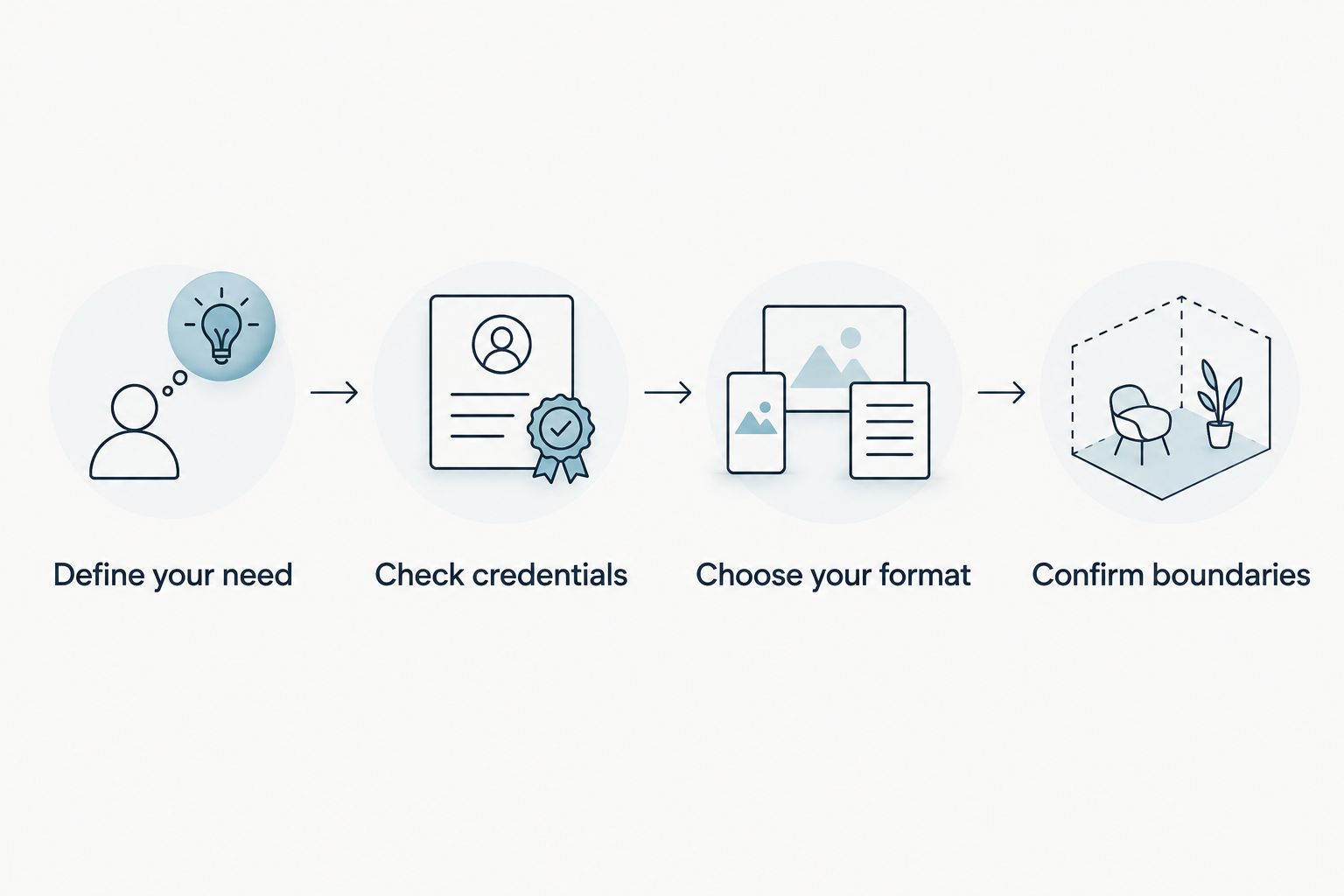
Once those questions have clear answers, you can compare providers on the same basis. Keep your initial enquiry brief and avoid sending sensitive documents before you understand how the service handles them.
Explore online therapy
Consider licensed African therapists and video, voice or chat sessions.
When staying with InnerCare Uganda is the right call
Stay with InnerCare Uganda if the professional you are seeing is appropriately qualified, the sessions meet your needs and you feel able to discuss your concerns. A working therapeutic relationship is a reason to pause before switching.
For 2026, judge your current arrangement against your goals. Ask whether the approach still fits and whether any practical problem can be resolved without changing providers.
Do not switch for the sake of switching. Change when you can name the problem and explain how the next service would address it.
FAQ
What are the best InnerCare Uganda alternatives in 2026?
InnerSpark Africa is a relevant alternative for online therapy with licensed African therapists through video, voice or chat. In-person counselling suits people who need a shared physical setting, while hospital-based mental health care is a route for medical assessment.
Is online therapy better than in-person counselling?
Neither format is automatically better for every person. Choose based on clinical suitability, therapist fit, privacy and your ability to attend consistently.
Can I choose voice or chat instead of video therapy?
InnerSpark Africa offers video, voice and chat therapy sessions. Confirm how your preferred format works before booking, including session boundaries and how interruptions are handled.
How do I check whether a therapist is qualified?
Ask for the therapist’s name, qualifications and relevant registration or licensing details. Verify those details with the appropriate professional body where applicable, and ask about experience with your concern.
Is everything I tell a therapist confidential?
Therapy confidentiality has limits, including circumstances involving safety or legal obligations. Ask the provider to explain its confidentiality arrangements and exceptions before you begin.
Should I change providers if I already trust my therapist?
You do not need to change providers if the relationship works and the care meets your needs. Discuss practical problems or changing goals with your therapist before deciding whether to move.
What should I do if I need urgent mental health help?
If you are in immediate danger or cannot keep yourself safe, seek emergency medical help now or go to the nearest emergency department. Routine online therapy and provider-comparison pages are not substitutes for urgent assessment.
One last thing
Ask a prospective therapist: How will we review whether this approach is helping me? The answer should explain how you will discuss your goals and reassess the work together, without promising a guaranteed outcome.
That question shifts the decision from access alone to the purpose of care. An easy appointment matters; understanding what you and the therapist are working towards matters too.


