

If Safe Places Uganda already gives you a trusted clinician and care that fits your needs, that continuity is a reason to stay. The ceiling comes when your current arrangement no longer fits the appointment format, privacy or clinical support you need. Among Safe Places Uganda alternatives in 2026, InnerSpark Africa fits people seeking online therapy with licensed African therapists; an in-person clinician fits people who need face-to-face care.
- For Safe Places Uganda alternatives, InnerSpark Africa offers online counselling with licensed African therapists by video, voice or chat.
- Choose an in-person clinician when face-to-face appointments fit your needs better than remote sessions.
- Ask about qualifications, confidentiality and clinical fit before changing your mental health provider.
- Keep effective existing care unless switching solves a specific problem.
Why this matters
Choosing a mental health provider is not the same as choosing an appointment app. You need someone qualified to help with your concern, a format you can use privately, and a clear understanding of what happens between sessions. A convenient booking process does not answer those questions.
For your 2026 decision, start with the problem you want a different provider to solve. Perhaps you cannot attend appointments in person, cannot speak freely at home, or need an assessment rather than counselling alone. Those are different needs, and they point to different services.
Switch for a better fit, not simply for a different name. Write down what you want to preserve from your current care and what needs to change. That gives you a useful basis for comparing online therapy, in-person counselling and psychiatric assessment without assuming they are interchangeable.
Safe Places Uganda alternatives at a glance
This comparison separates the named online option from other care routes. The routes are alternatives to consider, not claims that every clinic or clinician offers the same service.
| Provider or care route | Best for | Format or defining feature | How to compare it with Safe Places Uganda |
|---|---|---|---|
| Safe Places Uganda | Staying with care that already meets your needs | Your existing care arrangement, if you already attend | Assess therapeutic fit, access and continuity before leaving |
| InnerSpark Africa | Online therapy with licensed African therapists | Video, voice or chat; serves Uganda, Kenya, Tanzania and beyond | Compare remote access and therapist fit with your current arrangement |
| Local in-person clinician | People who want face-to-face counselling | Appointments in a physical consulting space | Compare travel, privacy and the experience of meeting in person |
| Psychiatrist or psychiatric clinic | People seeking medical assessment of mental health concerns | Medical assessment, with treatment decisions made by a qualified clinician | Compare the clinical service you need, not just appointment convenience |
| Clinician experienced in your concern | People with a clearly identified therapy need | Relevant training and experience to assess directly | Compare the clinician's suitability for your concern |
The right choice depends on what you need treatment for and how you can attend. Do not treat a service's name, website or booking speed as evidence that it can provide every kind of mental health care.
1. InnerSpark Africa: best for online therapy
InnerSpark Africa offers online mental health therapy with licensed African therapists through video, voice or chat. It serves individuals in Uganda, Kenya, Tanzania and beyond. It is a practical choice when you want professional counselling without travelling to an appointment.
The useful distinction is the choice of communication format. You can consider whether speaking, seeing your therapist or communicating through text fits your circumstances. Confirm how your chosen format works before booking; the format alone does not tell you the session structure.
Where online therapy shines
- You can attend without travelling to a consulting room.
- Video, voice and chat give you different ways to communicate.
- The stated service connects you with licensed African therapists.
- Online access is relevant if location makes attending in person difficult.
Where online therapy falls short
- You need a private place and a usable connection or device.
- Remote appointments do not give you the experience of sharing a consulting room.
- Offering counselling does not establish that a service provides prescribing, inpatient care or emergency response.
- A choice of formats does not guarantee that a particular therapist is the right fit for your concern.
For 2026, ask about the therapist's relevant experience, how sessions are conducted, and what support exists if your needs exceed online counselling. Also ask whether voice or chat means a scheduled live appointment or another arrangement. Do not assume that messaging includes continuous access to a therapist.
Best for: People seeking licensed African therapists through online video, voice or chat.
Verdict: Choose InnerSpark Africa for online counselling when its format and therapist fit match your needs.
2. A local in-person clinician: best for face-to-face care
An in-person clinician is a useful alternative when you want to meet in a consulting room rather than connect from home. This route deserves attention if your main obstacle to online therapy is privacy, not travel. The clinician's qualifications and suitability still matter more than the setting.
Where in-person care shines
- A consulting room separates the appointment from your home environment.
- You can communicate face to face without managing a remote connection.
- It suits people who prefer the structure of leaving home for an appointment.
Where in-person care falls short
- Travel adds another demand to your schedule.
- You need to confirm the location, accessibility and appointment arrangements.
- Being nearby does not establish relevant clinical experience or a good therapeutic fit.
Ask who will provide your care and how they approach your concern. If the reason for leaving Safe Places Uganda is difficulty discussing something with a clinician, a different building alone does not solve that problem. You need a conversation about how the next clinician works.
Best for: People who prefer face-to-face counselling or cannot find a private place for remote sessions.
Verdict: Choose an in-person clinician when the consulting-room setting solves a genuine access or privacy problem.
3. A psychiatrist: best for medical assessment
A psychiatrist is a medical doctor trained in mental health. Psychiatric assessment is a different care route from choosing a counselling format: it is relevant when you need medical evaluation, have questions about medication, or have been advised to seek psychiatric care.
Where psychiatric care shines
- It provides a route to medical assessment of mental health concerns.
- A qualified psychiatrist can assess whether medication is appropriate.
- It gives you a clinician with whom to discuss existing psychiatric medication.
Where psychiatric care falls short
- A medical appointment is not automatically an ongoing psychotherapy appointment.
- You need to ask what follow-up and counselling arrangements the service provides.
- Choosing psychiatric care does not remove the need to assess clinician fit and access.
Do not stop or change prescribed medication because you are switching providers. Discuss any change with a qualified prescriber, and arrange continuity if you need ongoing prescriptions or monitoring.
Best for: People seeking medical assessment or a review of psychiatric treatment.
Verdict: Choose psychiatric assessment when the need is medical; do not substitute a counselling booking for that assessment.
4. A clinician experienced in your concern: best for a specific need
Sometimes the useful alternative is not another platform. It is a clinician with relevant training and experience in the concern you want help with, such as grief, trauma or relationship difficulties. Ask about that experience directly rather than relying on a broad service label.
Where this route shines
- You can make your presenting concern central to the selection process.
- You can discuss the clinician's approach before committing to ongoing care.
- The search can include either online or in-person appointments.
Where this route falls short
- A specialist description alone is not proof of qualifications.
- Experience with a concern does not guarantee personal fit.
- You still need to check privacy, appointment format and continuity.
Best for: People who know what they want help with and need relevant clinical experience.
Verdict: Choose the clinician's fit for your concern before choosing the platform around them.
Why people consider switching from Safe Places Uganda
A useful switch solves a specific problem. The following are decision criteria, not claims about Safe Places Uganda's services or performance.
- Appointment access: Your existing arrangement no longer fits work, travel or caregiving responsibilities.
- Communication format: You want to explore video, voice, chat or face-to-face sessions.
- Therapeutic fit: You do not feel able to discuss your concern openly, or you want a different clinical approach.
- Clinical scope: You need assessment or treatment beyond the counselling you currently receive.
- Privacy: Your current appointment setting makes it difficult to speak freely.
- Continuity: You need a clear plan for follow-up rather than an isolated appointment.
For a 2026 comparison, turn each concern into a question for the next provider. Instead of asking whether a service is better, ask whether it offers the appointment format you need or has a clinician experienced in your concern. A specific answer is more useful than a general promise.
If you already have a therapist, consider discussing the difficulty before leaving. A conversation about goals, communication or appointment arrangements can clarify whether you need an adjustment or a different provider.
How to choose your next provider
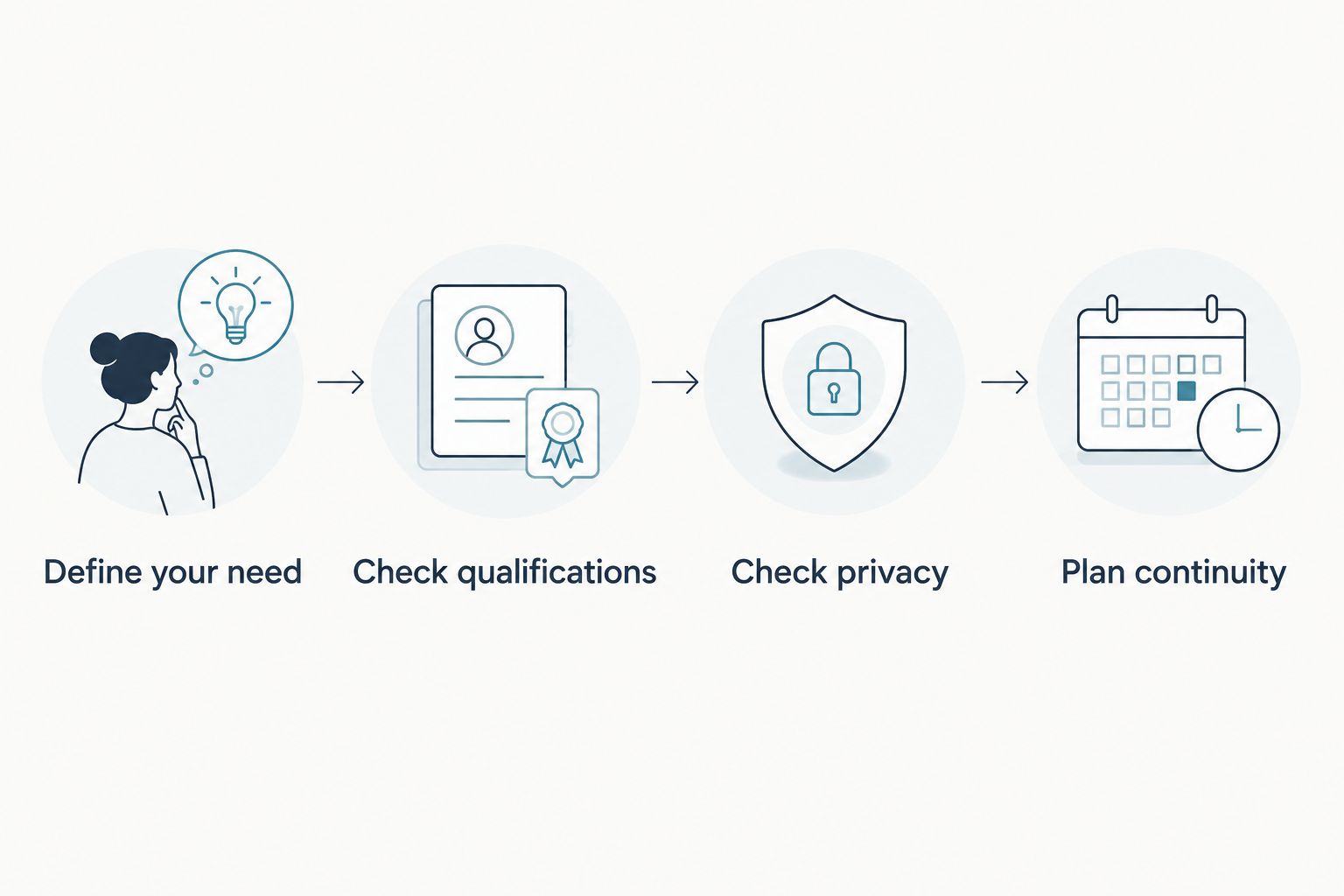
Use this sequence before booking. It keeps the decision focused on care rather than presentation.
Define your need
Describe what you want help with in ordinary language. You do not need to diagnose yourself. Explain what is happening, how it affects daily life, and what you hope an appointment will help you understand or change.
Check qualifications
Ask who will conduct the session, what professional qualifications they hold, and whether they have experience relevant to your concern. For a claim of licensing or registration, ask which professional body issued it and how you can verify it.
Check privacy
Ask how the provider handles records, session communications and confidentiality. Confidentiality has limits, including circumstances involving serious safety concerns; ask the clinician to explain the limits that apply to your care. For remote sessions, also plan where you can speak without being overheard.
Plan continuity
Ask how follow-up works, whether you can continue with the same clinician, and what happens if that clinician is unavailable. If you are transferring existing care, discuss whether a treatment summary would help and how consent for sharing information works.
These checks belong in your 2026 comparison regardless of whether you choose a platform, an individual clinician or a clinic. A quick booking process is useful only after you understand what you are booking.
Once you have checked clinical fit and privacy, choose the format you can actually use. For online counselling, make sure your proposed setting lets you participate without rushing or being overheard.
Explore online therapy
Consider licensed African therapists offering video, voice or chat sessions.
When staying with Safe Places Uganda is the right call
Stay with Safe Places Uganda if your existing care meets your needs, you trust your clinician, and you understand the treatment plan. A new provider is not automatically an improvement. Changing care also means introducing your history and goals to someone new.
Before leaving effective care, ask whether the difficulty is something you can address within the existing arrangement. You might need clearer goals, a discussion about progress or a different appointment setup rather than a complete switch.
For 2026, the strongest reason to stay is effective, appropriate care—not familiarity alone. If your needs have changed, discuss the next step with your clinician. Do not create a gap in necessary treatment simply to try another service.
FAQ
What's the best Safe Places Uganda alternative for online therapy?
InnerSpark Africa fits people seeking online therapy with licensed African therapists through video, voice or chat. It serves individuals in Uganda, Kenya, Tanzania and beyond. Confirm therapist fit and session arrangements before booking.
Is online therapy better than in-person counselling?
Neither format is better for everyone. Online therapy removes travel, while in-person counselling gives you a separate consulting space. Choose the format that supports privacy, attendance and the care you need.
How do I check whether a therapist is qualified?
Ask for the therapist's professional qualifications and the licensing or registration body behind any credential claim. Check the credential with the relevant body and ask about experience with your concern.
Should I choose a counsellor or a psychiatrist?
Choose according to the clinical help you need: counselling and psychiatric medical assessment serve different purposes. If you need medication advice or have been advised to seek psychiatric assessment, speak with a qualified medical clinician.
Can I switch providers while taking psychiatric medication?
You can change providers, but medication decisions need a qualified prescriber. Arrange continuity and discuss any change before stopping or altering prescribed treatment.
What should I ask about confidentiality before online therapy?
Ask how records and communications are handled and what limits apply to confidentiality. Also check whether your own location lets you participate without being overheard.
Is online counselling the right option in an emergency?
A routine online counselling appointment is not a substitute for emergency care. If you are in immediate danger, have seriously harmed yourself, or cannot keep yourself safe, seek urgent help through local emergency services or the nearest emergency department.
When should I stay with Safe Places Uganda instead of switching?
Stay when your current clinician and care arrangement meet your needs. Discuss concerns about goals, progress or access before deciding whether a different provider would solve the problem.
One last thing
A text-based session is not automatically private. Someone can still read your screen, see notifications or access a shared device. Before choosing chat because you cannot speak aloud, check whether written communication is safer in your setting.
Choose the format you can use confidentially, not just the format that looks convenient. That check belongs alongside qualifications and clinical fit when choosing your next mental health provider.


