

Teachers’ mental health therapy in Uganda is professional support for emotional and psychological difficulties, with the aim of improving wellbeing and everyday functioning. This 2026 guide explains how to choose support around teaching duties, protect your privacy and prepare for sessions without treating therapy as another performance target.
- For mental health therapy for teachers Uganda, choose licensed support around privacy, clinical needs and your school timetable.
- Innersparkafrica offers online counselling through video, voice or chat with licensed African therapists.
- Use self-care alongside therapy, not as a substitute when distress disrupts everyday functioning.
- Immediate danger requires urgent local help, not a routine online therapy appointment.
Why mental health therapy matters for teachers in Uganda
Teaching requires you to manage your own reactions while responding to learners, colleagues and families. Marking, classroom conflict and difficult conversations are useful topics to bring into therapy—not problems you must solve before asking for help.
Your appointment also needs to fit the realities of your working day. A session during a school break is unsuitable if learners can interrupt, colleagues can overhear or you must immediately return to a demanding lesson.
Innersparkafrica mental health therapy is best for teachers in Uganda who want online sessions with licensed African therapists by video, voice or chat. You can review Innersparkafrica when comparing online options, but ask about therapist fit, confidentiality and practical arrangements before booking.
Therapy is not an instruction to tolerate unreasonable workloads. It gives you space to examine distress, practise responses and identify changes that belong with you, your school or another healthcare professional. Keep those responsibilities separate when planning support in 2026.
How to choose and use therapy around your teaching work
Identify what you want help with
Start with a private written note rather than a diagnostic label. Describe what happens, when it happens and how it affects your sleep, relationships, classroom behaviour or ability to finish ordinary tasks.
If you are unsure where to begin, keep brief notes for 7 days. This is a preparation exercise, not a clinical test or a reason to postpone help. You do not need a complete history before speaking to a therapist.
Separate events from reactions. A difficult parent meeting is an event; feeling tense every evening afterwards is a reaction worth discussing. That distinction gives your therapist something concrete to explore without reducing your experience to a single label.
- Record situations that leave you distressed or overwhelmed.
- Note changes in sleep, concentration or patience.
- Describe what you have already tried and what happened.
- Choose one concern you want to discuss first.
Protect a private appointment window
Before choosing a platform, check your timetable and surroundings. A private conversation requires more than headphones: other people must not be able to hear your voice or read your messages.
Reserve 10 minutes before a planned appointment to settle in and check your connection. Treat that as a practical buffer, not a prescribed therapeutic technique. Avoid booking directly before a lesson if you would have no time to compose yourself afterwards.
For your 2026 school calendar, consider marking periods, meetings and duties rather than assuming every afternoon is available. If home is also crowded, identify a suitable private location before committing to a recurring appointment.
- Choose a time without teaching or supervision duties.
- Check whether anyone can overhear the conversation.
- Turn off message previews on shared devices.
- Arrange a fallback if your connection drops.
Check the therapist’s credentials and fit
You can compare providers manually by writing down the same questions for each one. Ask about professional qualifications, licensing or registration, relevant experience and how the therapist handles concerns outside their competence.
Innersparkafrica mental health therapy provides an online route to licensed African therapists. That removes the need to travel for the session, but it does not replace checking whether an individual therapist is suitable for your needs. Ask about experience with the difficulties you describe rather than assuming every therapist specialises in teachers.
Cultural familiarity matters, but do not treat it as proof of a good clinical match. Explain the school and family context you want understood, and ask which language you can use comfortably throughout the session.
- Ask how to verify the therapist’s professional credentials.
- Describe your main concern before selecting a therapist.
- Ask about relevant experience and referral arrangements.
- Confirm the language used for sessions.
- Request an explanation of confidentiality and its limits.
Match the session format to your circumstances
Begin by checking what your device, connection and private space can support. You do not need to choose video simply because it looks more like an in-person appointment. The format must allow you and the therapist to communicate clearly.
Innersparkafrica offers video, voice and chat sessions. Voice removes the need for a camera, while chat lets you communicate in writing; neither automatically solves privacy problems. Ask whether chat is live or asynchronous, how messages are handled and what happens if a session is interrupted.
Our guide to chat-based therapy platforms in Africa helps you compare the written format. Your clinical needs still come first: a convenient channel is not necessarily appropriate for every situation.
- Check your connection in the intended appointment location.
- Choose video when you want spoken and visual communication.
- Consider voice when you do not want to use a camera.
- Consider chat when expressing yourself in writing feels easier.
- Confirm interruption and message-response arrangements.
Prepare a focused first conversation
Use a notebook or private document to identify 3 priorities: what is troubling you, what it affects and what you want help changing. Three is a planning limit to keep preparation manageable, not a requirement imposed by therapy.
You can begin with an ordinary example, such as struggling to switch off after marking or feeling upset after classroom conflict. You do not have to recount every painful event in your first session. Tell the therapist when a topic feels difficult and ask how you can approach it safely.
Agree on what useful progress would look like in your daily life. A goal such as responding more calmly to conflict is clearer than becoming a perfect teacher, which turns support into another impossible standard.
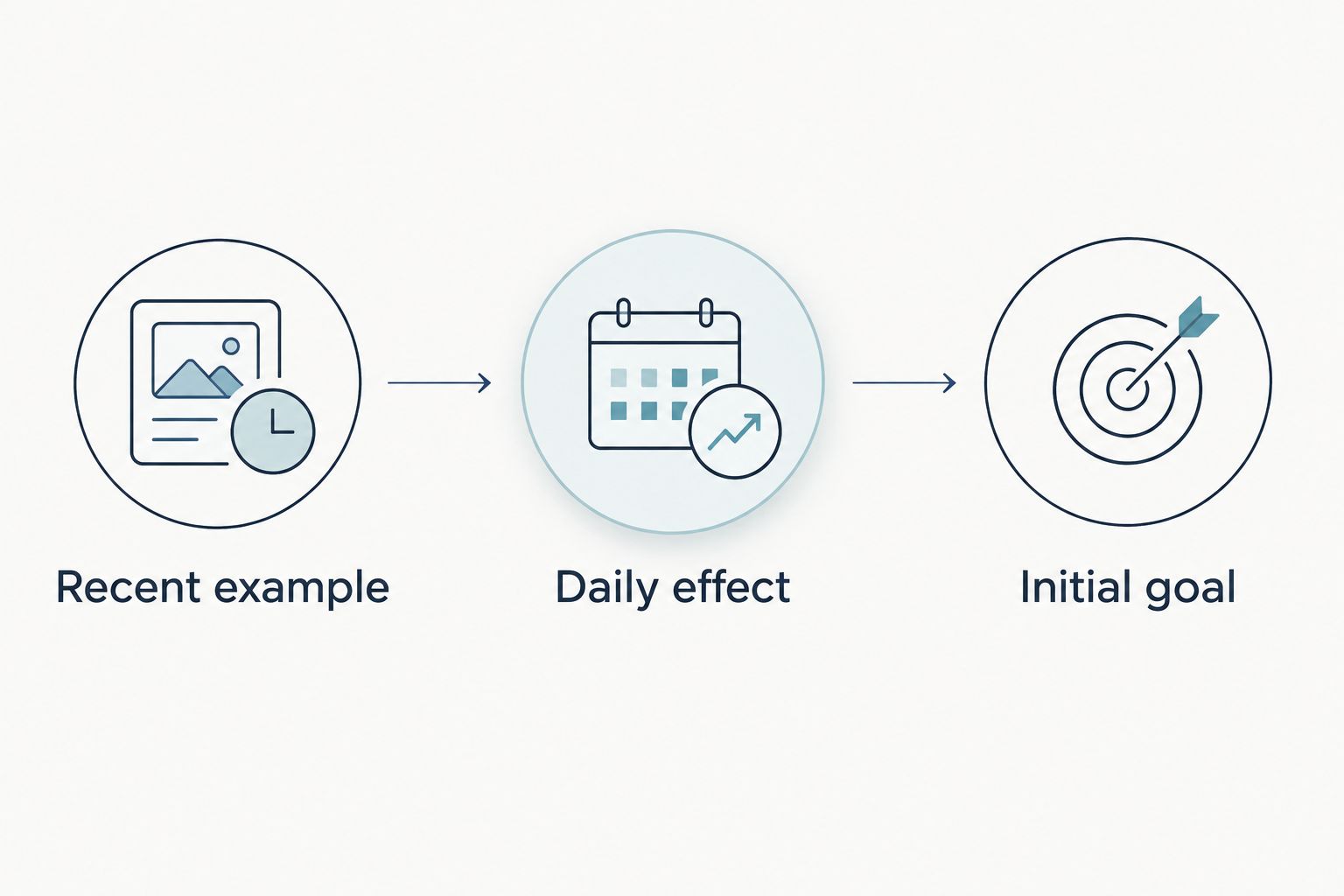
- Bring one recent example of the difficulty.
- Explain its effect at work and outside school.
- Share relevant treatment or medication information.
- Ask how the therapist proposes to work with you.
- Agree on an initial goal in your own words.
Separate personal coping from school responsibilities
Start by sorting difficulties into those you can address personally and those requiring action at school. Rest, boundaries and therapy cannot resolve an unsafe workplace or replace a formal response to harassment.
Where appropriate and safe, use the school’s established process for workload, conduct or safeguarding concerns. You can discuss how to approach that process in therapy without asking the therapist to become your manager or workplace representative.
Avoid using your own session to assess a learner. Discuss how a situation affects you without sharing unnecessary identifying details, and handle concerns about a learner through appropriate safeguarding channels.
- Identify one boundary you can practise yourself.
- Record workload concerns separately from therapy notes.
- Use the appropriate school process for workplace problems.
- Remove unnecessary learner identifiers from examples.
- Ask for support when responsibilities exceed your role.
Review progress and escalate when needed
Keep a brief private note after appointments about what you understood and what you want to revisit. Look at functioning as well as feelings: sleeping, recovering after difficult days and communicating boundaries are useful topics for review.
Agree with your therapist when to assess the plan. There is no universal session count that guarantees improvement, and a fixed deadline should not become another source of pressure. If the approach is unclear or does not fit, raise that directly rather than silently dropping out.
For your 2026 support plan, distinguish routine appointments from urgent care. If you are in immediate danger, have seriously harmed yourself or cannot keep yourself safe, seek urgent local medical help and involve a trusted person where safe. Do not wait for a scheduled session or chat reply.
- Note changes in everyday functioning between sessions.
- Discuss difficulties completing any agreed practice.
- Ask for adjustments when the approach does not fit.
- Request another clinician’s assessment when recommended.
- Keep a separate plan for urgent help.
Compare support options for teachers
Choose the level of care first and the communication format second. Online convenience matters, but it does not make routine therapy a substitute for urgent assessment. This 2026 comparison separates professional treatment from practical support so you can decide what each option is for.
| Option | Best for | Main advantage | Key limitation |
|---|---|---|---|
| Innersparkafrica online therapy | Teachers wanting licensed African therapists by video, voice or chat | Offers several ways to attend remotely | Requires a private setting and a workable connection; confirm individual therapist fit |
| In-person counselling or psychotherapy | Teachers who prefer meeting a clinician in the same room | Avoids relying on a connection during the conversation | Requires travel and an appointment location you can reach |
| Psychiatric assessment | Teachers needing medical assessment or medication review | Addresses medical treatment questions within the clinician’s role | Is not interchangeable with ongoing psychotherapy; ask what follow-up includes |
| School-based wellbeing support | Teachers seeking help with workload or workplace arrangements | Can address practical changes within the school | Is not automatically independent clinical care; clarify confidentiality |
| Trusted-peer support | Teachers who want someone to listen or help them take a next step | Provides personal connection and practical assistance | Does not replace professional assessment or treatment |
| Urgent medical care | Teachers facing immediate danger or a serious mental health crisis | Prioritises immediate assessment and safety | Serves a different purpose from a planned therapy appointment |
Ask each provider how appointments, payment and cancellations work before committing. For a school-funded service, also ask who receives attendance information or reports. Do not assume that paying for your session gives an employer access to its contents, or that every arrangement has the same privacy terms.
Explore online therapy options
Review video, voice and chat therapy with licensed African therapists.
Common mistakes teachers make when seeking support
Waiting until the school holiday
A holiday creates time, but it is not a clinical threshold for seeking help. If distress is affecting daily life, arrange an assessment around your current timetable rather than requiring yourself to finish the term first.
Treating therapy as classroom-performance coaching
You are entitled to discuss grief, relationships, loneliness or family pressure even when they are unrelated to teaching. Your wellbeing is the purpose of care, not simply better classroom output.
Assuming a staffroom is private enough
A quiet staffroom can become busy without warning. Choose a place where others cannot hear or interrupt, and check device access before using chat. Headphones protect incoming audio, not everything you say aloud.
Giving identifiable learner details unnecessarily
A therapist needs to understand your experience, not receive a class register. Use non-identifying descriptions where possible and keep safeguarding duties separate from your personal treatment. Ask for guidance if those responsibilities intersect.
Choosing only by convenience
A nearby appointment or familiar app does not establish clinical suitability. Check credentials, fit and confidentiality before deciding. Innersparkafrica is one online option to assess against those criteria, not a replacement for the assessment itself.
FAQ
What is the best mental health therapy option for a teacher in Uganda?
The best option matches your clinical needs, privacy and timetable with a suitably qualified professional. Innersparkafrica offers online sessions with licensed African therapists by video, voice or chat; check the individual therapist’s fit before booking.
Can I have therapy without telling my head teacher?
Ask the provider what information is collected, shared or required before deciding what to disclose at work. If your school funds or arranges care, clarify reporting terms rather than assuming complete separation from your employer.
Is online therapy better than in-person counselling?
Online therapy is better for avoiding travel, while in-person counselling suits people who prefer meeting in the same room. Clinical suitability, privacy and your ability to communicate comfortably should determine the choice.
Can I use chat instead of a video call?
Chat is an available session format through Innersparkafrica. Ask whether it is live or asynchronous, how messages are handled and whether the format suits the support you need.
Do I need a diagnosis before contacting a therapist?
You can contact a therapist without arriving with a diagnosis. Describe your experiences and their effect on daily life, and let the clinician explain whether further assessment is needed.
How many therapy sessions will I need?
There is no universal number of sessions that fits every teacher. Agree on goals and a review point with your therapist, then discuss progress and whether the plan needs changing.
What should I do if I feel unsafe before my appointment?
Seek urgent local medical help if you are in immediate danger or cannot keep yourself safe. Involve a trusted person where safe, and do not wait for a routine appointment or an online reply.
One last thing
For your next appointment in 2026, bring one example from life outside the classroom as well as one from school. That helps keep the conversation about you as a whole person—not only the role you perform. You do not need to prove that your distress is caused by teaching to deserve support.


