
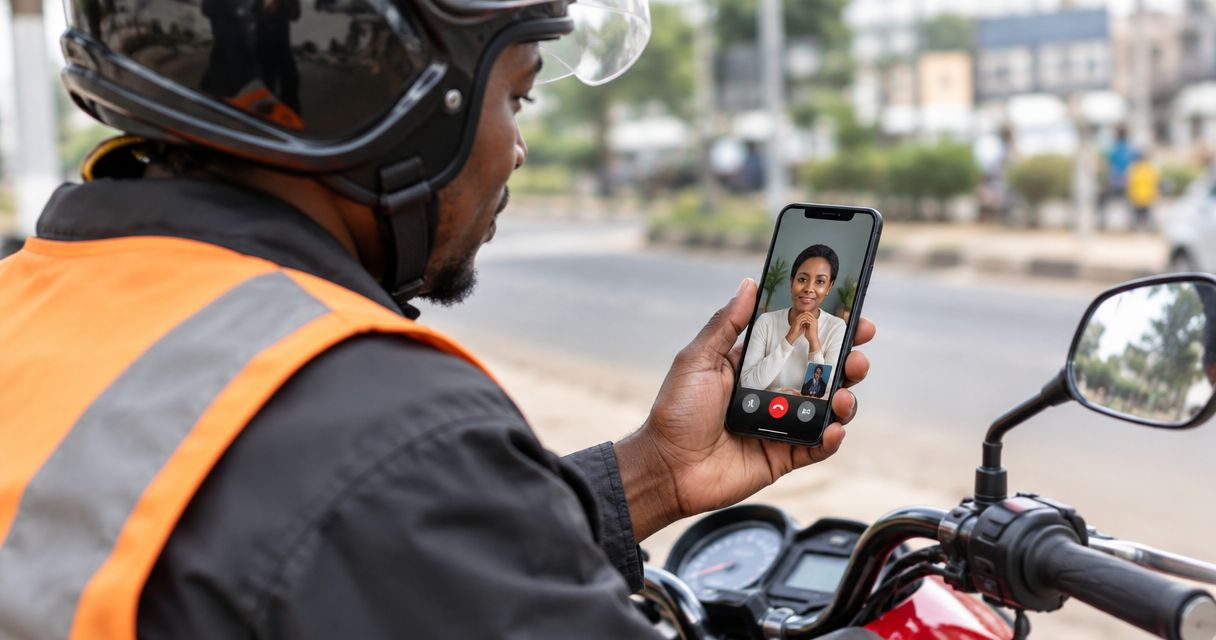
Boda boda riders’ online therapy is counselling delivered remotely with the aim of supporting mental health alongside riding work. This 2026 guide explains how to choose a therapist, arrange a private session around your work, and recognize when you need in-person or urgent help instead.
- InnerSpark Africa offers online therapy for boda boda riders through licensed African therapists by video, voice or chat.
- Choose counselling around your needs, privacy and connection—not just the easiest appointment to fit between trips.
- Never attend therapy while riding; park safely and protect the session from passenger interruptions.
- Online therapy is not emergency care; seek immediate local help when you cannot keep yourself safe.
Why online therapy matters for boda boda riders
A therapy appointment needs your attention, not just an available phone. If your working day depends on accepting trips, protect time when you can stop working rather than trying to discuss distress while watching for passengers.
Online counselling removes the need to travel to the therapist’s room, but it does not remove the need for privacy. A busy stage, a shared phone or an unreliable connection still needs planning. Choose the format around those practical constraints.
InnerSpark Africa offers online therapy with licensed African therapists by video, voice or chat, serving people in Uganda, Kenya, Tanzania and beyond. Those formats give you ways to talk without travelling to an appointment; each still requires a suitable setting and an agreement about how sessions work.
The right appointment is one you can attend safely, privately and without rushing back into traffic. Use this 2026 guide to decide what to ask before booking, rather than assuming every remote service works the same way.
How to arrange online therapy around riding work
1. Identify what you want help with
Start without an app: write down what has been bothering you and how it affects daily life. You do not need to name a condition or decide whether your problem is serious enough before asking for professional support.
If a road incident, money concern, relationship conflict or difficult interaction is behind your distress, describe that in ordinary language. Explain what happens afterward: perhaps you avoid a route, argue at home or struggle to settle before bed. These are examples to discuss, not diagnoses.
Prepare 3 short notes: what is happening, what it affects and what you want to change. Keep them somewhere private, especially if other people use your phone. The notes are a starting point, not a test you must complete perfectly.
- Name the concern you want to discuss first.
- Describe its effect on work, sleep or relationships.
- Note any situations you now avoid.
- Include relevant injuries, medicines or substance use.
- Write what useful support would look like to you.
2. Decide whether remote counselling fits your situation
Begin with a practical check: can you stop work, hear clearly and speak without someone listening? If not, arrange a different place or time before choosing a session format. Convenience alone does not make a setting suitable for therapy.
Remote counselling is an option for discussing emotional concerns, but some needs require a medical assessment or in-person care. Tell the provider about symptoms that affect your ability to ride safely. Do not treat a counselling appointment as permission to continue riding when you feel unsafe.
If you are in immediate danger, have seriously injured yourself or cannot keep yourself safe, seek urgent local help instead of waiting for an online appointment. Go to the nearest emergency department or ask someone you trust to help you reach emergency care.
- Check whether your concern needs urgent attention.
- Identify a private place away from moving traffic.
- Consider whether discussing the issue remotely feels workable.
- Ask whether an in-person assessment is needed.
- Arrange support reaching care if you feel unsafe.
3. Check the therapist and service before booking
You can compare providers yourself by asking for their professional qualification, licensing body and relevant experience. A directory listing or social media profile does not answer those questions. Ask how to verify the clinician’s credentials and whether they can provide care where you are located.
InnerSpark Africa online therapy offers licensed African therapists through video, voice or chat. This provides a route to remote counselling; you still need to confirm the individual therapist’s suitability, language, session arrangements and approach to your concern.
For a 2026 booking, confirm current terms directly rather than relying on an old screenshot or shared message. Ask about confidentiality limits, records and what happens if the therapist believes someone faces serious harm. Confidential care does not mean there are no exceptions.
- Ask how to verify the therapist’s professional credentials.
- Confirm the therapist can work with your location.
- Request a language you can use comfortably.
- Discuss experience relevant to your main concern.
- Read the privacy and cancellation terms before committing.
4. Choose your format and make a connection plan
Start by checking your phone and connection in the place you intend to use. A test call helps you identify practical problems before discussing something personal. Do not assume that a connection working at your stage will work equally well somewhere else.
Video includes visual communication, voice lets you speak without a camera, and chat lets you write. Choose the format you can use privately and consistently, then agree what happens if the connection drops. Chat does not automatically mean immediate replies or unlimited messaging.
Use the same preparation sequence each time: choose privacy, check connection and agree backup. Headphones help keep the therapist’s voice from others, but people nearby can still hear your side of a spoken conversation.
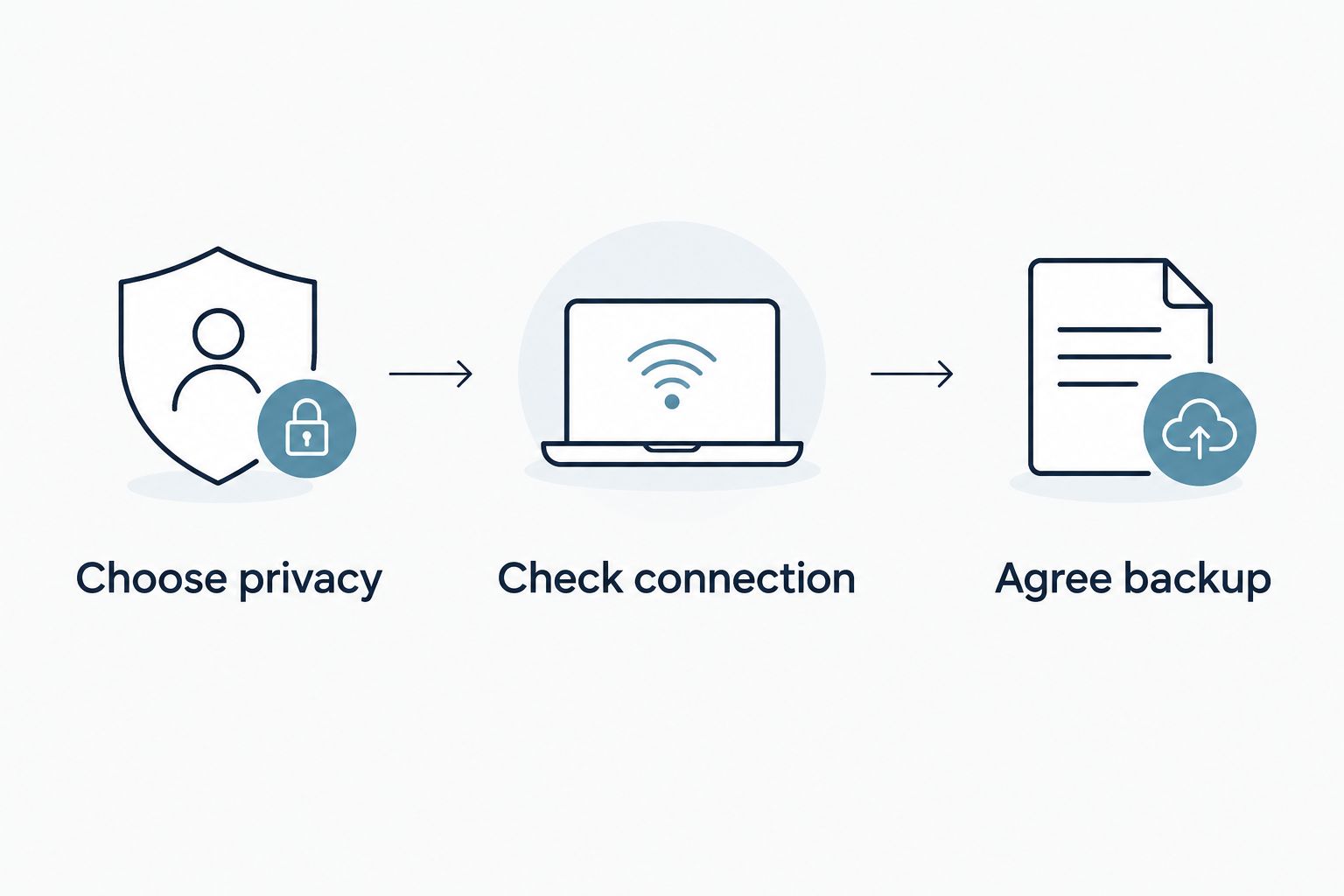
- Choose privacy away from passengers and colleagues.
- Check connection in your planned session location.
- Agree backup arrangements with the therapist.
- Charge your phone before the appointment.
- Confirm whether chat is live or answered later.
5. Protect the appointment from work interruptions
First, look at your own work pattern and identify a time when you can stop accepting trips. You do not need to explain personal details to colleagues. A simple statement that you have an appointment is enough.
Plan somewhere to sit safely, not just somewhere to park. Avoid attending while carrying a passenger, waiting in moving traffic or preparing to rejoin the road. Give yourself space afterward to notice whether you feel ready to ride.
If an appointment clashes with work, discuss another slot or format with the provider rather than splitting your attention. For your 2026 therapy plan, confirm the session length and rescheduling terms before arranging your working day around it.
- Stop accepting trips for the appointment period.
- Park legally and move away from traffic noise.
- Silence unrelated notifications where practical.
- Tell the therapist if privacy disappears mid-session.
- Check that you feel settled before riding again.
6. Explain your working context in the first session
Start with your notes rather than trying to tell your whole life story. Explain what brought you to counselling and which parts of riding work matter to that concern. A therapist cannot understand an unspoken constraint.
If income pressure makes attending difficult, say so. If you are frightened after a crash, describe what happens when you approach a similar road or situation. If the issue is unrelated to riding, you do not need to make work the centre of the conversation.
Ask how the therapist proposes to help and how you will decide whether the work is useful. Agree 2 initial goals, such as discussing a specific fear and handling conflict differently. These are examples, not promised treatment outcomes.
- Explain the concern in your own words.
- Describe the work circumstances that affect it.
- Mention relevant health care or previous treatment.
- Ask what the proposed approach involves.
- Agree goals that matter outside the session.
7. Review whether the support fits
Between appointments, make a brief private note about what felt useful and what did not. You can do this on paper; you do not need a tracking app. Bring the note to the next session instead of relying on memory alone.
Review fit as well as symptoms. Can you understand the therapist? Do you feel able to disagree? Are the session arrangements workable alongside your job? Feeling uncomfortable discussing something difficult is different from being pressured, dismissed or treated disrespectfully.
Write 1 question you want answered at the next appointment. If the approach is unclear or the arrangement keeps failing, raise that directly and ask about alternatives. Worsening symptoms or a change in safety needs calls for professional reassessment, not simply continuing unchanged.
- Note changes relevant to your agreed goals.
- Tell the therapist about difficulties with the approach.
- Review privacy and connection problems.
- Discuss whether another format would fit better.
- Ask about referral when your needs exceed the service.
Compare counselling options for riding work
InnerSpark Africa online therapy is best for riders seeking licensed African therapists through video, voice or chat. Its remote formats remove travel to the appointment, but you still need privacy, a working connection and confirmation that the therapist fits your needs.
Use this 2026 comparison to choose a setting, not to diagnose yourself. Online and in-person counselling are appointment formats; urgent care serves a different purpose and must not be delayed while you compare routine services.
| Option | Best for | Practical benefit | Key limitation |
|---|---|---|---|
| InnerSpark Africa online therapy | Riders seeking licensed African therapists remotely | Offers video, voice or chat | Requires a suitable device, connection and private setting |
| Video counselling | Riders who prefer visual communication | Lets you see the therapist during discussion | Camera use adds connection and privacy demands |
| Voice counselling | Riders who prefer speaking without a camera | Keeps the conversation spoken | The therapist cannot see visual cues |
| Chat counselling | Riders who express themselves more comfortably in writing | Avoids speaking personal details aloud | Typing takes effort; response arrangements need confirmation |
| In-person counselling | Riders who need a separate private setting | Avoids reliance on a remote connection | Requires travel and time away from work |
| Emergency or urgent medical care | People facing immediate danger or acute illness | Provides urgent assessment | Does not replace ongoing counselling after the immediate crisis |
Common mistakes boda boda riders should avoid
Treating a stage as a private counselling room
Being familiar with everyone around you does not make a busy stage private. Choose a setting where you can speak honestly without worrying about passengers, colleagues or someone approaching your phone.
Trying to attend between passenger requests
An open booking app competes with a difficult conversation. Stop taking trips for the appointment rather than repeatedly pausing to negotiate fares or collect passengers.
Assuming a therapist already understands your work
Explain the practical details that affect care, including changing hours, shared living space or difficulty leaving work. Do not assume an African therapist automatically knows your particular circumstances.
Confusing confidentiality with anonymity
A confidential service can still require identity details and maintain clinical records. Ask what information is collected, who can access it and what exceptions apply before sharing sensitive material.
Using counselling to replace an injury assessment
Emotional support after a road incident does not assess a head injury or other physical harm. Seek medical attention for injuries and tell the therapist about related treatment; do not ask a remote counselling session to do both jobs.
FAQ
What is online therapy for boda boda riders?
Online therapy for boda boda riders is counselling delivered remotely to support mental health alongside riding work. Sessions can use video, voice or chat, depending on the provider’s arrangements.
Can I have a therapy session while waiting for passengers?
Only attend if you have stopped working and have a safe, private setting without passenger interruptions. Never take part while riding or while responsible for transporting a passenger.
Is voice or chat better than video for a rider?
The better format is the one you can use privately and communicate through comfortably. Voice avoids a camera, while chat avoids speaking aloud; confirm connection requirements and response arrangements with the provider.
Does InnerSpark Africa provide online counselling in East Africa?
InnerSpark Africa offers online counselling with licensed African therapists to people in Uganda, Kenya, Tanzania and beyond. Confirm therapist suitability, language and session arrangements before booking.
Can online therapy help me talk about fear after a crash?
You can discuss fear after a crash with a qualified therapist and ask for an assessment of your support needs. Counselling does not replace medical attention for injuries or establish that you are safe to ride.
Will my colleagues or stage leader be told about my therapy?
Ask the provider who can access your information and what confidentiality exceptions apply. Separately, protect your own privacy by avoiding shared accounts, visible messages and conversations within other people’s hearing.
What should I do if I feel unsafe before my appointment?
Seek immediate local help if you cannot keep yourself safe or face immediate danger. Go to the nearest emergency department or ask a trusted person to help you reach emergency care rather than waiting for a routine online session.
One last thing
A private location can matter more than switching formats. Changing from video to voice does not solve the problem if other people can still hear you, and changing to chat does not protect messages on a shared phone.
Before your next 2026 appointment, check the setting as carefully as the connection. Tell the therapist what happens if someone interrupts, then agree how you will pause or end the conversation safely.


