

Remote and tech workers’ online therapy is mental health support delivered remotely with the aim of helping you address emotional difficulties alongside a location-flexible working life. This 2026 guide explains how to choose a licensed therapist, protect your privacy, and fit sessions around time zones, shared spaces, and demanding work.
- InnerSpark Africa suits remote workers seeking online therapy with licensed African therapists through video, voice or chat.
- Searching online therapy for remote tech workers Africa? Choose therapist fit before choosing a communication format.
- Separate confidential counselling from workplace performance conversations; ask exactly what an employer-funded service shares.
- Online therapy is not emergency care; immediate danger requires urgent local help.
Why online therapy matters for remote and tech workers
Your work location is not necessarily a place where you can talk openly. A shared apartment, coworking desk, or employer-managed laptop creates practical decisions about privacy before a session begins.
You also need a format you can actually use. If speaking aloud is difficult, compare chat-based therapy platforms in Africa, then ask how conversations are scheduled and when replies arrive. Chat does not automatically mean immediate support.
Choose care around your needs, not around the assumption that remote work should make everything easier. A flexible calendar does not remove distress, and an online appointment still needs protected time.
What makes this audience different
A useful therapy conversation connects your circumstances with how you feel and function. That might include being unable to stop checking messages, feeling isolated after relocation, or struggling with uncertainty about a contract.
These are topics to bring to an assessment, not diagnoses to assign yourself. Describe what happens outside work too: sleep, relationships, concentration, and activities you normally enjoy.
For your 2026 care plan, distinguish the work problem from its impact. A late meeting is a scheduling issue; persistent dread before meetings is something to discuss with a qualified professional.
How to choose and start online therapy
Use the following steps to move from a general search to a workable appointment. You can begin with a private note and direct questions to a provider; no subscription or workplace program is a prerequisite.
Name the problem
Start manually: write down what has been difficult, when it happens, and what you want help changing. Use ordinary language rather than trying to arrive with a clinical label.
For example, describe repeatedly reopening work messages after logging off, rather than deciding that you have an anxiety disorder. A therapist can assess the wider picture. Specific examples also give you something clearer to discuss than a broad request to become more productive.
Choose 3 work situations to describe, then include how each affects life beyond your job. This is preparation, not a diagnostic exercise.
- Record a recent situation, your response, and what followed.
- Describe changes in sleep, concentration, relationships, or daily routines.
- Write one goal that matters even when work is going well.
- Note any immediate safety concern before arranging routine care.
Check therapist fit
Ask a prospective provider directly about qualifications, the professional body responsible for their practice, and experience relevant to your concern. A directory profile or a familiar job title does not replace those questions.
Explain where you will physically be during sessions, including planned travel. Ask whether the therapist can provide care there and how urgent concerns are handled locally. Do not assume that online access removes geographical or professional boundaries.
In 2026, prioritize the therapist’s ability to understand your circumstances over a promise to improve your output. You are seeking mental health care, not another performance review.
- Ask who will provide the sessions and what their qualifications are.
- Confirm that care can continue from your current location.
- Ask about experience with the difficulties you described.
- Discuss language preferences and any cultural context important to you.
- Ask how referrals work when your needs fall outside the therapist’s scope.
Choose your format
First, compare video, voice, and chat against your own privacy and communication needs. You can make that decision by asking providers directly; you do not need a particular platform to identify your preferences.
InnerSpark Africa offers online therapy with licensed African therapists by video, voice, or chat, serving individuals in Uganda, Kenya, Tanzania, and beyond. Those options give you a concrete starting point for discussing format and fit without searching separately for each communication method.
InnerSpark Africa is best for remote workers seeking online therapy with licensed African therapists and a choice of video, voice, or chat. Its online format still requires you to arrange a private setting and confirm how your chosen sessions work; it does not replace emergency care.
- Choose video when seeing the therapist matters to you.
- Consider voice when you prefer speaking without a camera.
- Consider chat when writing helps you express difficult experiences.
- Ask whether chat is live, message-based, or arranged another way.
- Agree on what happens if the connection fails.
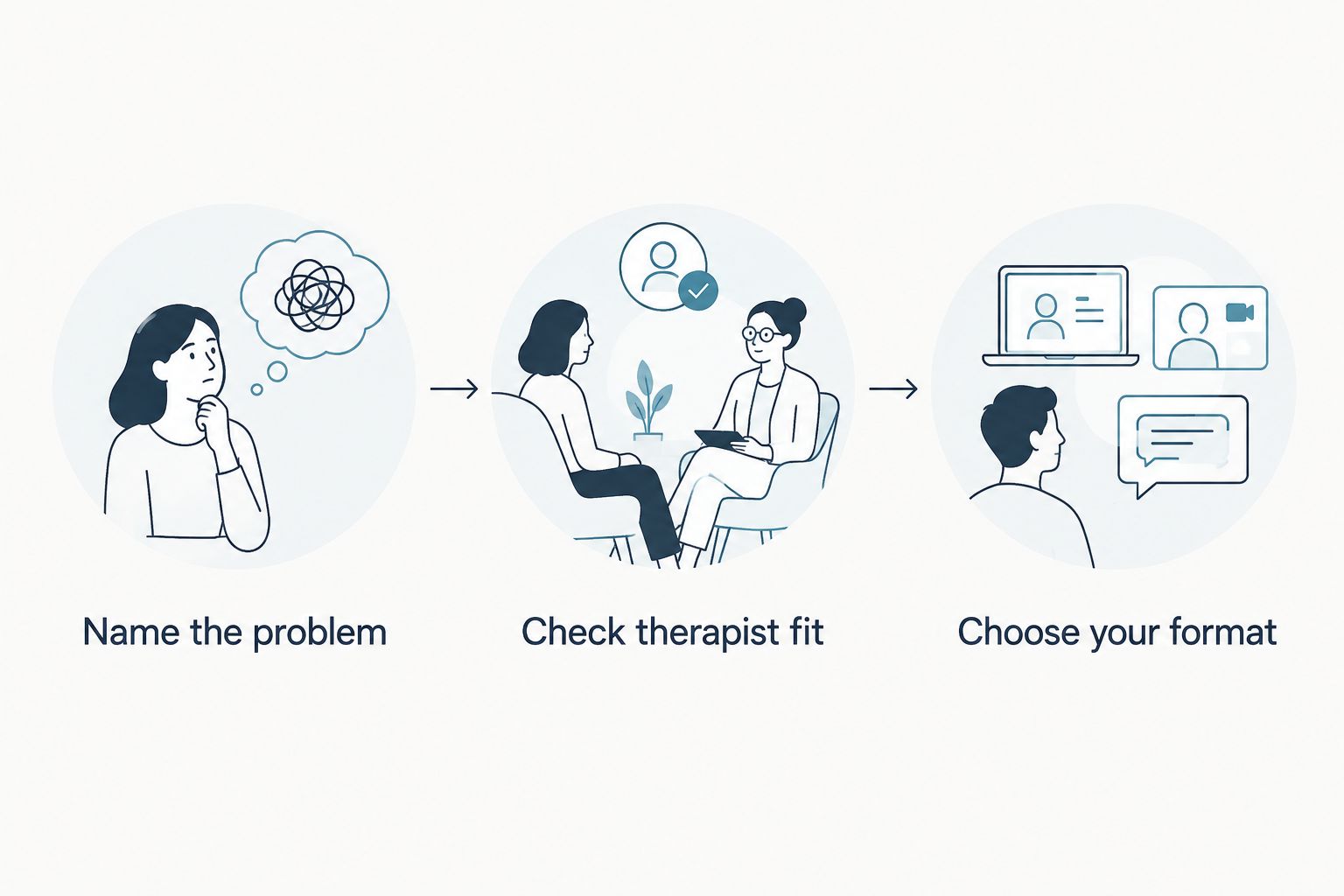
The sequence is simple: name the concern, check the professional fit, and then choose a workable format. Do not let an appealing interface make those decisions in reverse.
Protect your privacy
Start with the equipment and space you already have. Check whether someone can hear you, whether notifications will interrupt, and whether appointment details will appear on a shared calendar.
A provider’s confidentiality arrangements and your physical privacy are separate issues. Ask about confidentiality, its limits, record handling, and communication outside sessions. Do not assume that wearing headphones prevents people nearby from hearing your side of a conversation.
If an employer pays for care, ask what information reaches the employer before enrolling. Request a clear explanation rather than relying on a general assurance that the service is confidential.
- Use a personal device when possible instead of employer-managed equipment.
- Keep appointment notes out of shared work documents.
- Check calendar visibility and notification previews.
- Find a place where your conversation cannot be overheard.
- Ask what records are kept and who can access them.
Plan your appointment
Check your calendar yourself before choosing a session. Include meetings across time zones, handovers, and any on-call responsibilities rather than treating an empty slot as genuinely protected time.
Confirm the appointment’s time zone explicitly. If you travel or work with overseas teams, save the appointment in your current local time and check it again after a location change.
For your first appointment in 2026, prepare 2 questions: how you and the therapist will agree on goals, and how you will review whether the approach is helping. Ask about session length and follow-up arrangements directly rather than assuming a standard schedule.
- Choose a slot that does not overlap with an expected handover.
- Confirm the date, local time, and communication method.
- Ask about session length and cancellation terms before booking.
- Agree on a backup contact method for connection problems.
- Leave room afterward to collect yourself before returning to work.
Explore your therapy options
Find out about online sessions with licensed African therapists by video, voice or chat.
Review your progress
Keep a short private note between appointments. Record what you wanted help with, what you tried, and what you want to revisit. You do not need a tracking app or a detailed spreadsheet.
Review progress with your therapist rather than judging care only by whether you felt better immediately after a session. Discuss the goals you agreed on, any difficulties with the approach, and whether a different format or referral is needed.
Choose 1 work boundary to discuss, such as how you respond to messages after your agreed working hours. Treat it as a topic to explore, not a guaranteed treatment for distress.
- Bring examples of what changed and what stayed difficult.
- Tell the therapist if the format limits what you can share.
- Discuss exercises that do not fit your circumstances.
- Ask when to review the goals and approach together.
- Request a referral if your needs require different expertise.
Compare your support options
Choose the route that matches the level and type of help you need. Online therapy, workplace support, and informal conversations serve different purposes; none should be presented as interchangeable.
InnerSpark Africa online therapy provides licensed African therapists and several communication formats. Confirm the individual therapist’s suitability and service arrangements before committing, just as you would with any other provider.
| Option | Best for | Practical advantage | Key limitation |
|---|---|---|---|
| InnerSpark Africa online therapy | Workers seeking licensed African therapists by video, voice, or chat | Offers several ways to communicate within one service | Requires a private setting and confirmation of the care arrangement |
| In-person therapy | People who prefer a dedicated physical space for sessions | Separates the appointment from the home workspace | Requires travel and a suitable local provider |
| Employer-funded counselling, if offered | Workers exploring support through an existing workplace benefit | Provides an established route to ask about care | Eligibility, confidentiality arrangements, and scope need checking |
| Peer support | Workers seeking connection and shared experience | Creates space to talk with people facing similar situations | Does not replace clinical assessment or treatment |
| Urgent local care | People facing immediate danger or an acute mental health crisis | Provides a route to immediate assessment | Is not a substitute for planned ongoing therapy |
Use peer support for connection and qualified clinical care for assessment and treatment. If your workplace offers counselling, compare the actual arrangements rather than assuming it is either more private or less private than independent care.
Common mistakes remote and tech workers make
Turning therapy into another productivity project
Bringing a target such as shipping more code can hide the difficulty you actually want help with. Explain the worry, exhaustion, conflict, or loss of interest underneath the work outcome. Your care goals do not have to serve your employer.
Booking between meetings without privacy
An open calendar slot is not enough if you must whisper or monitor work messages throughout the appointment. Protect the space as well as the time, and tell the therapist when your setting prevents an honest conversation.
Choosing chat and assuming constant access
Chat describes a communication method, not a response-time promise. Confirm whether messages are answered during an appointment or under another arrangement. Ask separately what to do when you need urgent help.
Treating cross-border work as permission for cross-border care
Your employment arrangements do not establish where a therapist can provide treatment. Tell the provider where you are physically located, including when you travel. Confirm continuity before changing location rather than after arriving.
Calling every difficulty burnout
A label can become a shortcut that leaves important symptoms unexplored. Describe what you are experiencing and let a qualified clinician assess it. Seek urgent help for immediate safety concerns instead of waiting for a routine appointment.
FAQ
What is the best online therapy for remote tech workers in Africa?
The best fit is a qualified therapist who can provide care where you are and address your particular concerns. InnerSpark Africa offers licensed African therapists through video, voice, or chat; confirm the therapist’s fit, privacy arrangements, and session process before booking.
Can I start therapy without a mental health diagnosis?
Yes, you can seek a professional assessment without arriving with a diagnosis. Describe what has been difficult and how it affects daily life rather than trying to assign yourself a clinical label.
Is chat therapy better than video for someone working remotely?
Chat is not automatically better than video; the right format depends on your needs and the care arrangement. Ask how chat sessions work, how replies are handled, and whether the format suits the concerns you want to discuss.
Will my employer know that I am having therapy?
Do not assume what your employer can see; check the service’s confidentiality and reporting arrangements. If work pays for care, ask exactly what information is shared, and avoid storing appointment details on shared workplace systems.
Can I keep the same therapist while traveling across Africa?
Confirm continued care with your therapist before each change of location. Online delivery does not remove professional or geographical requirements, and the therapist needs to know where you are physically located.
What should I prepare for my first online therapy session?
Prepare a short description of your concerns, your goals, and questions about the care process. Confirm the time zone, find a private space, and agree on what to do if the connection fails.
What should I do if I need help immediately?
If you are in immediate danger, contact local emergency services or go to the nearest emergency department. Tell a trusted person what is happening if you can, and do not wait for a routine online therapy appointment or chat reply.
One last thing
Before your first session in 2026, check what happens when you close the call and return to work. If the next calendar item demands an immediate presentation or difficult conversation, choose a different slot where possible.
Protect the transition, not just the appointment. Tell your therapist if your schedule leaves no breathing room; that constraint belongs in the conversation too.


