

Instead of repeating your whole Amani check-in when you seek therapy, prepare a short summary, choose what to share, and arrange a session with a licensed human therapist. This 2026 amani ai to human therapist workflow is a manual, consent-led handoff—not an automatic transfer of your conversation.
- Use the amani ai to human therapist workflow to prepare your own summary, not assume an automatic referral.
- InnerSpark Africa offers licensed online therapy by video, voice or chat for people in Uganda, Kenya, Tanzania and beyond.
- Confirm confidentiality, therapist suitability and connection arrangements before sharing sensitive check-in content.
- If you cannot keep yourself safe, seek urgent local help rather than waiting for an online appointment.
Why this matters
A check-in and a therapy appointment serve different purposes. You do not need a polished explanation, a diagnostic label or a complete chat history before asking for professional support.
InnerSpark Africa is best for people seeking online therapy with licensed African therapists by video, voice or chat. Start with InnerSpark Africa when you want to arrange human support; keep control of which parts of your check-in you bring into the session.
The practical benefit of a handoff summary is simple: it gives you a starting point when explaining what has been difficult. Its limit matters just as much: a summary cannot replace the therapist's questions, assessment or discussion with you.
For your 2026 handoff, treat the check-in as background information rather than a clinical conclusion. The goal is a conversation with a qualified person, not agreement with everything written during the check-in.
Before you start
- Have your own notes ready. Use a device you control and write down what you want help with. You do not need to copy a complete conversation or create a separate account just to prepare notes.
- Prepare for the session. You need a way to contact the therapy provider, a usable connection and somewhere you can communicate privately. Ask whether the therapist can work with someone in your current country and preferred language.
- Do not assume a shared record. An Amani check-in does not establish that a therapist has received, read or accepted anything from it. Confirm the sharing method and your consent before sending sensitive material.
Safety comes before setup. If you are in immediate danger, have seriously harmed yourself or cannot keep yourself safe, contact local emergency services or go to the nearest emergency department. Do not wait for a routine online appointment or a check-in response.
Your handoff summary
Turn the check-in into your own words
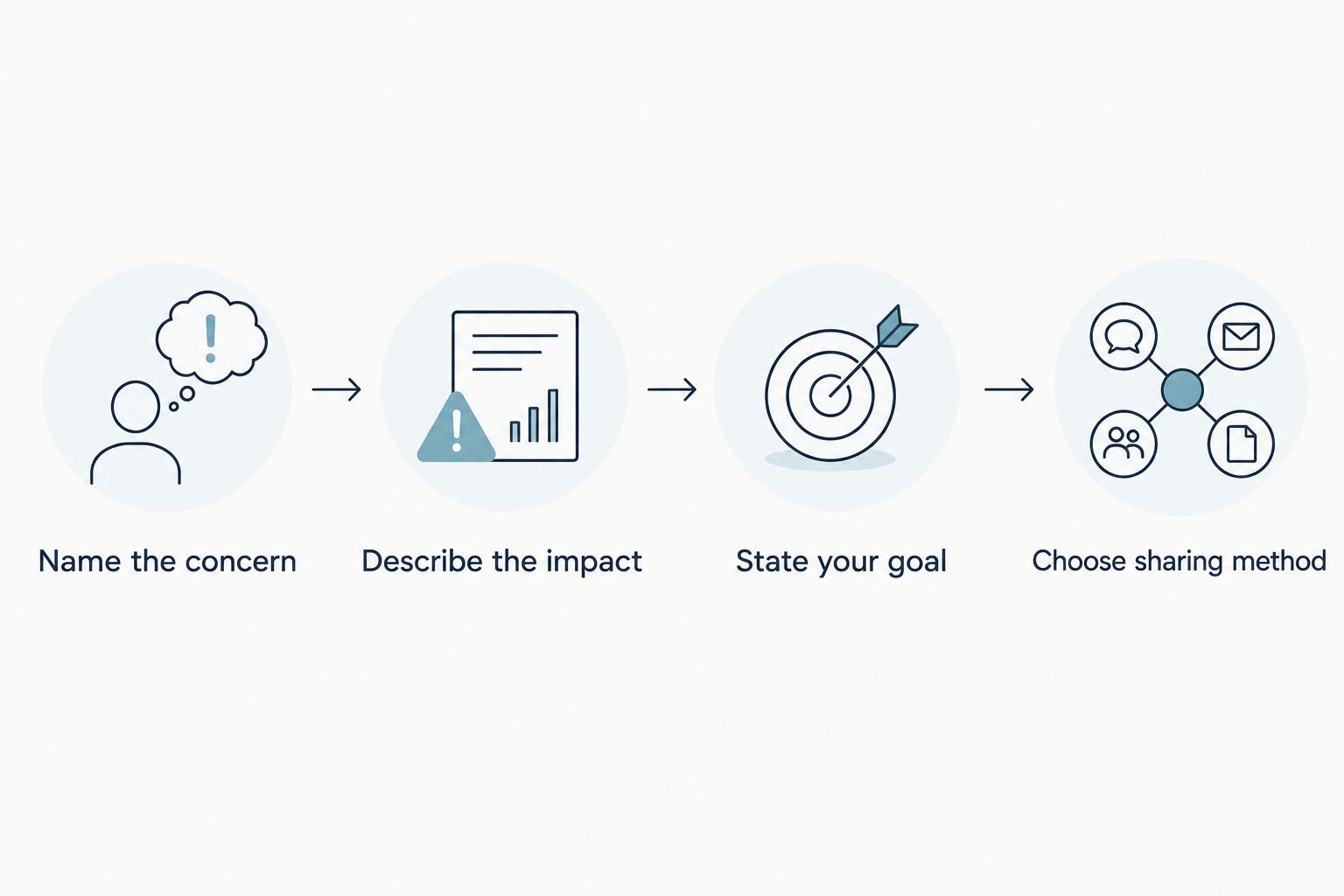
- Name the concern. Write what is troubling you without trying to diagnose yourself. Describe the experience: difficulty sleeping, recurring worry, conflict, grief or another concern that fits your situation.
- Describe the impact. Add what has changed in your daily life. Focus on something concrete, such as concentration, relationships, rest or completing ordinary tasks.
- State your goal. Write what you want help understanding or changing. Keep the first version to 3 sentences so you have a manageable opening rather than another long record to review.
- Check accuracy. Remove interpretations you do not agree with. Clearly separate your own experience from any explanation suggested during the check-in.
A simple structure is: what is happening, how it affects you, and what you want help with. Use ordinary language. You can tell the therapist that you are unsure how to explain something.
Expected result: you have a short, accurate summary that you can read aloud or share through an agreed channel. You have not treated check-in wording as a diagnosis.
Choose the sharing boundary
- Keep relevant context. Include information you want the therapist to understand at the beginning. Leave out unrelated exchanges and other people's identifying details unless they are necessary to explain your concern.
- Choose the sharing method. Decide whether you prefer to read the summary aloud, type it during a session or ask the provider how to send it beforehand.
- Ask about records. Before sending a transcript or screenshot, ask who can access it, how it is stored and how it becomes part of your care record.
- Mark private material. Identify anything you want to discuss verbally rather than transmit. Tell the therapist when a topic needs a slower introduction.
Confidentiality is a question to discuss, not a reason to send everything. Ask the therapist to explain its limits, including circumstances involving serious safety concerns and applicable legal duties.
Expected result: you know what you will share, what you will keep private and which questions need answers before you send any record.
Your appointment arrangements
Confirm the therapist and session format
- Describe the support you want. Explain your main concern and ask whether the therapist works with that concern. Request information about professional credentials and the rules that apply to care where you are located.
- Confirm your location. Give your current country and clarify the appointment time and time zone. This matters when you and the therapist are in different places.
- Choose the communication format. Ask about video, voice or chat, then select the format that fits your privacy, communication preferences and connection.
- Confirm the joining instructions. Establish where the session happens, how you receive instructions and what you should do if the connection fails. Follow the provider's actual instructions rather than looking for an assumed transfer button.
InnerSpark Africa offers online therapy through all three formats below. Each has a practical benefit and a limitation; none is automatically the right choice for every person.
| Format | Best for | Practical benefit | Limitation to plan around |
|---|---|---|---|
| Video | People who want to see their therapist | Supports face-to-face conversation at a distance | Requires camera privacy and a connection that supports video |
| Voice | People who prefer speaking without a camera | Removes the need to appear on screen | Someone nearby can still overhear your side |
| Chat | People who prefer expressing themselves in writing | Lets you compose what you want to say | Tone needs clarification; confirm whether messaging is live or delayed |
For a 2026 appointment, confirm the actual communication arrangements before the session. Do not assume that chat means an immediate reply or that changing formats during an appointment is already agreed.
Expected result: you know who you are meeting, which format you will use, when to join and how to handle a disconnected session.
Prepare the opening conversation
- Select one priority. Choose 1 main concern for the opening discussion. This is a starting point, not a limit on what you are allowed to bring up.
- Prepare questions. Write 2 questions about the therapist's approach, confidentiality or what happens after the first conversation.
- Explain the check-in's role. Tell the therapist that you used Amani to check in and that the summary reflects what you chose to bring forward. Say when wording came from the check-in rather than from you.
- Agree on next steps. Before the session ends, clarify what you understood, what remains uncertain and how further contact will work.
You can also start without sharing the check-in at all. Tell the therapist directly what prompted you to seek support and let the conversation develop from there.
Expected result: your first session begins with your concern and your consent—not an assumption that the therapist already knows your history.
Arrange human support
Ask about licensed online therapy by video, voice or chat.
When you want to bring an updated check-in
Use the same manual handoff after a later check-in if you want to discuss something new. Bring changes, not an entire repeated history.
- Describe the change. Note what feels different since your previous session, using your own words.
- Add useful context. Explain what was happening around the change without deciding on a cause you have not established.
- Choose the next question. Identify what you want the therapist to help you understand.
- Confirm the contact boundary. Ask whether the update belongs in your next session or through another agreed channel. Do not assume between-session messages are monitored continuously.
Keep your 2026 notes dated so you can distinguish a current concern from an earlier one. If your safety changes, use urgent local support rather than treating a saved update as a request someone has already received.
If you are also considering an assessment-led starting point, the Mind Check assessment-to-therapist workflow covers that adjacent route.
Troubleshooting
You cannot find a transfer button
Use a manual handoff. Contact the therapy provider through its published route and ask how to arrange a session; only send your summary through a method the provider confirms. A completed check-in is not an appointment confirmation.
You have too much text to share
Return to the short summary: concern, impact and goal. Keep the longer record for yourself and ask the therapist whether any particular part would help the discussion. You do not need to submit everything to explain why you want support.
You cannot speak privately
Do not force a sensitive conversation in an unsafe setting. Ask about a different time or whether a writing-based format fits your circumstances. Chat still needs privacy from shared screens, notifications and anyone who can access your device.
Your connection drops
Follow the reconnection arrangement you agreed with the therapist. If no arrangement exists, establish it before discussing sensitive material. Avoid sending personal information through a new channel simply because the original connection failed.
You disagree with the check-in summary
Correct it before sharing. Bring the disagreement to the therapist if it feels relevant, but do not present a statement as true just because it appeared in the check-in. Your account of your experience comes first.
Customize your workflow
Adapt the preparation to your circumstances without changing the core sequence: summarize, choose boundaries, confirm the appointment and discuss your concern.
For work-related stress, note which situations affect you without copying confidential employer material. For relationship concerns, describe your own experience without including another person's private messages by default.
For a cross-border appointment in 2026, confirm location, time zone and whether the therapist can provide care where you are. For low-bandwidth conditions, discuss connection needs and an agreed fallback before the appointment.
InnerSpark Africa online therapy offers a choice of video, voice or chat; the useful next step is confirming which format fits your situation. Keep the preparation short enough that it helps you seek support rather than becoming another task you must finish perfectly.
FAQ
How do I go from Amani AI to a human therapist?
Prepare a short summary of your concern, contact a licensed therapy provider and confirm how to arrange a session. Share only the information you choose through an agreed method; do not assume an automatic transfer.
Does finishing an Amani check-in mean I have booked therapy?
Treat an appointment as arranged only after you receive confirmation from the therapy provider. Confirm the therapist, time, time zone, session format and joining instructions.
Do I have to share my entire Amani conversation?
No. You can explain your concern in your own words or read a short summary aloud. Ask how records are handled before sending a transcript or screenshots.
Can I choose chat instead of video therapy?
InnerSpark Africa offers online therapy by video, voice or chat. Confirm which format applies to your appointment and whether chat is live or delayed before relying on it.
Can a check-in diagnose my mental health condition?
Do not treat check-in wording as a clinical diagnosis. Discuss symptoms and concerns with a qualified clinician who can assess your situation and explain any conclusions.
What should I ask a therapist before sharing sensitive information?
Ask about confidentiality, its limits, record storage and who can access information you send. Also confirm how to contact the therapist and what to do outside scheduled sessions.
What if I need help before my appointment?
If you are in immediate danger or cannot keep yourself safe, contact local emergency services or go to the nearest emergency department. For other concerns, ask the provider about the appropriate contact route rather than assuming messages receive an immediate response.
One last thing
You can seek therapy even if the check-in did not capture what you meant. A useful opening is simply to describe what feels difficult and ask for help explaining it. Your notes support the conversation; they are not an entry requirement.


