

Choose Innersparkafrica if you want online therapy with a licensed African therapist; choose Postpartum Progress if you want to read about postpartum mental health and other mothers’ experiences. For your 2026 decision, the main difference is individual clinical support versus educational reading—not two competing therapy services.
- Innersparkafrica wins for online therapy with licensed African therapists through video, voice or chat.
- Postpartum Progress is the better fit for postpartum-focused educational reading and lived-experience perspectives.
- The innerspark vs postpartum progress decision separates personalised counselling from maternal mental health information.
- Ask about postpartum experience, privacy and follow-up before booking a therapist.
Why this matters
Innersparkafrica is the better choice for African adults seeking licensed online therapy rather than postpartum reading material. Postpartum Progress serves a different purpose: its maternal mental health articles help readers understand experiences, recognise concerns and find words for what they feel.
Reading and therapy do not need to compete. You can use an article to prepare for a conversation, then discuss your own symptoms with a clinician. In 2026, choose by the help you need next—not by which name appears first in a search result.
At a glance
| Dimension | Innersparkafrica | Postpartum Progress |
|---|---|---|
| Best for | People seeking licensed online therapy in African settings | Readers seeking postpartum mental health information |
| Personalised support | Sessions with licensed African therapists | Educational content rather than individual clinical assessment |
| Postpartum focus | Ask about the individual therapist’s postpartum experience | Maternal mental health is the central editorial subject |
| Lived-experience reading | A conversation about your own circumstances | Articles offering maternal mental health perspectives |
| African service access | Serves Uganda, Kenya, Tanzania and beyond | Reading does not establish access to a local clinician |
| Standout feature | Video, voice and chat therapy options | Postpartum-focused educational articles |
| Privacy | Check session privacy and communication arrangements | Check website privacy before sharing personal information |
| Pricing model | Therapy-session model; confirm current booking terms | Educational reading is separate from purchasing clinical care |
| Urgent symptoms | Routine appointment planning is not emergency assessment | Reading is not emergency assessment |
The table compares what each option does. It does not rank treatment outcomes, therapist quality or recovery speed. Those questions require information about the actual clinician, your needs and the care being offered.
Licensed sessions win for personalised support
An article cannot ask follow-up questions about your sleep, mood, relationships or ability to manage daily responsibilities. A licensed therapist can discuss those concerns with you and help decide what support fits your situation.
The online therapy service offers that direct conversation. You can describe what has changed since pregnancy or childbirth, explain what worries you and ask questions that a general article does not answer.
Best for: someone who wants to discuss their own symptoms rather than keep searching for explanations. The limitation is that a licence alone does not establish postpartum expertise. Ask the individual therapist about experience supporting people during pregnancy and after birth.
Postpartum Progress is useful preparation, but it cannot turn a reader’s description into an individual assessment. Use reading to organise your thoughts, not to confirm a diagnosis or rule one out.
Postpartum Progress wins for topic-specific reading
Postpartum Progress centres its educational content on maternal mental health. That makes it the more direct reading choice when your question is specifically about emotional changes after having a baby.
A general therapy service and a postpartum-focused publication answer different questions. The publication helps you explore a subject; the therapist helps you discuss your circumstances. Neither role automatically replaces the other.
Best for: someone looking for postpartum-focused explanations before speaking with a professional. The drawback is that relevant content is still general content. An article describing a familiar experience does not establish that you have the same condition.
For a 2026 care decision, check an article’s publication date and any clinical references it uses. Do not assume that an older article’s treatment links, organisational details or referral information remain current.
Postpartum Progress wins for lived-experience perspectives
Personal accounts can give you language for feelings that are hard to explain. Postpartum Progress’s maternal mental health writing offers that reading experience without requiring you to begin a clinical conversation first.
That is a genuine advantage when you want to understand how other mothers describe distress, uncertainty or seeking help. Recognition can make the next conversation easier. It is not the same as treatment.
Best for: someone who wants perspective and words for a difficult experience. The limitation is that another person’s recovery story cannot tell you which treatment, clinician or support plan fits you.
Therapy offers a different benefit: the conversation centres on your experience. If reading becomes a repeated search for reassurance without helping you take the next step, bring the questions you keep searching into an appointment.
African service coverage wins for arranging therapy locally
The online therapy service explicitly serves people in Uganda, Kenya, Tanzania and beyond. Those are 3 named countries in its service description, with licensed African therapists providing the sessions.
That is a clearer starting point for someone seeking a clinical conversation in an African setting than a postpartum educational publication. However, regional coverage does not guarantee a particular language, payment method, professional registration or appointment time.
Best for: someone in the stated service area who wants to arrange online counselling. Before booking in 2026, confirm that the clinician can work with someone in your location and that the session arrangements suit you.
Postpartum Progress remains useful for reading, but an article is not evidence of local service access. Where a resource discusses referrals or treatment pathways, check those details with a clinician who understands your setting.
Video, voice and chat win for choosing a session format
The therapy service offers 3 session formats: video, voice and chat. That gives you a practical choice about how to communicate with a therapist rather than relying on written educational content alone.
Choose a format based on privacy, connection quality and how comfortably you can explain yourself. Voice avoids the need to be on camera. Chat requires you to express concerns in writing. Video adds visual communication but still requires a suitable private setting.
Best for: someone who wants a live clinical conversation in a format they can manage. Ask whether chat is scheduled or asynchronous, how follow-up works and what happens if the connection drops; do not assume the answers.
Postpartum Progress’s reading format has its own strength: you can read at your pace. Its limitation is the absence of an individual clinician responding to your questions.
Both require privacy checks before sharing personal details
Privacy matters differently during therapy and while reading a website. Neither comparison should stop at a reassuring phrase.
For a therapy appointment, ask how messages and records are handled, who has access and what the limits of confidentiality are. Also consider your surroundings: headphones do not prevent someone nearby from hearing your side of a conversation.
For educational reading, check privacy notices before submitting personal information. You do not need to share your story publicly to benefit from an article. Take particular care on shared phones, computers or accounts.
Best for both: people who check the information they share and the setting they use. This is a tie on the decision rule, not a claim that both options have identical privacy practices. Clinical confidentiality and website privacy are different questions.
Neither replaces urgent mental health assessment
Reading and routine online counselling are not substitutes for urgent assessment when safety is at risk. Hallucinations, delusions, severe confusion or immediate danger to yourself or another person require urgent medical help.
The National Institute of Mental Health’s Perinatal Depression guidance distinguishes short-lived baby blues from more severe or persistent symptoms. Baby blues generally resolve within 2 weeks; that timeframe is not an instruction to wait when symptoms are severe or frightening.
The American College of Obstetricians and Gynecologists addresses mental health conditions during pregnancy and the first 12 months after birth. Distress deserves attention beyond the earliest days at home, too.
Best for urgent symptoms: local emergency or urgent medical care, not either comparison option. If danger is immediate, contact local emergency services or go to the nearest emergency department. Do not wait for an article or a routine booking to resolve a safety concern.
Pricing: compare clinical appointments with reading, not equal packages
Innersparkafrica uses a therapy-session model. Before committing, confirm the current charge, what the appointment includes, cancellation terms and whether any communication outside the session is included.
Postpartum Progress’s educational content is not an equivalent clinical package. Reading an article does not purchase assessment, a treatment plan or ongoing clinician support. Compare the cost of actual care separately from your use of information resources.
For your 2026 budget, ask about the likely appointment pattern without demanding a guaranteed recovery timeline. A clinician should explain the proposed next step and how you will review whether it is helping.
The trade-off is individual attention versus self-directed reading—not a like-for-like subscription comparison. Avoid judging value by a headline alone. A session you cannot attend privately, or a clinician whose experience does not fit your needs, is a poor match regardless of the booking terms.
Make the decision in a practical order
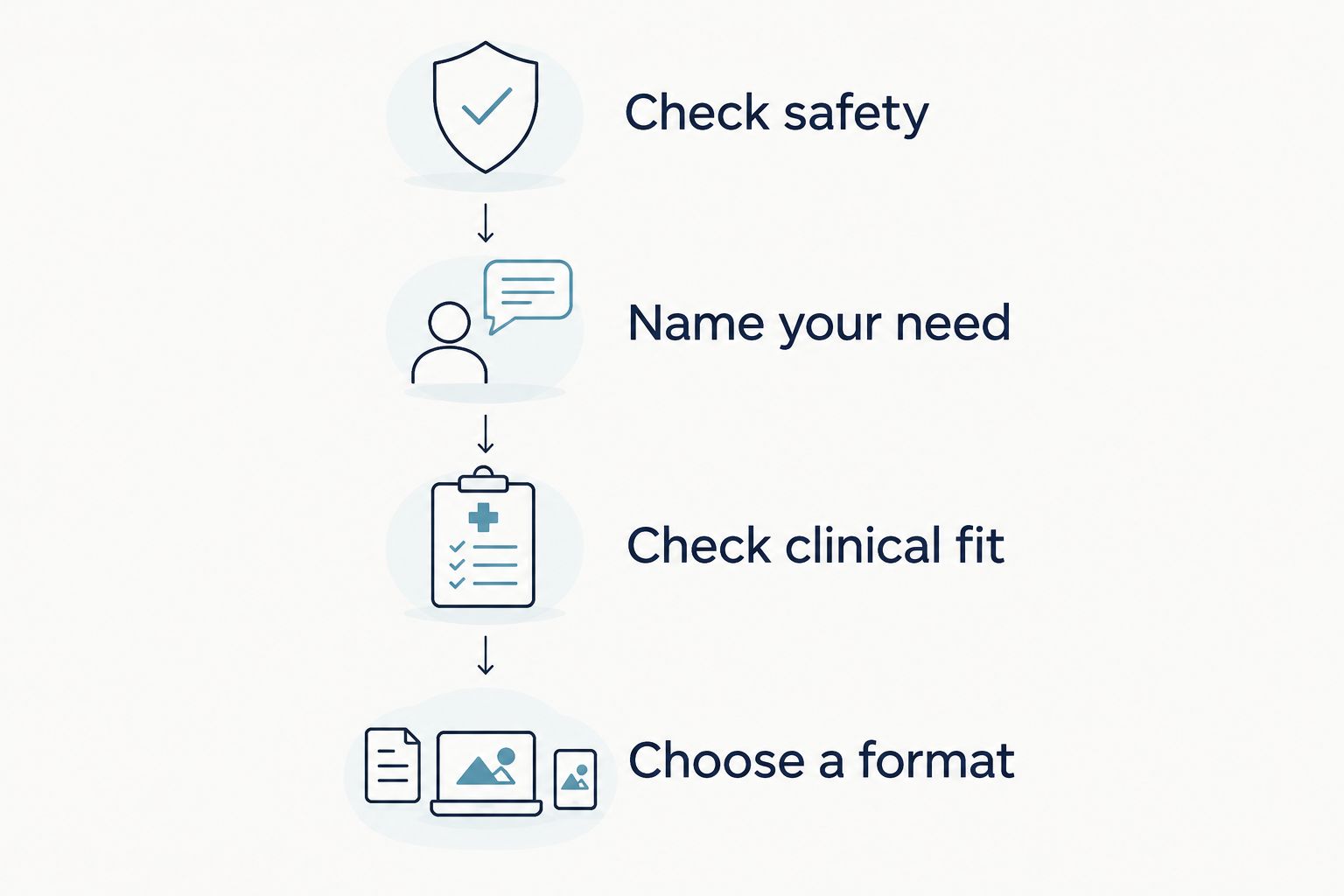
Use this sequence when you are unsure whether to keep reading or arrange care:
- Check safety. Seek urgent medical help if there is immediate danger, severe confusion, hallucinations or delusions.
- Name your need. Decide whether you want information, a personal assessment or help managing ongoing difficulties.
- Check clinical fit. Ask the therapist about postpartum experience, professional credentials and working with people in your location.
- Choose a format. Select video, voice or chat only after checking privacy and communication arrangements.
These steps prevent a common mismatch: choosing an educational resource when you need individual support, or booking before checking the clinician’s experience. You do not need to diagnose yourself before asking for help.
When contacting a therapist, explain what has changed and how it affects daily life. Include sleep difficulties, distressing thoughts, practical support at home and any current treatment you want to discuss. Ask what the clinician recommends next.
Final verdict: choose the help you need next
Choose Innersparkafrica if you need individual online therapy
Named profile: an adult in Uganda, Kenya, Tanzania or another served location who wants to speak with a licensed African therapist. The therapy service wins because it offers direct sessions through video, voice or chat.
Check the individual therapist’s postpartum experience before booking. The service description establishes online therapy access, not that every clinician specialises in maternal mental health.
Choose Postpartum Progress if you need postpartum reading
Named profile: a mother, partner or supporter seeking postpartum-focused information and lived-experience perspectives. Postpartum Progress wins for that educational task.
Use what you read to prepare questions or explain concerns. Do not treat familiarity with an article as evidence that professional support is unnecessary.
One-glance scorecard
| Dimension | Winner |
|---|---|
| Individual clinical conversation | Innersparkafrica |
| Postpartum-focused educational reading | Postpartum Progress |
| Lived-experience perspectives | Postpartum Progress |
| Explicit African therapy coverage | The online therapy service |
| Video, voice and chat appointments | The online therapy service |
| Privacy decision | Tie: check the relevant practices |
| Pricing comparison | Different categories, not an equal-package contest |
| Urgent symptoms | Neither: seek urgent medical assessment |
FAQ
Is online therapy better than Postpartum Progress?
Online therapy is the better choice when you need an individual conversation with a licensed clinician. Postpartum Progress is better suited to postpartum-focused reading; educational content does not provide a personal assessment.
Can Postpartum Progress diagnose postpartum depression?
No, reading Postpartum Progress cannot establish a diagnosis. A qualified clinician needs to assess your symptoms, circumstances and relevant medical history.
How do I find out whether a therapist understands postpartum mental health?
Ask the individual therapist about experience supporting people during pregnancy and after birth. Also ask how they assess concerns, coordinate other care and respond when symptoms require more urgent support.
Should I choose video, voice or chat therapy after having a baby?
Choose the format that lets you communicate clearly and privately. Confirm scheduling, message handling and what happens if your connection fails before the appointment.
Can I use postpartum articles alongside therapy?
Yes, educational reading can help you prepare questions for therapy. Discuss anything that feels relevant with your clinician rather than using an article to decide your diagnosis or treatment.
How much does online postpartum therapy cost in 2026?
Confirm current session charges and booking terms directly with the provider. Ask what the appointment includes and whether follow-up communication carries separate terms.
When should I seek urgent help instead of reading more?
Seek urgent medical help for hallucinations, delusions, severe confusion or immediate danger to yourself or someone else. Contact local emergency services or attend the nearest emergency department rather than waiting for a routine appointment.
One last thing
The most useful result of reading is not a label—it is a clearer conversation. Before an appointment, write down what has changed, what feels hardest and what help you want first.
Bring the questions you keep searching for. A therapist can discuss how those questions relate to your circumstances; another article cannot do that. For your 2026 decision, that is the clearest dividing line between educational reading and individual care.


