
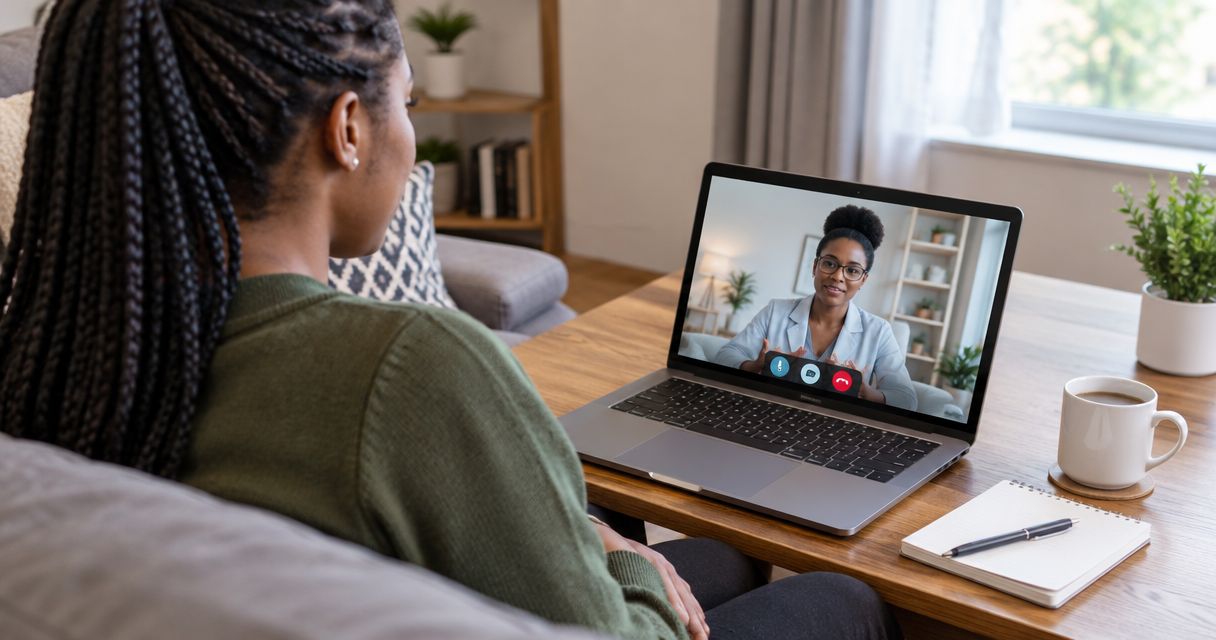
Online therapy in Uganda should be confidential, but confidentiality is not an absolute promise of secrecy: your therapist must explain when information can be shared and who can access your records. Privacy also depends on the service’s technology, your device and whether anyone can overhear or read your session.
- Is online therapy confidential Uganda? Check disclosure rules, record access and device privacy before sharing sensitive details.
- InnerSpark Africa suits people seeking online therapy with licensed African therapists through video, voice or chat.
- Confidential does not mean anonymous: booking, payment and clinical records can identify you.
- Choose your session format around your surroundings, not just whether you want the camera on.
Is online therapy confidential and private in Uganda?
Confidentiality is the professional duty to protect what you share; privacy is how that protection works in practice. You need both. A therapist’s confidentiality promise does not stop someone nearby from hearing your call or someone with access to your phone from reading messages.
InnerSpark Africa offers online therapy with licensed African therapists through video, voice or chat. Those formats give you different ways to attend, but the format alone does not establish how records, recordings or disclosures are handled.
Use these 3 layers to assess any online therapy service in 2026:
| Privacy layer | What it covers | What to check |
|---|---|---|
| Professional confidentiality | How the therapist handles what you disclose | Exceptions, supervision and sharing with other professionals |
| Service and records | Information held by the therapy provider | Access permissions, recording, storage and retention |
| Your surroundings | What other people can hear or see | Room privacy, shared devices, notifications and account access |
A clear answer covers all three layers. General reassurance without an explanation of records and disclosure is not enough to make an informed choice.
Why this matters
You should not have to choose between getting support and understanding what happens to your information. Before discussing relationship conflict, trauma, work problems or family concerns, establish the boundaries of the conversation.
Privacy questions belong at the start of therapy, not after you have disclosed something sensitive. Asking them does not mean you distrust the therapist; it helps you give informed consent and decide what feels safe to discuss.
For a 2026 booking, ask for the current privacy notice and consent terms. Read the documents that apply to your actual appointment, including any separate terms for messaging or a workplace-funded service.
What are the limits of confidentiality?
Confidentiality has exceptions, and your therapist should explain the exceptions that apply to your care. These can involve serious safety concerns, safeguarding responsibilities or legally required disclosure. The exact response depends on the circumstances and applicable professional and legal obligations.
Ask what the therapist would do, who would receive information and whether the therapist would discuss the situation with you first. Do not settle for a general statement that everything is private.
You can ask directly:
- Under what circumstances would you share information without my permission?
- What information would you share, and with whom?
- How do you handle concerns about immediate safety?
- Does anyone review your clinical work, and what information do they see?
- How would you respond to a request for my records?
Do not avoid mentioning a safety concern because you fear an automatic response. Ask the therapist to explain the process, then discuss what is happening. If you are in immediate danger, seek urgent in-person help rather than waiting for an online appointment.
Which therapy format gives you the most privacy?
No format is automatically the most private. Video, voice and chat protect different things and expose different things, so choose around the risks in your actual surroundings.
| Format | Best for | Privacy advantage | Privacy limitation |
|---|---|---|---|
| Video | People with a private room who want visual conversation | You can communicate with facial expressions and gestures | Your camera shows part of your surroundings, and speech can be overheard |
| Voice | People who prefer speaking without showing their surroundings | Your room and appearance stay off camera | People nearby can still hear your side of the conversation |
| Chat | People who cannot speak privately but can protect their screen | You do not need to speak aloud | Messages, previews or screenshots can expose written content |
Video: best for a private room
Video lets you see your therapist while talking. Before joining, check what appears behind you and whether anyone can hear through the door or from an adjoining space.
Headphones keep the therapist’s voice from playing into the room, but they do not hide your own voice. Ask about recording rather than assuming the session is either recorded or never recorded.
Voice: best for keeping your surroundings off camera
Voice avoids showing your face or room during the conversation. It does not make the conversation anonymous or prevent someone nearby from listening.
Choose somewhere you can speak without being overheard. A quiet location is not necessarily private: a corridor or outdoor sitting area can be quiet until another person arrives.
Chat: best when speaking aloud is the main concern
Chat removes the need to speak aloud, which helps when sound is your main privacy concern. It shifts attention to screen access, notifications and stored messages.
Check whether messages remain visible after the appointment and whether another device receives them. Do not assume chat disappears when you close the conversation.
Why online therapy privacy varies
The important differences are practical, not just technical. Use these factors to compare services and prepare your own setup:
- Confidentiality terms: You need an explanation of disclosure exceptions before sensitive discussion begins.
- People with access: Ask about therapists, supervisors, administrative staff and any other people permitted to see records.
- Recording and retention: Establish whether sessions are recorded, what notes are kept and how long information remains stored.
- Account and device access: Shared passwords, unlocked phones and linked devices can expose information outside the therapy service.
- Your physical location: A private screen does not protect a spoken conversation from being overheard.
- Referral or payment arrangements: Ask what information an employer, university, insurer or person paying for therapy receives.
For online therapy in 2026, assess these factors together. A private room does not resolve an unclear records policy, and a clear policy does not protect an unlocked shared phone.
How do I check privacy before my first session?
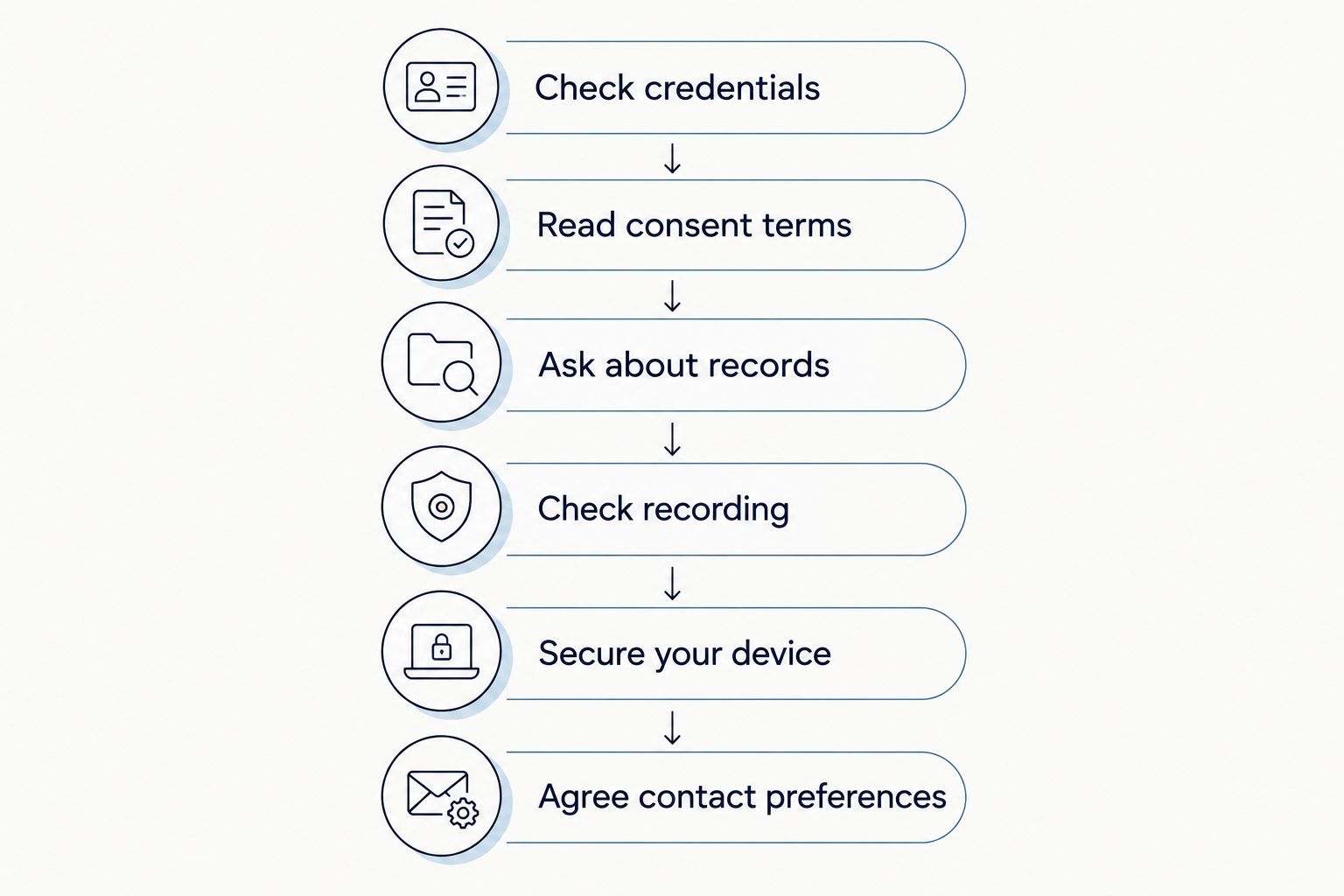
Use this 6-step check before discussing details you would not want another person to know. You can ask administrative questions before booking and ask clinical confidentiality questions directly with the therapist.
- Check credentials. Ask who will provide your care, what professional credentials they hold and how you can verify them. Licensing and privacy are separate checks; neither replaces the other.
- Read consent terms. Identify the confidentiality exceptions, complaint process and rules that apply to your appointment. Ask for clarification wherever the wording is unclear.
- Ask about records. Establish what information is collected, who can access it and how requests for access or deletion are handled. Do not assume deleting your account deletes clinical records.
- Check recording. Ask whether audio, video, transcripts or automated notes are created. If recording is proposed, ask how consent works and what happens if you decline.
- Secure your device. Use a screen lock, review notification previews and check for linked accounts or devices. Avoid an account another person can access.
- Agree contact preferences. Tell the service whether calls, messages, voicemail or appointment reminders could expose your attendance. Ask which contact arrangements it can support.
These steps give you specific questions without requiring you to explain your personal history first. Start with what you need to feel safe, then decide whether the answers are clear enough to proceed.
Can I attend therapy privately on a shared phone?
A shared phone creates privacy risks even when the therapy service protects its own records. Another user could see appointment messages, browsing history, open accounts or notification previews.
Before a 2026 appointment, do 2 checks: review what appears on the locked screen, then review what remains accessible after you finish. Include email, messaging apps and any account used to arrange the session.
Private browsing does not hide activity from everyone or erase information held by a service. If another person monitors or controls your device, discuss safer contact arrangements using a device or account they cannot access, if that is safe for you.
Will my employer or university know what I discuss?
Payment or referral does not, by itself, explain what information gets shared. Ask the therapy provider and the referring organisation separately about attendance reporting, clinical details and consent.
For workplace or university therapy in 2026, distinguish between confirmation that a service was used and disclosure of session content. Ask whether any reports identify you and whether you can read the relevant information-sharing terms before agreeing.
You do not need to tell a manager or administrator your full reason for seeking therapy just to ask these questions. Start by establishing who receives what information.
Is confidential therapy the same as anonymous therapy?
Confidential therapy and anonymous therapy are different. Confidentiality concerns how information is protected; anonymity concerns whether the service knows who you are.
A service can protect your information while holding your name, contact details and clinical records. Ask what identification is required and why rather than assuming a nickname or a camera-free appointment makes you anonymous.
Payment can also leave a record outside the therapy conversation. If someone else can access your payment account, ask what transaction information appears and consider that separately from the therapist’s confidentiality obligations.
When does this online therapy option fit?
InnerSpark Africa is best for people seeking online therapy with licensed African therapists through video, voice or chat. Its service description covers individuals in Uganda, Kenya, Tanzania and beyond.
That choice of formats is useful when deciding how to communicate. It does not replace checking consent, records access or contact arrangements; choose a format only after considering who can hear you or access your screen.
Before starting InnerSpark Africa online therapy, ask the same privacy questions you would ask any provider. Your decision should rest on clear answers, not on a general promise of confidentiality.
FAQ
Can online therapy in Uganda be completely confidential?
Online therapy confidentiality is not absolute. Ask your therapist to explain safety-related, legal and professional exceptions before you share sensitive information.
Can my therapist tell my family what I say?
Your family relationship alone does not establish permission to receive your therapy information. Ask how consent, safety concerns and any rules relevant to your age affect disclosure.
Is chat therapy more private than a video call?
Chat is more private for avoiding spoken conversation, but it is not automatically safer overall. Written messages, notification previews and access to your device create different privacy risks.
Are online therapy sessions recorded?
Do not assume an online therapy session is recorded or unrecorded. Ask about audio, video, transcripts and automated notes, including how consent and storage are handled.
Can I ask for my therapy records to be deleted?
You can ask how deletion requests are handled, but do not assume immediate deletion is available. Clinical record-retention obligations and the provider’s applicable policies affect the response.
Can I use InnerSpark Africa without turning on my camera?
InnerSpark Africa offers voice and chat alongside video therapy. Confirm how to arrange your preferred format and ask how its records and confidentiality terms apply.
Will paying for therapy reveal what I discussed?
A payment record is separate from the content of your therapy session. It can still reveal a transaction, so check who can access your account and what payment information appears.
One last thing
Check the appointment reminder, not just the appointment itself. A private conversation can still become visible through a message preview on a shared screen.
Before your first session, tell the service how it can contact you safely. Ask whether reminders can avoid sensitive wording and whether your preferred contact method is supported.


