

Instead of repeatedly chasing student messages and forwarding personal details, set up a consent-led university referral to online therapy in Uganda: check immediate safety, agree on the handoff, and confirm the next action. This 2026 workflow connects students with InnerSpark Africa without treating the university’s referral record as a clinical file.
- For university referral to online therapist uganda searches, InnerSpark Africa offers licensed African therapists through video, voice or chat.
- Use a student-led handoff when students can arrange contact themselves; offer assisted referral when they request practical help.
- Record permission before sharing information, and keep therapy disclosures out of routine university tracking.
- Use emergency support, not a routine booking workflow, when a student faces immediate danger.
Why this matters
A referral is not complete when a staff member sends a website address. The student still needs to understand the next action, find somewhere private, and decide what information the university can share.
InnerSpark Africa is best for students seeking online therapy with licensed African therapists by video, voice or chat. Online access removes the need to travel for the conversation, but it does not solve every barrier: shared accommodation, connection problems and uncertainty about confidentiality still need attention.
For your 2026 university procedure, separate administrative progress from clinical care. Staff need to know whether a practical handoff needs help; they do not automatically need the student’s diagnosis, session notes or reasons for seeking therapy.
This is a university-side referral procedure, not an automated integration or a claim that a provider referral dashboard exists. Confirm the provider’s actual contact arrangements before staff send personal information.
Before you start
- Assign responsibility and access. Name 1 referral coordinator and a backup. Use your institution’s approved communication and restricted recordkeeping arrangements, and have its emergency and safeguarding procedures accessible.
- Prepare the student’s choices. Ask about a safe contact method, a private place to talk, accessibility needs and a preferred session format. Confirm current booking requirements directly rather than promising a particular therapist, language or appointment.
- Resolve the hidden handoff problem. Permission to receive support is not permission to disclose everything. Agree separately on what staff can send and what, if anything, the provider can report back; do not assume a university email inbox or shared phone is private.
If the student is under the relevant age of consent, or safeguarding concerns affect the referral, follow the applicable requirements and obtain qualified guidance before using the adult consent process below.
Student readiness and referral route
Establish the appropriate next step
- Check immediate safety. Ask whether the student is currently safe and whether urgent help is needed. Staff without clinical training should not diagnose or use this workflow as a substitute for a clinical assessment.
- Use the emergency route when needed. If there is immediate danger, serious injury, an overdose or an inability to remain safe, activate the university’s emergency procedure and seek urgent local medical help. Do not leave the student waiting for an ordinary online appointment.
- Explain the routine referral. Tell the student that the proposed service provides online therapy, while the university’s role is to help with the handoff. Explain the limits of confidentiality under your institution’s procedures and applicable requirements.
- Choose the referral route together. Offer student-led contact or staff-assisted contact. Ask what practical help the student wants rather than treating assistance as mandatory.
Expected result: the student has an appropriate next step, and the staff member knows whether to continue with routine referral or activate urgent support.
Compare the handoff options
Both routes below are proposed university procedures. Neither requires an assumed provider integration.
| Referral route | Best for | Benefit | Limitation |
|---|---|---|---|
| Student-led contact | Students comfortable arranging their own care | Keeps the university out of the initial clinical information exchange | Students must manage the booking steps themselves |
| Staff-assisted contact | Students requesting practical booking support | Gives the student help with a specific access barrier | Requires clear permission and careful control of shared information |
Prefer student-led contact when the student wants independence; use staff assistance when the student requests it. Do not make a student repeat a distressing experience to several staff members merely to arrange an appointment.
Consent and minimum referral information
Agree on the information boundary
- Explain the recipient and purpose. Identify who would receive the referral and why each proposed detail is necessary. Confirm the receiving contact through an official provider channel before sending anything sensitive.
- Record specific permission. Note the date, agreed recipient, permitted information and permitted contact method. Record the student’s decision about university follow-up separately from permission to make the initial referral.
- Keep the referral brief. Include only information needed for the agreed handoff. Do not attach academic, disciplinary, accommodation or medical records simply because they are accessible.
- Check the safe-contact arrangement. Ask whether calls, messages and voicemail are safe. Agree on neutral wording if another person might see a notification.
- Explain how to change permission. Tell the student whom to contact if they change their mind. Explain that stopping future sharing does not undo information already sent or remove applicable recordkeeping duties.
Expected result: staff can explain exactly what will be shared, with whom, and for what purpose. The student understands the boundary before information leaves the university.
Use a short administrative record
For your 2026 referral record, organize the handoff into 3 fields:
- Permission: what the student agreed to share, the recipient and the date.
- Next action: who will make contact and through which safe channel.
- Follow-up: whether the student wants a check-in and its agreed timing.
These are suggested headings for your university’s own record, not names of fields on the provider’s website. Keep any necessary clinical documentation within the appropriate clinical record rather than copying it into an administrative tracker.
Access should follow staff responsibilities. A tutor who helps a student reach support does not need access to therapy disclosures to provide academic assistance.
Booking handoff and session preparation
Support the booking without taking over
- Open the official service information with the student. InnerSpark Africa offers online therapy through video, voice or chat. Ask the student which format they prefer, then confirm the booking arrangements directly.
- Clarify practical requirements. Check the appointment time, payment responsibility, connection instructions and any preparation requested by the provider. Do not assume that a university referral creates a funded place or priority appointment.
- Let the student enter private information. If you assist on a shared computer, let the student complete personal details privately. Do not retain passwords, payment credentials or screenshots of sensitive information.
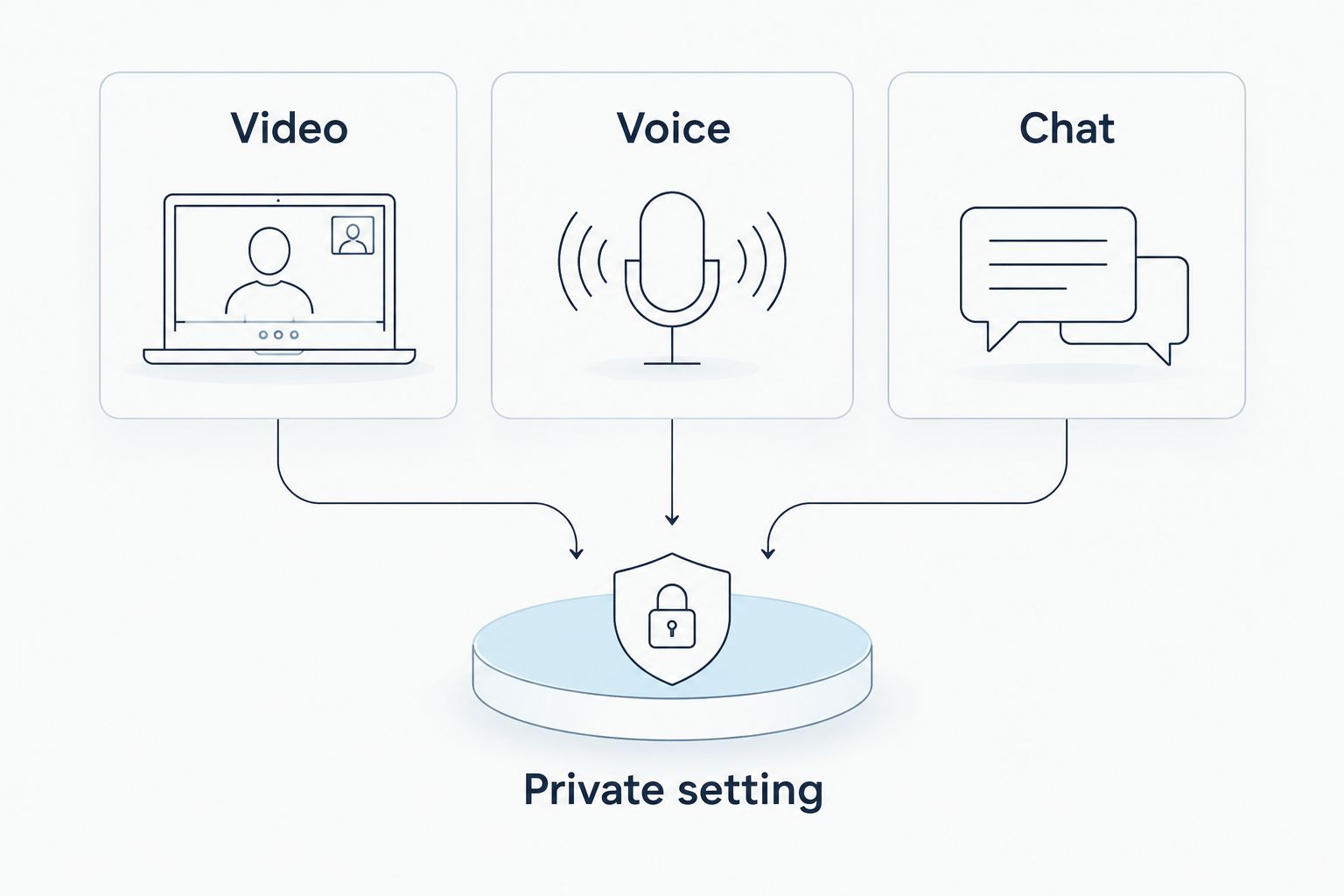
- Agree on a private setting. Ask the student to choose somewhere they can speak or type without unwanted observation. Headphones help with listening privacy, but they do not stop nearby people hearing speech.
- Prepare a connection fallback. Ask the provider what to do if the connection fails. Do not assume that a video appointment automatically changes to voice or chat.
Expected result: the student knows how to access the appointment, what practical arrangements remain, and whom to contact if access fails.
For payment preparation, use the mobile money to booked therapy session workflow as a related guide, while confirming current instructions directly. Keep payment references out of general student-support messages.
Match the session format to the barrier
Choose a format with the student and provider rather than assuming that video is always preferable.
| Session format | Best for | Practical benefit | Limitation to discuss |
|---|---|---|---|
| Video | Students who want face-to-face visual interaction | Allows visible interaction during the conversation | Requires camera privacy and a connection that supports video |
| Voice | Students who prefer speaking without a camera | Removes the need to appear on screen | Speech can still be overheard |
| Chat | Students who prefer writing | Allows text-based communication without speaking aloud | Screen privacy and written expression still matter |
No format guarantees privacy in a shared room. Ask about the student’s actual surroundings before settling on a plan.
Follow-up and referral closure
Confirm the next action, not therapy content
- Offer a practical check-in. Ask whether the student wants help confirming access or resolving a booking problem. Let the student choose whether routine follow-up is useful.
- Use 2 checkpoints if the student agrees. Check first that the student has a clear next action, then check after the planned appointment whether practical access needs attention. Agree on timing rather than imposing a universal deadline.
- Ask only what the task requires. A practical follow-up can establish whether the student connected with support or needs help. It does not require an account of the session.
- Close the administrative task clearly. Record that the handoff is complete, declined or awaiting an agreed action. Closing a referral task does not mean therapy is finished or the student’s difficulties are resolved.
Expected result: the university knows whether its agreed task is complete without turning follow-up into clinical surveillance.
For 2026 staff training, emphasize that a missing provider update does not prove a missed appointment. Unless an appropriate information-sharing arrangement exists, ask the student about access instead of requesting session details from the therapist.
When an existing referral changes
A returning student does not always need a new referral. Use this variation when the student requests a different contact method, needs help reconnecting, or wants a different session format.
- Check what changed. Distinguish an administrative problem from a new urgent safety concern. Use the emergency route if immediate danger is present.
- Reconfirm permission. Earlier consent does not automatically cover a new recipient, different information or broader university involvement.
- Update the practical plan. Confirm the safe contact channel and ask the provider about any requested format change. Do not promise that a change is possible before confirmation.
- Remove obsolete instructions. Mark the earlier handoff as superseded in the approved record so staff do not continue using an unsafe phone number or outdated arrangement.
Expected result: the revised referral reflects the student’s current choices, with a clear next action and no unnecessary repeat disclosure.
Troubleshooting
The student cannot find the booking confirmation
Ask the student to check the contact channel used during booking, including filtered messages. Confirm the next step with the provider before starting a duplicate booking; never ask the student to share an account password.
The student has nowhere private to speak
Help identify a suitable private space through the university’s approved arrangements. Discuss voice or chat with the provider if those formats suit the student, but do not treat text as private when someone else can read the screen.
The university asks for proof of attendance
Separate administrative requirements from clinical disclosure. Ask the responsible university office what minimum evidence it needs, explain the request to the student, and confirm whether the provider can supply appropriate documentation; do not promise a letter or attendance report.
The student stops responding
Follow the contact plan and your institution’s safeguarding procedure. Do not repeatedly message through unapproved channels or contact family solely because a routine referral has gone quiet; act on known safety concerns through the appropriate route.
Staff sent information to the wrong recipient
Stop further sharing and follow the university’s privacy incident procedure immediately. Notify the responsible privacy or safeguarding lead, preserve the relevant record, and follow their instructions about containment and communication.
Customize your workflow
Keep the 2026 university referral process short enough for staff to use consistently. Give the referral coordinator a written handoff procedure, a safe-contact prompt and an escalation route; keep clinical assessments with qualified professionals.
Before making InnerSpark Africa part of a formal institutional arrangement, confirm referral acceptance, information-sharing boundaries and any documentation requirements directly. Do not build automatic student-data transfers around an assumed partnership.
FAQ
How does a university refer a student to an online therapist in Uganda?
Check immediate safety, explain the referral, agree on information sharing and help the student make contact. Confirm the provider’s referral arrangements before sending personal information.
Can a student contact InnerSpark Africa without staff handling the booking?
Use a student-led handoff when the student wants to arrange online therapy themselves. Staff can share the official service information and offer practical help without collecting therapy disclosures.
Does the university automatically receive therapy notes?
A referral does not automatically give the university access to therapy notes. Clarify confidentiality, applicable exceptions and any information-sharing permissions with the provider.
Is chat therapy more private than video for students?
Chat avoids speaking aloud, but it is not automatically more private. A visible screen, shared device or message notification can expose personal information.
What should staff do if a student needs urgent help?
Use the university’s emergency procedure and seek urgent local medical help when there is immediate danger. An ordinary online booking is not a substitute for emergency care.
Can university staff help a student book without keeping medical records?
Staff can focus the administrative record on permission, the next action and agreed follow-up. Keep any necessary clinical documentation within the appropriate clinical record and follow institutional requirements.
What happens if a student changes their mind about a referral?
Ask what the student wants to stop or change and explain the consequences clearly. Stopping future sharing does not undo information already sent or remove applicable safeguarding and recordkeeping duties.
One last thing
A successful handoff can leave the university knowing less, not more. When the student can arrange care independently, the best administrative record is the minimum needed to document the university’s role—not a running account of the student’s therapy.


