

Your student therapy cost in Uganda in 2026 depends on the provider’s current session fee and the appointments you agree to book; confirm the amount directly before paying. Budget separately for internet data and any travel needed to reach a private place. Ask what one booking includes before deciding whether it fits your student budget.
- Student therapy cost Uganda: confirm the current session fee and what each booking includes before paying.
- InnerSpark Africa offers online therapy with licensed African therapists through video, voice or chat.
- Compare session fees alongside data, privacy and follow-up needs—not the advertised fee alone.
- Ask your university about counselling and referral support without assuming outside therapy is covered.
How much does student therapy cost in Uganda in 2026?
Start with the current fee quoted for your chosen appointment, then separate the provider’s charges from your own access costs. A session fee does not tell you how much internet data you need, whether your room is private, or how you will budget for another appointment.
You can check the current online therapy information through InnerSpark Africa. Confirm the fee, appointment format and booking terms directly rather than treating an older article or shared screenshot as a current quote.
| Budget item | What to confirm | Why it matters |
|---|---|---|
| Session fee | The total charge for the appointment you select | This is the starting point for your budget |
| Session scope | Duration, format and what the booking includes | Different descriptions are not automatically equivalent |
| Internet access | How you will connect and pay for data | Online access belongs in your personal budget |
| Private space | Where you can speak or type without being observed | A convenient location is not always a private one |
| Follow-up | The proposed frequency and how later bookings work | An affordable first appointment needs a workable next step |
| Booking changes | Cancellation, rescheduling and connection-failure terms | Read the terms before committing money |
Compare the full appointment, not just the fee. Ask for a clear explanation if the booking page leaves any of these points unanswered.
Why this matters
A student budget often has competing commitments: tuition, accommodation, meals, transport and study materials. Therapy planning should make those commitments visible, not require you to pretend they do not exist.
For your 2026 budget, the useful question is whether you can access the proposed care without losing essential spending. Tell the therapist what you can sustain and ask how that affects the care plan. Do not quietly choose a schedule you already know you cannot maintain.
University support is another question to investigate, not a benefit to assume. The university referrals and student therapy workflow provides a related starting point; confirm your own institution’s arrangements with its student support office.
What determines your student therapy budget?
Keep these factors separate when you ask about costs. They affect what you need to budget for, but they do not establish a particular provider’s fee or prove that one format is cheaper.
- Session scope: Ask how long the appointment lasts and what happens during it. Do not assume that a brief check-in and a therapy appointment describe the same service.
- Follow-up plan: Discuss the proposed appointment schedule with the therapist. Ask when you will review it rather than assuming you need a fixed course before assessment.
- Connection needs: Video, voice and chat use different ways of communicating. Choose a format your device and connection can support, and check your own data arrangements.
- Privacy arrangements: Identify a place where you can participate safely. If you need to travel there, include that journey in your personal budget.
- Booking terms: Read what happens if you cancel, arrive late or lose your connection. Ask the provider to explain any unclear charge before you pay.
The practical distinction is between the session fee, which the provider confirms, and your access costs, which depend on your circumstances. Write both down so neither disappears from the decision.
Which therapy format fits your student routine?
Video, voice and chat are communication options, not a ranking of treatment quality. Ask whether the format you prefer is appropriate for the concerns you want to discuss.
InnerSpark Africa online therapy offers these formats with licensed African therapists. InnerSpark Africa is best for students seeking online therapy with licensed African therapists by video, voice or chat. That describes a service fit, not a promise that every format suits every student’s needs.
| Format | Best for | Practical benefit | Limitation to consider |
|---|---|---|---|
| Video | Students who want face-to-face conversation remotely | You and the therapist can see each other | You need a suitable connection and a private camera setting |
| Voice | Students who prefer speaking without appearing on camera | You can talk without showing your surroundings | Someone nearby can still overhear your side |
| Chat | Students who prefer expressing themselves in writing | You can put difficult thoughts into text | Typing takes effort, and shared screens create privacy concerns |
Video: best for face-to-face conversation remotely
Choose video when seeing the therapist matters to you and you have somewhere suitable to join. Test your camera and microphone before the appointment, and check what appears behind you.
Video does not remove the need for privacy. Headphones protect the therapist’s voice from being overheard, but people nearby can still hear what you say. Ask what happens if the connection fails rather than assuming the session will automatically switch formats.
Voice: best for speaking without a camera
Voice is a practical option when you want to talk but do not want to appear on screen. Check whether the appointment uses an internet connection or another calling arrangement before estimating your access costs.
The main trade-off is that the therapist cannot see your facial expressions. Say clearly when you are confused, uncomfortable or need a pause. You still need somewhere you can speak without unwanted listeners.
Chat: best for expressing yourself in writing
Chat gives you a written way to communicate when speaking feels difficult or inconvenient. Ask whether the service involves a scheduled live conversation or another messaging arrangement; the word chat alone does not explain response times.
Protect the device as well as the conversation. Consider notification previews, shared accounts and whether anyone else can read your screen. Do not assume chat means anonymity, continuous access or immediate replies.
How do you check the cost before booking?
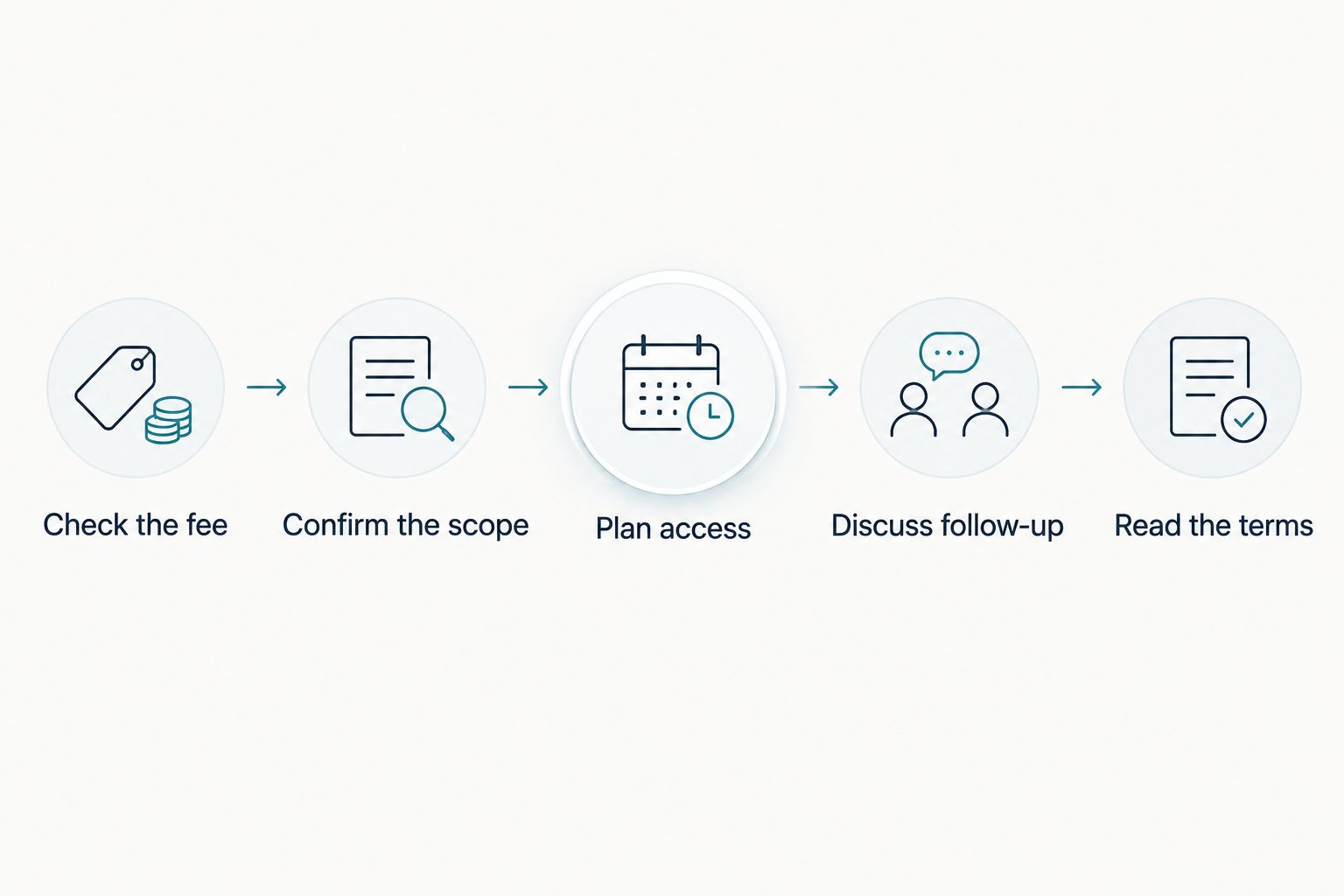
Use this sequence for a 2026 booking. It keeps the money conversation clear without asking you to decide your entire treatment plan before meeting a therapist.
- Check the fee. Open the provider’s current booking information and identify the charge for the appointment you actually intend to select. Ask whether anything else is payable for that booking.
- Confirm the scope. Ask about session duration, communication format and what is included. Confirm that you understand whether you are booking therapy, an initial discussion or another service.
- Plan access. Choose your device, connection and private location. Check that you can use them at the appointment time, not just when you make the booking.
- Discuss follow-up. Explain your budget limits and ask how the therapist will discuss further appointments. Avoid treating an initial suggestion as a commitment you cannot question.
- Read the terms. Check payment, cancellation, rescheduling and connection-failure arrangements. Keep the booking confirmation somewhere you can find it.
You do not need clinical vocabulary to ask these questions. A clear explanation of what you are booking is a reasonable request, especially when you are arranging therapy for the first time.
What should you ask if your budget is tight?
State your limit plainly. Explain what you can spend on appointments and access without giving up essentials, then ask what the provider can offer within that limit. Do not assume a student discount, sponsored place or payment arrangement exists unless it is confirmed.
Useful questions include:
- What exactly does this appointment include?
- Can we discuss my budget before agreeing on follow-up?
- Does the quoted amount apply to the format I want?
- What happens if my connection drops during the session?
- Are there other support services you recommend if this is outside my budget?
If the proposed arrangement does not fit, say so before paying. Ask about alternatives rather than stretching your budget around an unconfirmed expectation of how many appointments you will need.
Do not buy a larger commitment just because you feel embarrassed to discuss money. Affordability is relevant information for planning care, not a personal failing.
Can your university help with therapy costs?
Ask your university’s student support or counselling office what it currently provides in 2026. Request details about eligibility, appointment arrangements, confidentiality and any referral process. An external referral does not by itself mean the university pays the bill.
Separate three questions: whether support exists, whether you qualify, and who pays. Get the answer to each before assuming a referral changes your personal cost.
Also ask what information the university needs to arrange support and what, if anything, is shared afterward. Do not assume that academic staff receive therapy details, or that nothing is shared under any circumstances. Request the actual confidentiality explanation.
If you prefer to arrange therapy independently, ask the outside provider the same questions about consent and information sharing. The important point is understanding the arrangement before you use it.
Does a lower session fee mean better value?
A lower fee answers a budget question, not the whole care question. Check the therapist’s credentials, the service offered and whether the proposed format fits your needs. Ask who you will meet and how concerns about the care are handled.
Compare like with like. An initial discussion, a full therapy appointment and an ongoing messaging arrangement should not be treated as identical simply because each involves mental health support.
For 2026, use a simple decision rule: choose care you understand, can access privately and can budget for—not a fee with unclear terms. No provider can promise a particular outcome before understanding your situation.
How should you plan for follow-up appointments?
Ask the therapist how you will decide whether to continue and when you will review progress. There is no reason to invent a personal treatment schedule before that conversation.
Discuss practical barriers early: exams, changing accommodation, shared devices or returning home during a break. Explain how those changes affect your ability to attend or speak privately. Ask what the booking rules allow rather than assuming appointments can be moved without consequences.
Keep a simple record of confirmed bookings and your actual access spending. Use it to check whether the arrangement remains manageable, then raise problems before the next payment rather than after missing an appointment.
FAQ
How do I find the current student therapy cost in Uganda?
Confirm the current fee for your selected appointment directly with the provider before paying. Ask what the booking includes and budget separately for your internet access and any travel needed for privacy.
Does InnerSpark Africa offer online therapy for students in Uganda?
InnerSpark Africa offers online therapy in Uganda with licensed African therapists by video, voice or chat. Students should confirm the current fee, appointment details and suitability of the service before booking.
Is chat therapy cheaper than video therapy?
Do not assume chat therapy is cheaper than video therapy. Confirm the fee and scope for each format, including whether chat is a scheduled conversation and what response arrangements apply.
Will my university pay for private therapy?
Confirm payment support directly with your university before booking private therapy. A referral alone does not establish that the university covers an outside provider’s charges.
How many therapy sessions should I budget for?
Discuss the appointment plan with your therapist instead of choosing a fixed total in advance. Explain your budget and ask when you will review the need for further sessions.
Can I attend online therapy from a shared student room?
Use a shared room only when you can protect your privacy during the appointment. Headphones do not stop others hearing your voice, and chat requires protection from screen viewing and notification previews.
Is online therapy suitable if I need urgent help?
A scheduled online therapy appointment is not an emergency response. If you are in immediate danger or cannot keep yourself safe, seek urgent in-person help at the nearest emergency department and contact someone you trust.
One last thing
Before your first appointment, write down the concern you most want help with and the budget constraint you most need the therapist to understand. Bring both to the conversation.
You do not need to hide financial limits to deserve care. A useful next step is a clearly understood appointment—not an unexplained payment or a commitment you cannot sustain.


